‘Swayamsevak Is the Sangh’s Identity’: Mohan Bhagwat Recalls RSS’s Early Years
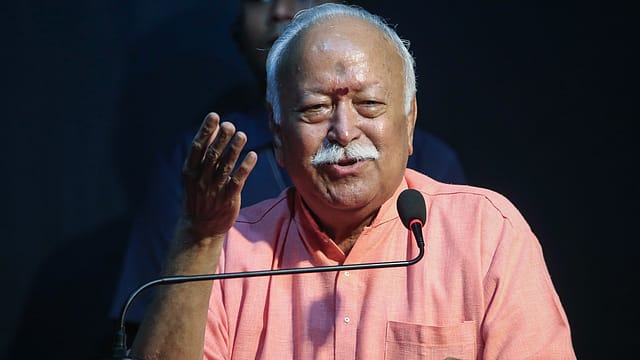
Rashtriya Swayamsevak Sangh (RSS) chief Mohan Bhagwat on Monday described volunteers, or swayamsevaks, as the organisation’s defining identity, recalling an episode from its early years when a man named Ibrahim spoke against an attempt to ban the Sangh.
Speaking at the inauguration of a newly constructed auditorium at the renovated headquarters of Nagpur Nagrik Sahakari Bank Limited in Maharashtra, Bhagwat said the proposed ban was discussed in the Central Provinces Assembly in the 1930s. At the time, he said, no RSS volunteer came forward to defend the organisation, and Ibrahim was the only person who spoke in its support.
Bhagwat recalled Ibrahim arguing that the Sangh should not be shut down because it was not communal. He also referred to Ibrahim’s remarks about the organisation’s founder, Keshav Baliram Hedgewar.
“He said, ‘I believe that those who say Hindustan is Hindu Rashtra should be sent to a mental hospital. I know Dr Hedgewar; he is not mental; he is a good person. So, Sangh cannot be communal,’” Bhagwat said.

The Era of Forever Wars
30 Oct 2026 - Vol 05 | Issue 44
Coping with an explosive Middle East
The RSS chief added that although the organisation was still relatively unknown in its early years, Hedgewar was widely recognised. “When Sangh began, Swayamsevak became its identity. Even today, after 100 years, Swayamsevak is Sangh’s identity,” he said.
BHAGWAT ON THE LIFE OF A PRACHARAK
Speaking about a book documenting the lives of RSS pracharaks, Bhagwat said such accounts were being written out of gratitude and affection rather than for any material benefit.
“No pracharak ever expected this, nor ever will, because there is nothing material to be gained,” he said.
Describing the commitment expected of a pracharak, Bhagwat said the organisation remained central to such a volunteer’s life. “For a pracharak, there is only the Sangh. The Sangh is everything, and nothing else exists for him,” he said.
He added that the dedication of pracharaks could not be fully captured in writing and was best understood by those who had interacted with them directly.
‘SWIMMING AGAINST THE TIDE’
Bhagwat described the life of a swayamsevak as one of “swimming against the tide”, marked by principles, selflessness and an absence of personal expectations.
“His only thought is: how much good can I do for society?” he said.
He acknowledged that not every volunteer might fully meet this ideal, but maintained that the organisation’s members shared a common direction.
“There are degrees and variations, but everyone's direction remains the same,” Bhagwat said.
With inputs from ANI