#UNTOLD | Shantanu Upadhyay Kept Walking Away. Until There Was Nowhere Left: The Kati Patang Story
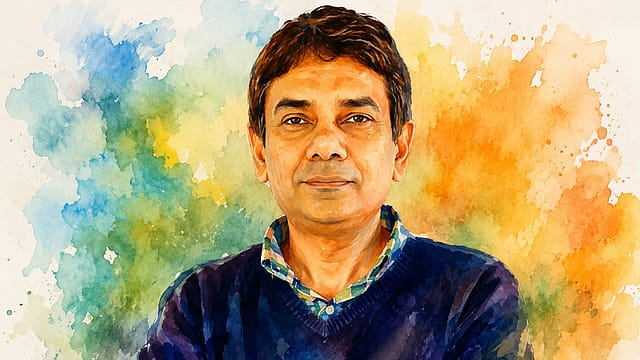
2022. New Delhi.
Shantanu Upadhyay stared at his reflection in the dead screen.
The meeting had ended a few moments earlier. One by one, the faces had disappeared until the laptop became nothing more than a black sheet of glass. Outside his cabin, the office carried on as if nothing had happened. A phone rang somewhere down the corridor. Someone laughed. Another meeting had begun.
Eight months of work had ended in less than ten minutes.
They hadn’t just negotiated an acquisition; they had engineered it via a series of conversations. It had been months of building a future that everyone had slowly begun to believe in. Models had been revised, projections challenged, and integration plans debated. They had worked through what would happen to Kati Patang, what would happen to the team, who would stay and who would leave. The discussions had reached a point where possibilities had quietly turned into expectations.
The Age of Anger
31 Jul 2026 - Vol 05 | Issue 31
A raging generation makes the government relent. What's next?
Then the buyer walked away.
Shantanu closed the laptop and leaned back in his chair.
The silence in the room suddenly felt heavy. The numbers stared back at him: Nearly ₹2.5 crore in liabilities, cash that was running out, sales that had slowed, stalled and, in some markets, disappeared altogether.
For months, the acquisition had looked like the bridge across all of it. Now there wasn't one. The debt didn't disturb him as much as the absence of a next move.
That feeling was unfamiliar. For almost twenty years, every difficult turn had eventually revealed another road. Sometimes he found it. Sometimes he chose it before anyone else believed he should. Either way, he had never stayed stuck for long.
This time, he couldn't see what came next. He didn't open the financial model again that evening. It wasn't going to tell him anything he didn't already know.
BEFORE KATI PATANG, THERE WAS A PATTERN
The first conversation happened before the day was over.
There were no presentations, no spreadsheets, no discussions about strategy. Just two chairs, a table and a conversation he had hoped he wouldn't have to begin. He tried explaining why the acquisition had fallen through, what had changed and what it meant for the company, but somewhere in the middle of his explanation, the words began to lose their purpose.
He stopped. "तुम कहीं और देख लो... यहाँ अभी कुछ नहीं है।" (You should start looking elsewhere. There is nothing here for you right now)
The employee listened quietly. He didn't argue or negotiate. He simply nodded. The acceptance stayed with Shantanu long after the conversation had ended.
Over the next few days, Shantanu found himself repeating the same conversation with different people. Every farewell left the office a little quieter. It didn't feel emptier. It felt lighter, as though the company had begun letting go of pieces of itself simply to stay alive.
Somewhere during those days, he found himself thinking about the name they had chosen years earlier: Kati Patang.
When he and Lata--his wife--had settled on it, the name had felt uncomplicated. A severed kite represented freedom, the courage to leave familiar skies and trust the wind. Now it refused to leave his mind. For the first time, he wondered whether freedom and drift sometimes looked exactly the same until it was too late to tell them apart.
That question lingered longer than he wanted it to. And it quietly led to another: What if the instinct that had guided him for two decades had finally failed him? Five years earlier, he had walked away from a life that most people spend decades trying to build. Until that afternoon, he had never looked back.
Walking away had never frightened Shantanu. Staying did.
He simply didn't know it yet.
Long before there was Kati Patang, there was a pattern that only revealed itself in the rearview mirror. Every few years, just as life settled into something that looked complete, he found himself looking over the horizon again. It didn't happen overnight. It began quietly, almost invisibly, until one day the decision had already been made.
It began shortly after he graduated in chemistry from St.Stephen’s College in Delhi University.
He chose advertising because it offered a different kind of life from the one everyone expected him to pursue. Lintas came first, then madison. Consumer behaviour replaced equations. Campaigns replaced circuits. It was fast, creative and endlessly stimulating. For a while.
Then he began lingering in conversations that had nothing to do with advertising. Clients fascinated him more than campaigns. He wanted to know how businesses were built, why one company scaled while another didn't, and what happened long before an advertisement ever reached a customer.
Advertising no longer held his attention. So, he left.
WHEN EVERYTHING FINALLY CAME TOGETHER. AND THEN FELL APART
Canada came next.
The MBA wasn't simply another qualification. It was a wager. Money was tight enough for every decision to matter, and while Shantanu buried himself in classes, assignments and part-time work, Lata carried the heavier load and absorbed much of the uncertainty that came with starting over in a new country. Years later, he would reduce those two years to a single sentence: "She was the man of the family." The degree opened the door to strategy consulting.
Boston followed.
The degree was a golden key. A Boston strategy firm snapped him up. The work was demanding, the trajectory was vertical, and they had just welcomed a daughter. For the first time in years, ambition and life seemed to be moving in the same direction. For the first time, life had finally stopped interrogating him. It had finally arrived at a conclusion.
Six months, the conclusion was overturned.
He drove into the office on a Tuesday, the route etched into his muscle memory. Everything was identical to Monday—the glass, the steel, the morning light—but the weather inside the building had shifted. People clustered in the corridors, their voices hushed, their eyes darting. The meeting was already in session.
The partners didn't dress the blow in corporate euphemisms. The firm was a house of cards: too much leverage, too many bad bets, zero road left. By tomorrow, the lights would be out.
When the meeting ended, Shantanu stepped out of the building into the biting Boston winter. Forty-eight hours earlier, he had held his newborn daughter, feeling the weight of a stable, permanent world. Now, standing on the frozen pavement, he was a ghost. He was an immigrant with a visa that had just become a countdown clock. Now he was calculating how long his visa would survive without a job.
His first instinct was simple. Pack up, go back, and start again. Maybe this is it, he thought. Maybe it’s time to concede.
He let the thought linger, a cold comfort. Then, he turned back to the building. He spent the next week playing bridge while the world collapsed around him—calling in favors, leveraging contacts, ensuring the team he had built didn't vanish into the unemployment line. He secured them spots at Deloitte. While his firm died, the work—and his people—survived.
Shantanu walked away from the wreckage with a secret: Institutions are illusions. They appear granite-solid on Monday and turn to vapour by Friday. After that, he couldn't help but view every office as a temporary shelter.
Deloitte became another beginning. Then came BCG.
Professionally, everything continued moving in the right direction. The work became more demanding, the problems became larger, and New York became home. The children settled into school. Lata found her rhythm. And life stopped feeling temporary.
WHEN THE AMERICAN DREAM STOPPED FEEING LIKE ONE
Then, the Green Card arrived.
It stayed on the dining table for two days before Shantanu opened the envelope. He couldn't explain why. He had spent years building a life that had led to that moment. The document confirmed that he could stay in America for as long as he wanted.
Instead of relief, he felt something he couldn't name. Lata saw it before he did. She watched the shift in his eyes, the way he stopped engaging with the horizon. "You are always uncomfortable with what you are." It wasn't a rebuke; it was a diagnosis. She had seen the pattern repeat itself until it was undeniable.
The conversation ended. Shantanu tried to medicate the restlessness with new work, new platforms, machine learning, deeper domains. But every pivot was just a longer rope in an empty field.
The ghost returned a few weeks later. Friends spoke about security. Colleagues spoke about opportunity. Neither conversation stayed with him for very long. The ones with Lata did. He tried answering the feeling the way he always had—by taking on more work. New industries. New ideas. New problems. The distraction lasted only until the next project ended.
Then the question came back. Nothing was wrong. And that was precisely the problem.
By 2015, he stopped looking for a better explanation. He stopped trying to rationalize the irrational.
After more than a decade in the United States, he packed up his life and returned to India. He wasn't chasing a company, and he wasn't chasing a market. He was following the only compass he had ever trusted—the one that told him when the air had gone stale.
This time, however, the instinct wouldn't just cost him a plane ticket. It would demand everything.
Coming home was supposed to answer the question.
It didn't.
Returning to India removed one uncertainty but exposed another. BCG gave him work he respected, colleagues he enjoyed, and problems that demanded the kind of thinking he had spent years learning. There was nothing to complain about. If anything, the move had worked exactly as planned.
For a while, that seemed enough. Then small things began to change.
In client meetings, he found himself drifting into questions that had nothing to do with the presentation on the screen. He lingered after conversations that everyone else considered over. He came home with books that had little to do with consulting and stacked them beside the bed, promising himself he would read only a chapter before sleeping.
Lata diagnosed the symptoms long before he spoke them aloud. One evening, she looked at the books, then at him.
"You've started looking for a door again."
He smiled, offering no defence.
A few days later, a colleague slid a book across his desk. It was written by a consultant who had left the profession to build a beverage company. Shantanu didn’t read it looking for inspiration; he read it looking for the flaws. He opened the pages expecting to argue with the author’s logic.
WHEN BEER BECAME AN OBSESSION
Instead, he found himself returning to the same paragraphs night after night. Some pages folded over at the corners. Others carried pencil marks in the margins. When he finished, he went back to the beginning and read parts of it again. It wasn’t the specific beverage business that haunted him; it was the sheer gravity of the possibility. For the first time, he saw a life that wasn't spent auditing someone else's architecture, but laying his own brick.
After that, weeks bled into months, and the vagueness sharpened into an obsession. If a man were to engineer a consumer brand from absolute zero, where would the first stone be laid? What category still possessed room for imagination? What product could weave itself into the daily ritual of a life, rather than merely passing through it?
Instead of switching off on Friday nights, Shantanu was tracking down microbreweries and dissecting the chemistry of fermentation. Conversations that once revolved around consulting slowly gave way to licensing, supply chains and state excise policies.
The more people he met--including cold-calling founders--the more consistent the advice became: Stay away. Don't enter alcohol. The category was heavily regulated. Distribution was difficult. Every state had its own rules. Companies with deeper pockets had struggled for years. The more they told him it was impossible, the more the numbers began to sing to him.
Shantanu listened. Then he asked another question. The following week, someone else told him the same thing. He came home and ordered two more books.
Lata watched all of it without saying much. She had seen this version of him before. Dinner conversations drifted towards breweries instead of boardrooms. Weekends disappeared into meetings that had nothing to do with BCG. Some nights he stayed awake reading long after everyone else had gone to bed.
One evening she finally asked the question that had been sitting between them for weeks.
"What exactly are you trying to build?"
He looked at her.
"I don't know yet."
It was the most honest answer he could give.
Months passed. The consulting projects continued. So did everything else. By day he sat in conference rooms discussing growth plans for other companies. By night he filled notebooks with ideas for one that didn't exist. The distance between those two lives grew a little wider every week.
Eventually, they stopped fitting inside the same day. When he told Lata he was thinking of leaving, she didn't look surprised. She looked at him for a long moment before speaking.
"If you're going to do this," she said, looking straight through him, "do it properly."
He knew the weight of that sentence. It meant no side-hustles. No safety nets. No half-measures to protect the ego. A life, surrendered completely. Either build it or don't.
LEAVING BCG WITHOUT A SAFETY NET
The surrounding noise was entirely predictable. Friends thought he was making a mistake. Some reminded him what it had taken to reach BCG. Others couldn't understand why anyone would leave just when everything had come together. Every single one of their arguments was logical, rational, and entirely correct. He didn't argue with them.
That was the knife-edge of the choice. Shantanu wasn’t choosing between success and failure; he was choosing between a life that already functioned perfectly and one that existed only as a silhouette in his mind.
The search for a name came later.
Pages filled with possibilities before being crossed out again. Some sounded expensive. Others sounded borrowed. None of them felt like they belonged. Then one evening, while he and Lata were talking, one name stayed on the table after every other option had disappeared: Kati Patang.
Kati Patang...he let the syllables sit in his mouth. The more he repeated it, the more the room fell silent around it. A kite cut clean from the spool. Not because the string had snapped under strain, but because it had demanded the open sky. Shantanu smiled. For the first time in years, a name felt less like branding and more like an autobiography.
In February 2018, Shantanu resigned from BCG.
He was forty-two. He had two children. He had a career that had rewarded him generously. He left all of it behind without knowing whether the business would survive its first year.
For the first time in his life, he wasn't walking away because he had stopped believing in what he had. He was walking towards something he couldn't ignore anymore.
When Shantanu walked out of BCG, he didn't step into a company. He stepped into a void.
There was no brewery waiting to produce his beer. No distribution network. No sales team. No playbook for someone who had spent two decades in consulting and now wanted to build an alcohol brand from scratch.
There was only a concept, and an ecosystem designed to spit it out.
The first meetings were courteous. They offered tea, listened politely, and nodded at his pedigree. They asked about New York, about BCG, about why a man from the upper echelons of corporate strategy wanted to drown himself in beer.
Then they asked the question that mattered.
"What is your projected case volume?"
Shantanu’s answer usually ended the meeting. The numbers were too small, ther margins non-existent, and the economics didn't work. Large breweries had bigger customers to serve and little reason to stop their lines for an unknown founder with an untested brand.
He would thank them, collect his materials, and drive to the next coordinate on the map. Another gatekeeper. Another pitch. Another silent drive home. The rejections accumulated like sediment, hardening until the repetition itself became the job.
Eventually, the map led him across the border to an independent brewery in Bhutan. They were small enough to listen, and desperate enough to take the gamble. Finding someone willing to make the beer solved the riddle of production. But getting it into India turned out to be another business--and logistics--nightmare.
HOW THE TAJ CHANGED EVERYTHING
He spent weeks travelling between the brewery, customs offices and excise departments, trying to understand a system that had no reason to make sense to a first-time founder. Every answer led to another form, another office or another official.
Some days ended exactly where they had begun. Other days ended with two words: “Kal aana.” (Come tomorrow.)
Tomorrow wasn't progress. But it wasn't a dead end either. So, he came back. Again. And again.
Friends continued asking him the same question. "Why beer?" He found himself answering it less often. Not because he had stopped believing in the idea but because there was too much work waiting for him. Labels had to be approved. Recipes had to be refined. Packaging had to be finalised. Import paperwork had to move. Distributors wanted proof that the business would survive before agreeing to carry the brand.
Proof was the one thing he didn't have. So, he carried the beer himself.
He loaded sample cases into his car, drove from one hotel to another, walked past the concierge desks without an appointment, and asked if the food and beverage manager could spare ten minutes. Sometimes he got five. Sometimes, he was shown the door. He kept returning anyway
On a Tuesday afternoon, a conversation in a dining room ran long. The venue was the Taj. A manager popped the cap and tasted the beer. He called a colleague out from the back. Then another.
The questions changed. Nobody wanted to know where he had worked anymore. They wanted to know what was in the bottle. When the meeting ended, nobody promised him anything.
A few days later, the answer arrived. The Taj had placed an order. It wasn't large enough to change the business. It wouldn't clear his liabilities or balance the ledger. But it carried a weight that numbers couldn't measure. For the first time since he had thrown his career off a cliff, someone had looked at his imagination and validated it.
For months, every interaction had been an indictment of what he lacked. No domain history. No manufacturing scale. No distribution footprint. The Taj wasn't buying his past. They were buying his beer.
As he walked out that afternoon, the business hadn't suddenly become easier. The regulations were still there. The uncertainty was still there. The next problem was probably already waiting. But Kati Patang no longer existed only as an idea. Someone had made room for it in the real world.
By early 2020, Kati Patang finally felt like a real business.
It was still small, but it had found a rhythm. Hotels were placing repeat orders. Restaurants were calling back. Distributors who had refused to meet him a year earlier were now asking for lunch. Every month seemed to solve a problem that had looked impossible the month before. For the first time since leaving BCG, Shantanu could see a future beyond survival.
The investment conversations reflected that optimism.
COVID…WHEN THE WORLD STOPPED
An European investment group had begun exploring an investment in Kati Patang. Preliminary conversations became due diligence. Due diligence became a term sheet. In February 2020, Shantanu flew to Singapore believing he was finally raising the capital that would allow the business to grow.
The meetings went well.
On the flight back to India, he noticed a handful of passengers wearing surgical masks.
Within weeks, the world stopped. The hospitality sector died first. Hotels locked their main gates. Restaurants turned their chairs upside down on empty tables. Bars went dark. The entire ecosystem that had served as the theater for Kati Patang’s discovery vanished over a weekend.
The phone on Shantanu's desk stopped ringing. The market didn't lose its appetite for the beer, but there was nowhere left to sell it.
For a brief, everyone waited for the storm to clear. Then it became obvious that patience was a luxury they couldn't afford. The Singapore capital froze. The world had changed, and the conversation changed with it.
Shantanu did what he had always done: Adapted. Production moved from Bhutan to Solan. Costs were cut wherever they could be. Plans that had looked sensible in February no longer mattered by April.
The business survived. At that moment, survival was enough. When the national lockdown gradually lifted, Kati Patang began to limp forward again. It wasn't the sprint he had envisioned, but the gears were turning.
Then Delhi disappeared.
The excise policy was abruptly withdrawn, and the market they had spent months building vanished with it. Distributors who had been discussing fresh orders were suddenly talking about uncertainty. Inventory stopped moving. New plans were put on hold while everyone tried to understand what came next.
Shantanu had survived corporate collapses and personal reinventions before. But this fracture felt different. The market wasn't rejecting his beer. The market itself had become a mirage.
So, he sat his team down and cut salaries. Nobody walked out. Nobody complained.
That silence stayed with him. It didn't fix the balance sheet, and it didn't placate the creditors, but it meant that every single person in that room had looked at the listing ship and made a conscious, quiet choice: Stay.
The company became smaller. The ambition didn't.
Around the same time, a former BCG colleague stepped in to help run the café in Gurgaon. He didn't have to. He believed in what they were trying to build.
Then came the phone call: An accident.
For days afterwards, people still turned towards his chair before remembering. The work continued because it had to. Invoices still had to be paid. Orders still had to be chased. The business didn't pause for grief. It simply carried it. By then, survival had become routine. Growth had become the exception.
That was when another conversation began. A larger beverage company approached Kati Patang about an acquisition. The valuation wasn't everything Shantanu had once imagined. It no longer mattered. The conversation wasn't about an exit anymore. It was about giving the business a future.
For eight months, the process moved forward. Weekly calls. Financial reviews. Lawyers. Draft agreements. Integration plans. As the weeks passed, the questions became smaller.
WHY SHANTANU UPADHYAY NEVER WALKED AWAY
Inside the office, people began speaking about the acquisition as though it had already happened. Shantanu never quite allowed himself to do the same. Experience had taught him that deals don't exist until the signatures do.
Even so, hope has a quiet way of entering a room. It stayed longer than he expected.
Then it left.
The deal collapsed. The reasons belonged to the buyer. The consequences belonged to Kati Patang.
When the calls stopped, the liabilities were still there. The debt was still there. The uncertainty was still there. Only the bridge had disappeared. For the first time in his life, walking away wasn't an option. He stayed.
The morning after the acquisition collapsed looked almost ordinary.
The office opened on time. The coffee arrived. The inbox filled up. Suppliers still wanted delivery dates. Regulatory filings still had deadlines. Customers who knew nothing about the failed acquisition still expected their orders. Business has very little sympathy for disappointment.
Shantanu opened his laptop and began returning calls. There was no meeting to announce what came next. He didn't know what came next. He only knew the company was still there. So was he.
The months that followed were quieter. The office had fewer people. Every expense was questioned. Every payment mattered. Growth was no longer the conversation. Survival was. The work itself became smaller. One distributor needed convincing. Another payment had to be collected. A supplier wanted reassurance. A recipe needed attention. There were no breakthrough moments. Just ordinary days that demanded to be lived through.
He kept showing up for them. People still asked the question that had followed him for most of his adult life.
"So...what's next?"
It was a reasonable question. He had spent two decades building a career that could have taken him back into consulting at almost any time. He had the experience. He had the reputation. He had the network. He had options. He simply chose not to use them.
Today, Kati Patang is no longer a few sample bottles carried from one hotel to another. It is a publicly listed company still fighting for its place in one of India's most demanding consumer categories.
The financials tell an honest story. In FY26, the company crossed a gross revenue of ₹12 crore, sold about 86,000 cases and posted losses. The balance sheet remains under pressure. Profitable scale is still a work in progress. The business is still being built. To someone reading only those numbers, Kati Patang may look unfinished.
It is. And that is precisely what makes the story worth telling. For most of his life, every difficult season had ended the same way. He left advertising, America, BCG…leaving had become instinct. Kati Patang asked something different. It asked him to stay. Not because the business became easier but because there was finally something worth staying for.
Some mornings still begin the same way. The laptop opens. The phone rings. Another distributor. Another supplier. Another excise notification. Another problem waiting to be solved. The work continues. So does Kati Patang.
Years ago, Shantanu chose that name because it spoke of freedom. Life gave it another meaning. The winds are still strong. The footing is still uncertain. But the kite is still in the air.