Ruins to Resilience: The story of India’s financial freedom
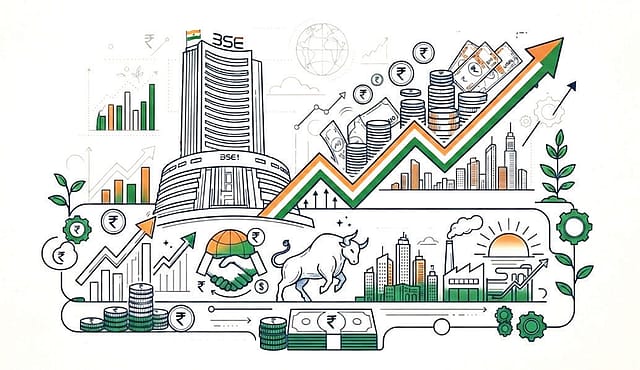
AT INDEPENDENCE IN 1947, India inherited a drained, agrarian economy scarred by colonial extraction and widespread poverty. The early decades were defined by state-led planning, import substitution and the ambitious architecture of Five-Year Plans aimed at growth, self-reliance and equity. Yet, financial freedom for ordinary Indians remained elusive—credit was scarce, markets were closed, and opportunity was rationed by licences.
The turning point came in 1991, when a balance-of-payments crisis forced sweeping reforms. Finance Minister Manmohan Singh’s Budget dismantled much of the Licence Raj, devalued the rupee, cut tariffs and welcomed foreign investment. Liberalisation unleashed private enterprise, expanded consumer choice and set India on a high-growth trajectory.
Post-1990s, India’s financial sector deepened and diversified. Capital markets opened, mutual funds and insurance products multiplied, and a new generation of retail investors began participating in equities and debt. Digital infrastructure—Aadhaar, UPI and the India Stack—revolutionised payments, banking and government service delivery, dramatically lowering the cost of financial inclusion. Today, India’s financial system is stable, increasingly digital and globally integrated, even as regulation by the RBI and the Finance Ministry remains tight.
Yet, financial freedom is more than macro milestones. For households, it means control over time and choices: enough residual income to meet lifestyle expenses without constant stress. Practical steps now taught in India’s personal finance playbooks include tracking expenses, building six-to-nine months of emergency savings, securing insurance, investing consistently via SIPs, and eliminating high-interest debt.
India’s macro story is one of grit and reinvention—from famine to forex surpluses, telegrams to terabytes. By 2025, the economy crossed the $4-trillion GDP mark, becoming the world’s fourth-largest. But challenges persist—inequality, inflation, bad loans and regulatory hurdles still shape the trajectory.
Financial freedom since Independence, then, is a tale of two arcs: a nation that moved from scarcity to scale, and citizens learning to harness markets, technology and discipline to claim their own economic sovereignty.