#UNTOLD | Cars24, Vikram Chopra & The Man He Refused To Become
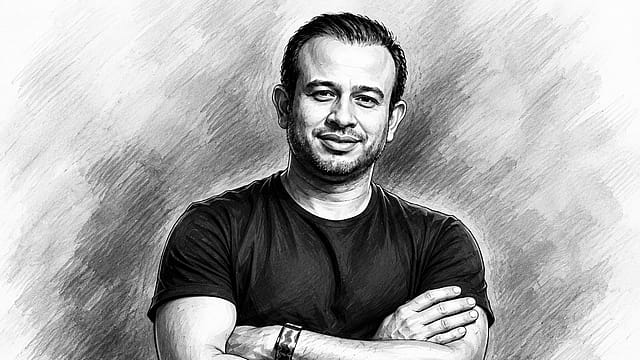
There are failures that empty your bank account. There are failures that end friendships. And then there are failures that force you to ask a far more uncomfortable question: Who have I become?
For Vikram Chopra, that moment had nothing to do with Cars24.
It came years earlier. He was building his first company, FabFurnish. The business was growing. The pressure was mounting. Somewhere along the way, his relationship with his friend and cofounder, Vaibhav, began to come apart.
At the time, it felt like a business disagreement. Years later, it no longer looked that way. The arguments. The decisions. The disagreements. Most of those would eventually fade. One realization wouldn't. "I had created the situation for him to leave," Chopra confesses.
The sentence is striking not because it assigns blame, but because it refuses to avoid it.

Losing Memory
16 Oct 2026 - Vol 05 | Issue 42
The making of a medical and social emergency
For a long time, Chopra had believed he was fighting to build a company. Looking back, he realized he had been fighting something else entirely. He had become the kind of adult he had promised himself, as a child, he would never become.
To understand that promise, you have to travel to a small town in Uttar Pradesh. Long before Cars24. Long before IIT. Long before investors, boardrooms and billion-dollar valuations. There, a frightened little boy couldn't understand why grown-ups found it so difficult to leave children out of their wars. Relatives fought, children got caught in the middle, and adults said things they could never take back.
Chopra rarely understood the reasons. He understood the feeling. Watching from the sidelines, he made himself a quiet promise: I don't ever want to become like this.
Children make promises like that all the time. Most forget them. Chopra spent the next four decades trying to keep his.
Years after FabFurnish had disappeared and both founders had moved on, he opened his laptop and wrote an email to Vaibhav. Nobody had asked him to. There was no need. No lawyer suggested it. There was no pressure. No investor asked for it. There was nothing left to negotiate. Chopra simply apologized. That email explains more about Chopra than any funding announcement ever could.
If you want to understand how Cars24 was built, you can study the company. But if you want to understand the man, you have to begin much earlier. With a frightened child, a failed video cassette shop, an apology written years too late, and a question that has quietly shaped every important decision of his life.
Vikram Chopra's Childhood: The Promise That Shaped the Cars24 Founder's Life
Long before Chopra learnt how to build companies, he learnt how to watch people. That education began at home.
He was born in Lucknow, but before long the family moved to Raebareli, where his father was trying to build a business of his own. The first venture was a printing press. It didn't survive. Years later came a video cassette library. That, too, would eventually shut down. Between those attempts lay years of uncertainty, borrowed money and the quiet anxiety that settles over a household when every month feels like a fresh negotiation.
One of Chopra's earliest memories has nothing to do with toys, birthdays or school. He remembers sitting on the low boundary wall outside his house while two men stood nearby demanding money from his father. He doesn't remember the conversation. He doesn't remember the amount. He remembers feeling scared enough to cry.
He must have been six or seven. Children rarely understand debt. They understand fear immediately. The creditors eventually left. Life moved on. But the scene never quite did. Years later, Chopra would struggle to remember why his father's businesses had failed. What stayed with him instead was something far more enduring: Integrity.
The video library arrived at the worst possible time. Film studios had begun delaying official cassette releases after theatrical runs, hoping to protect box-office collections. Pirated copies flooded the market almost overnight. Most video libraries stocked them. Customers wanted the latest films, not lectures on ethics.
His father's shop never did. He refused to rent pirated cassettes. By the time the original versions arrived weeks later, the audience had already watched the film somewhere else. It was a terrible business decision. It was also an unforgettable life lesson. "I don't think I remember the business failing," recounts Chopra. "What got etched into me was the integrity."
That sentence explains more about him than any leadership framework ever could. Failure disappeared with time. Integrity didn't.
If his father was teaching him values without intending to, his mother was teaching him something else entirely: Persistence. When the family's finances grew tighter, she took up a job as a schoolteacher. The work didn't end when she returned home. Every evening, answer sheets followed her to the dining table. She checked them one by one. Sitting beside her was a young Chopra, still a student himself, helping tally marks and turn pages.
Nobody announced it as responsibility. Nobody called it character building. It was simply what the family needed. Looking back, Chopra doesn't remember feeling burdened by any of it. That is perhaps the most remarkable part of his childhood. There is almost no trace of self-pity in the way he tells these stories. When summer vacations arrived, there were no holidays in the hills. No family trips. Most of his friends disappeared to visit relatives. Raebareli emptied into the scorching heat of a North Indian summer.
He stayed back. With little else to do, he picked up the textbooks for the next academic year and started reading them. There was no exam around the corner. Nobody pushed him to get ahead. He was simply curious. By the time school reopened, he had often finished large parts of the syllabus. He remembers borrowing second-hand books from seniors since buying new ones every year wasn't always practical. He remembers reading chapters well beyond his class. The questions interested him. Marks were almost incidental. "I studied because there was nothing else to do," he says with a laugh. It sounds almost casual. It wasn't.
Without realizing it, Chopra was developing the habit that would define him decades later. Achievement was almost incidental. Curiosity was what kept pulling him forward.
There is another story he tells, almost in passing. One morning, his mother had to leave early. Before leaving, she reminded him that his father's lunch was packed and waiting. Make sure he takes it, she said.
He forgot.
By the time he remembered, his father had already left. Someone suggested sending the lunch by rickshaw. That would cost money. So, Chopra picked up the tiffin and started walking. He was eight or nine. The distance felt endless. Somewhere along the way, someone who knew the family spotted him and offered him a ride for the last stretch. When he finally handed over the lunchbox, he wasn't trying to be extraordinary. He was trying to fix a mistake.
What stayed with him wasn't the walk. It was the instinct to quietly make things right.
By the time the young lad left Raebareli, he carried very little with him in material terms. But he left with an operating system that had already begun taking shape. Integrity mattered, curiosity became a habit, and responsibility arrived early. And perhaps most importantly, every difficult experience offered a choice. You could become bitter. Or you could decide, quietly and privately, that when your turn came, you would choose differently. Chopra would spend the next three decades discovering how difficult that promise really was.
How IIT Changed Vikram Chopra More Than It Changed His Career
By the time Chopra reached Class XI, Raebareli had become too small for his ambitions.
If he wanted to crack the IIT entrance examination, Chopra knew he had to leave. Not forever, but long enough to give himself a better chance. After Class XII, he moved to Sanghinagar, on the outskirts of Hyderabad, where his parents had shifted for work. The day began long before sunrise. Around 4:30 every morning, Chopra boarded a bus that was usually filled with fish vendors, vegetable sellers and other daily commuters heading into Hyderabad. He would spend the day at coaching classes before making the journey back home late in the evening. By the time he returned home, there was little energy left for anything except preparing for the next day.
Chopra remembers the journey. He doesn't remember complaining about it. Looking back, that is one of the recurring patterns in his life. He rarely tells stories in the language of sacrifice. He simply tells you what needed to be done.
Then he did it.
The journey wasn't as straightforward as it now sounds. Chopra didn't clear the IIT-JEE on his first attempt. He came back, tried again and eventually made it into IIT Bombay. His mother's reaction stayed with him far longer than his own. She cried. He went to sleep.
It is an almost absurd image. One of the most competitive examinations in the country had just changed the trajectory of his life. His family understood the magnitude of the moment immediately. Chopra, somehow, did not. Perhaps because he had already begun looking ahead. Or perhaps because, at eighteen, he still didn't fully understand what IIT represented.
He would soon find out.
Until then, Chopra had spent most of his life being the brightest student in the room. IIT rearranged that certainty within days. His classmates came from schools he had only heard about. Many spoke fluent English. Some seemed impossibly confident. Others solved problems with a speed that left him wondering whether he had somehow reached the wrong campus.
For the first time, being the smartest person in the room was no longer something he could assume. "I felt like an idiot," he says, laughing at the memory today.
There is no embarrassment in the admission anymore. Only perspective.
He wasn't alone. Somewhere on campus, he found another student trying to find his footing in exactly the same way: Gajju. The friendship would outlast college, but what mattered at the time was much simpler. Neither of them felt they had to pretend. The insecurity that had arrived with IIT became easier to carry when someone else admitted to feeling it too.
If Raebareli had taught him curiosity, IIT taught him humility. Instead of trying to prove he belonged, he began doing what came naturally to him. He watched. He listened. He learnt. His classmates became textbooks. The people who intimidated him also fascinated him. He wanted to understand how they thought. How they communicated. How they solved problems.
Years later, Chopra would actively seek mentors for exactly the same reason. The habit began here, in the corridors of IIT Bombay.
There was one more lesson waiting for him outside the classroom.
By his third year, Chopra had thrown himself into campus life with the same energy he once reserved for textbooks. He became hostel secretary. Later, he had the opportunity to become institute secretary, but there was a catch. He couldn't hold that position and lead Mood Indigo at the same time. He chose Mood Indigo instead, eventually heading IIT Bombay's iconic cultural festival, one of the largest student-run events in the country.
Almost without noticing it, the boy who had once struggled to find his voice was now leading thousands of students.
Recognition came gradually. One day he noticed people already knew his name. His opinions carried weight. Doors opened more easily. Leadership, he discovered, could be intoxicating. One episode stayed with him. In December 2004, after the Indian Ocean tsunami, there were calls to cancel celebrations across the country. Mood Indigo was among the events caught in the debate. Chopra believed cancelling the festival would achieve little. Instead, he proposed something else: Turn it into a fundraiser.
The idea wasn't immediately welcomed. There were disagreements. Permissions had to be secured. Plans had to be redrawn almost overnight. Eventually, the event went ahead, raising money for relief efforts instead of abandoning the platform altogether. Looking back, the episode revealed something important about him. When someone told Chopra that something couldn't be done, his first instinct wasn't to retreat. It was to ask why. That instinct served him well. But it also got him into trouble.
Confidence came easily. So did certainty. Years later, reflecting on those years, Chopra would admit that the confidence he had built at IIT slowly crossed an invisible line. Without realizing it, he had begun believing that being convinced was the same as being right. The boy who had arrived in Delhi eager to learn was still there. But another version of him had started taking shape too. He just hadn't met him yet.
FabFurnish, Ego and the Friendship That Changed Vikram Chopra
The first time Chopra built a company, he also began dismantling a friendship.
Looking back, he doesn't remember the exact meeting where things started going wrong. There wasn't one. Relationships rarely fall apart in dramatic moments. They weaken quietly, one conversation at a time.
FabFurnish had brought together three founders with very different personalities. Chopra often describes the equation with a smile. "Vaibhav was a love marriage," he says. "Mehul was an arranged marriage."
It sounds like a joke. It isn't. It is his way of explaining that businesses are built by people long before they are built by strategy. Companies inherit the strengths, insecurities and blind spots of the people who create them.
As the company grew, so did the pressure. Decisions became bigger. Disagreements became sharper. The certainty that had once helped Chopra persuade people slowly became something else. He argued harder. He listened less. And, like many young founders discovering success for the first time, he mistook conviction for clarity.
At the time, none of it felt unusual. He believed he was protecting the company. Years later, he realised he had been protecting something else: His ego.
The relationship with Vaibhav eventually reached a point where it could no longer continue. Most founder stories stop there. A disagreement. A split. Two people moving in different directions.
Chopra's story begins there. For years, he told himself the version most people tell after a difficult separation. Circumstances had been complicated. Everyone had made mistakes. Time had simply taken its course.
Then something shifted.
Distance has a peculiar way of changing memory. The further he moved from FabFurnish, the less interested he became in asking who had been right. Instead, he found himself asking a different question: What had I done wrong?
The answer unsettled him.
"I had created the situation for him to leave," he says. It is one of the most revealing sentences he utters during our conversation. Not because it settles history. It doesn't.
Every partnership has more than one truth. What makes the sentence remarkable is what it reveals about the man saying it. He had spent years looking at the relationship through the lens of fairness. He began looking at it through the lens of responsibility. Those are not the same thing. Fairness asks whether everyone shared the blame. Responsibility asks what you could have done differently.
Years after both men had moved on, Chopra opened his laptop and wrote an email to Vaibhav. He apologised. Not for everything that had happened but for the part that belonged to him. Something changed after that. The need to win every argument began giving way to something more useful: The need to understand it.
Around the same time, another habit became more deliberate.
Why the Cars24 Founder Started Looking for Gurus Instead of Answers
Whenever Chopra met someone who was better than him at something, he stopped seeing them as competition. He started treating them as teachers. It wasn't networking. It wasn't mentorship in the fashionable startup sense. It was apprenticeship.
Rajeev Jain, Deepinder Goyal, other founders, business leaders, investors...whenever he found someone whose thinking he admired, he wanted to understand how they arrived at their conclusions. The intent was not to copy them but to study them. He often says that once someone became his "guru", he tried to learn everything he could from them.
The word is revealing. A guru isn't someone you imitate. A guru is someone who helps you see what you cannot yet see yourself.
That distinction mattered. Because Chopra had slowly realised that success had made him increasingly confident in his own judgement. The only antidote was to keep placing himself in rooms where he wasn't the smartest person anymore. He had experienced that feeling once before. On his first day at IIT. Now he began seeking it out. The pattern had come full circle.
As Cars24 grew from an idea into one of India's most closely watched startups, Chopra found himself leading larger teams, making bigger decisions and carrying responsibilities that were impossible to delegate.
The company was scaling rapidly. So was the work of questioning his own instincts. Because somewhere in the background, the promise made by a little boy in Raebareli still hadn't stopped echoing: Don't become that man.
Success changes the scale of your decisions. It doesn't automatically change the person making them. That, Chopra would discover, requires a different kind of work.
By then, Chopra was leading a business that had grown far beyond its early ambitions. Thousands of employees looked to the founders for direction. Investors demanded answers. Every decision carried consequences that stretched far beyond a meeting room.
Pressure had become part of the job. So had criticism.
One morning, a media report questioned Cars24's future, suggesting the company was running out of steam. It was the kind of headline capable of unsettling employees, irritating investors and provoking an emotional response from any founder who had spent years building the business.
Why Vikram Chopra Believes Becoming Better Matters More Than Becoming Successful
Years earlier, Chopra might have reacted differently. He might have argued, defended, explained. Instead, he let the story pass. The headline mattered less than what it stirred in him. The more responsibility he carried, the more he realised that leadership had less to do with having the right answers than with managing the first emotion that arrived. That emotion was still there. He never pretends otherwise.
Even today, there are moments when someone says something he believes is unfair. Someone underperforms. A conversation becomes difficult. The first instinct still appears, almost on cue. Push back. Prove the point. Win the argument.
The difference is what happens next. He notices it. Pauses. And asks himself a question that has become almost instinctive. Why am I reacting this way?
Years ago, that pause didn't exist. Now it does. It is only a few seconds long. But entire relationships can change inside those few seconds.
There is another moment that captures the distance he has travelled. As Cars24 evolved, some co-founders moved on to pursue different paths. In the startup world, such departures often become stories of betrayal, legal disputes or public acrimony. It has become almost an accepted script.
Chopra refused to follow it. The friendships remained. The conversations continued. There was no attempt to erase people simply because their journeys had diverged.
Years after FabFurnish, he ran into Vaibhav again. There was no awkwardness. No carefully rehearsed politeness. Just two people who had once built something together, carrying more understanding than resentment. The apology had not rewritten history. It had simply allowed both men to stop living inside it.
That, perhaps, is the quiet thread running through Chopra's life. He has never been particularly interested in winning arguments that cost him relationships. He has become increasingly interested in understanding the version of himself that shows up when those relationships are tested. The companies he has built will eventually be measured through revenue, valuation and market share.
Those numbers explain the company. But they say very little about the man who built it.
The harder story began decades earlier on a boundary wall in Raebareli, where a frightened little boy watched adults let anger get the better of them. It travelled through a video cassette shop that chose integrity over convenience, a classroom that rewarded curiosity, an IIT campus that humbled him, a friendship that he nearly lost to his own certainty, and a company that demanded he become a different kind of leader.
It is a story with no neat ending. Because Chopra doesn't speak about self-improvement as though it were an achievement waiting to be unlocked. He speaks about it as a practice. Something that can slip. Something that must be renewed. Every day.
Perhaps that is why, after more than two decades of entrepreneurship, Chopra rarely talks about becoming successful. He talks about becoming better.
The distinction is easy to miss. For him, it has made all the difference.