No conflicting interests in funding deep tech projects, says Govt
The Technology Development Board (TBD) under the ministry of science and technology on Friday said it has a stringent policy in place to ensure that “conflict of interest” does not vitiate the selection process for funding and promotion of indigenous deep tech, space capabilities and advanced computing.
Rebutting a media report that members of the TDB investment committee had links to proposals approved for funding that raise conflict of interest issues, the Board said a comprehensive policy screened interests of those approving or recommending funding. The Board also said rules regarding conflict of interest were not recent and were in place even when the United Progressive Alliance (UPA) was in office.
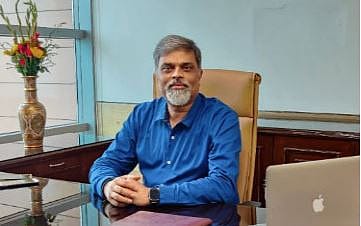
“We have a stringent policy regarding conflict of interest. It covers both `positive COI’ and `negative COI’ and all members of the investment committee have adhered to the rules set out for them,” TBD secretary Rajesh Kumar Pathak told Open. He said positive COI relates to a member’s direct involvement in a company applying for funding. “The member could be a founder, a CEO or a share holder,” Pathak said.

Zeroing In on ECI
09 Oct 2026 - Vol 05 | Issue 41
Constitutional legitimacy versus political opportunism
The negative COI rules could mean a member with a connection to a fund which invests in a particular entity and this requires the person concerned to recuse from any discussion on a related application for funding. “In both cases, in a positive COI and a negative one too, the member of the investment committee is required to recuse from the proceedings of the committee,” Pathak said.
In fact, a member who is connected to a firm working in a particular area will not be part of the deliberations in the application relates to a “rival” concern.
Further a two-third vote, or a “super majority,” is needed for the investment committee to recommend a proposal that is then considered by the TBD which is headed by the DST secretary and has five other secretaries as members besides domain experts. “The investment committee does not take the final decision. The TBD may refer a proposal back for clarifications and more information,” said Pathak.
The inclusion of persons with a background in investment and finance relating to the sector where funding is being provided is needed to ensure expertise. While conflict of interest cannot be avoided in some cases, the rules are framed in a manner to ensure that such instances do not impair decisions relating of funding of projects singled out as a national priority.
The funding under the ₹1 lakh crore Research, Development and Innovation (RDI) fund of the Anusandhan National Research Foundation (ANRF) is a key initiative to seed and promote development of critical technologies. The ANRF was announced in the interim Budget of 2024-25 after the Modi government returned to office for a third term.
Proposals were invited in February, 2026, and around 220 applications were received and pf the first bunch of 51, the TBD approved 22. The Board further considered 48 proposals and a decision is awaited on 14 of them.