India-Italy trade: Piyush Goyal pushes fast-track clearances as both countries target €20 billion
A product can be ready for export, a buyer can be waiting and a business deal can be within reach. But lengthy certification procedures and regulatory clearances can still hold up the shipment. India and Italy now want to tackle precisely this problem.
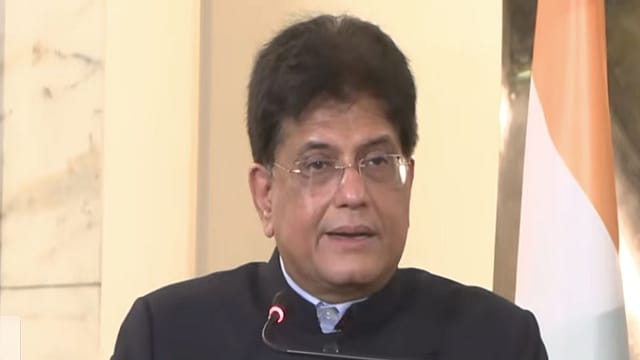
During his visit to Rome on November 18, Union Commerce and Industry Minister Piyush Goyal announced that the two countries were working towards a fast-track mechanism for regulatory approvals and certifications. Speaking alongside Italian Deputy Prime Minister and Foreign Minister Antonio Tajani, Goyal said the aim was to make market access smoother for businesses on both sides.
"We are working together to create a pathway that will help Italian businesses get any certifications or any approvals that may be required in India on a fast track basis and likewise are looking for the European Union and Italy to fast track the regulatory approval of many items that require very long drawn out approval processes in Italy," he said.

The Wealth Issue 2026
06 Nov 2026 - Vol 05 | Issue 45
Portraits of Dreamers and Doers under 35
The proposal comes as India and Italy seek to turn closer diplomatic ties into stronger commercial partnerships.
Why are India and Italy pushing for faster regulatory approvals?
For businesses exporting goods, tariffs are only one part of the challenge. Products may also need to meet technical standards, obtain safety certifications and secure regulatory clearances in the destination market. When these processes take too long, they can increase costs and delay market entry.
Goyal said India was seeking reciprocal support from Italy and the European Union to speed up approvals for Indian products. He added: "We believe that while we have also provided for fast tracking such approvals in the free trade agreement. We can bilaterally also between Italy and India support this effort."
The minister also assured Italian businesses that companies seeking approvals for manufacturing facilities in India would not face obstacles in accessing the Indian market.
How does the India-EU free trade agreement fit into the plan?
The proposed mechanism comes against the backdrop of the India-EU free trade agreement, whose negotiations were concluded in January 2026. However, the agreement is not yet in force. The European Commission says it still requires the necessary approval, signing and ratification procedures.
The agreement is expected to reduce trade barriers, simplify procedures and open new export opportunities. According to the European Commission, the EU and India already trade more than €180 billion in goods and services annually.
India and Italy have their own ambitious target. During Prime Minister Narendra Modi's visit to Italy in May 2026, the two countries elevated their relationship to a Special Strategic Partnership and agreed to increase annual bilateral trade to €20 billion by 2029.
Why is India seeking access to Europe's waste and scrap market?
Another important issue raised by Goyal concerns India's eligibility to receive certain waste and scrap materials generated in Europe.
Under the European Union's revised Waste Shipment Regulation, non-OECD countries will face tighter restrictions on imports of non-hazardous waste from May 21, 2027. Countries seeking exemptions must demonstrate that they can manage the imported material in an environmentally sound manner.
India has applied for inclusion in the European Commission's eligibility process. However, the Commission's September 2026 draft assessment did not recommend India for authorisation to import ferrous and non-ferrous metal waste, although it proposed allowing certain other waste streams. The final list is expected by November 21, 2026.
This matters to India's recycling and metal industries, which rely on scrap as an industrial input. The issue has also drawn attention because the European Commission's proposal could restrict India's access to European metal scrap.
Which sectors could benefit from stronger India-Italy cooperation?
Tajani highlighted artificial intelligence chips, space and defence as areas where technology partnerships could expand. He also pointed to Italy's industrial strengths, saying: "We have a very wide range of products here. So we're very nimble, very flexible. We can cater to any request from India."
Steel is another area where he sees opportunities for Indian businesses.
The discussions are part of the 23rd India-Italy Joint Commission for Economic Cooperation, co-chaired by Goyal and Tajani. The Indian government said around 80 Indian business leaders and startups were participating in the India-Italy Business and Innovation Forum in Rome.
The stakes are already visible in trade figures. India's exports to Italy rose 29.9 per cent to $3.92 billion between April and August 2026, compared with the same period a year earlier, according to the Commerce Ministry.
Goyal's visit also included meetings with Italian business leaders to explore investment, technology transfer and joint ventures in sectors such as aviation, clean energy, healthcare and manufacturing.
The larger challenge now is implementation. Faster clearances, predictable rules and stronger industrial partnerships could help businesses move beyond diplomatic announcements and turn the India-Italy trade target into a more achievable commercial reality.
(With inputs from ANI)