Will UPI Stay Free? Payments Council Clears the Air on MDR, Merchant Charges and Consumer Fees
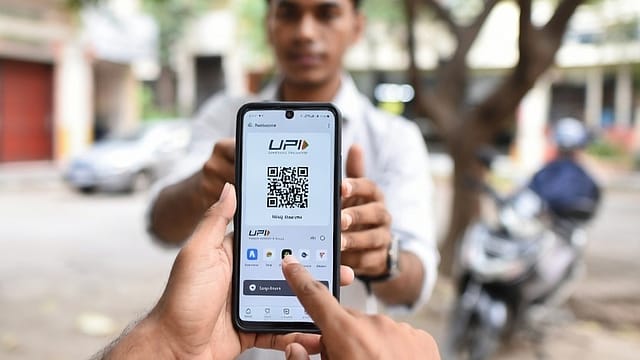
The rapid passage of amendments to India's payment laws triggered speculation that UPI users could soon have to pay transaction fees. The buzz intensified after the government empowered itself to levy a Merchant Discount Rate (MDR) on select digital payment modes.
Now, the Payments Council of India (PCI) has stepped in to end the confusion.
The industry body has categorically said that UPI will continue to remain free for consumers, while assuring that small merchants, kirana stores and neighbourhood businesses will not be charged for accepting UPI payments.
The clarification comes as India debates how to fund the world's largest real-time payments network without affecting the millions who rely on it every day.
Rise of the Pivotal Power
18 Sep 2026 - Vol 05 | Issue 38
The BRICS declaration is a strategic victory for Modi
According to the PCI, consumers will continue making UPI payments without paying any transaction fee. The Council stressed that discussions around Merchant Discount Rate (MDR) relate to commercial arrangements between payment service providers and larger merchants, and do not translate into charges for consumers.
It also emphasised that small merchants remain fully protected. Kirana stores and neighbourhood businesses will continue accepting UPI payments without paying MDR, preserving the inclusiveness that has fuelled UPI's explosive growth.
The clarification follows Parliament's passage of the Taxation and Other Laws (Amendment) Bill, 2026, which enables the government to levy MDR on select electronic payment modes. Reports have suggested that business-directed UPI transactions above ₹2,000 could attract an MDR ranging from 0.25% to 0.4%, although person-to-person transactions remain outside its scope.
PCI said the discussion is not about charging users but about ensuring the long-term sustainability of a platform that has become critical national infrastructure.
Since its launch in 2016, UPI has evolved into the world's largest real-time payment system, processing billions of transactions every month. Maintaining such a network requires continuous investment in technology, cybersecurity, fraud prevention, customer support, compliance and innovation. At present, these costs are largely borne by banks, fintech firms, payment companies, the National Payments Corporation of India (NPCI) and other ecosystem participants.
The Council said these investments continue every day to keep the platform secure, resilient and available round the clock.
It also sought to reassure consumers that merchant service charges, wherever applicable, are standard commercial arrangements seen across digital payment ecosystems worldwide and should not be confused with user fees.
The message from the industry body is clear: the debate is about who funds the infrastructure behind UPI—not about making consumers pay to use it. For hundreds of millions of Indians who use UPI every day, the Council says the experience will remain exactly what it has always been: fast, seamless and free.
(With inputs from ANI)