Inside Smartworks: How Neetish Sarda Turned a Risky Office Leasing Bet into a Managed Campus Giant
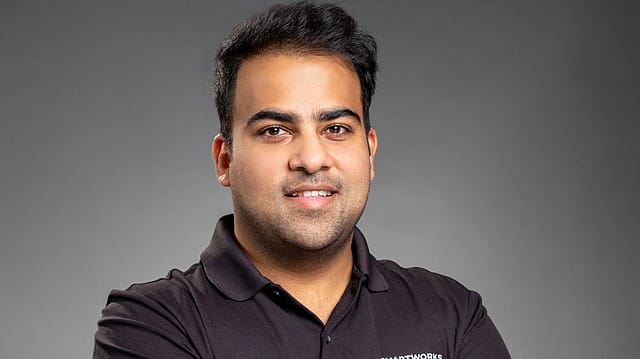
Neetish Sarda’s first problem was getting a building. His next was explaining why anyone should give him one.
Smartworks wanted to lease large properties, fit them out and offer offices to enterprise customers. To Sarda, the arrangement solved a practical problem: companies needed workplaces, but finding, building and operating them consumed money and management attention. Someone else could take responsibility for that work.
For a landlord, however, the proposal concentrated risk. Instead of leasing different floors to several tenants, the owner would depend on one young company. If Smartworks failed to attract customers, the rent would still be due.
“Why should I put all my eggs in one basket?” Sarda remembers being asked.

Zeroing In on ECI
09 Oct 2026 - Vol 05 | Issue 41
Constitutional legitimacy versus political opportunism
That disagreement defined the company’s early years. Sarda needed properties to demonstrate that his model worked. Property owners wanted evidence before committing their buildings.
Between 2017 and 2019, he approached individual owners when larger institutions proved difficult to persuade. He estimates that, of 50 landlords approached, perhaps five would agree. His response was to increase the number of conversations.
It was a workable strategy, although an exhausting one. More meetings could improve his chances of securing a building. They could also expose him to more reasons his business might fail.
Rallying His Team Behind the Vision
Some of those reasons came from his own office.
Sarda had recruited people with experience in real estate and workplace businesses. Several questioned whether a company needing 500 seats would buy from Smartworks. At that size, why wouldn’t it simply create an office of its own?
Their objection mattered. These were the people he needed to sell and deliver the service.
Sarda believed an enterprise could benefit from outsourcing the work of setting up and managing its office. His recruits were accustomed to a market in which larger requirements often meant companies making their own arrangements. Before Smartworks could persuade customers to change their behaviour, he had to persuade his team that they might.
The experience complicated the familiar advice to surround yourself with people who know more than you do. Their knowledge was valuable. Their assumptions still needed examining.
Sarda was examining his own assumptions, too.
“100 times I doubted,” he says of those early years.
He repeatedly gave himself more time to find out whether the business could become substantial. That willingness to extend the experiment would become a recurring feature of his decisions. So would the need to commit money before he could be certain of the outcome.
A Much Larger Commitment
One property negotiation ended when a landlord increased the asking rent on the day of signing. Sarda walked away.
A broker suggested another building in Bengaluru, where 40,000 square feet was available—twice the space he had originally sought. Sarda liked it and invited his father, who was visiting the city, to take a look.
His father suggested taking the entire building.
That meant 300,000 square feet. Sarda estimates that the investment required would rise from roughly ₹4 crore for the original, smaller property to about ₹55 crore for the whole building.
He took it.
His father’s encouragement carried particular weight for someone who had chosen the uncertainty of building something new over the security of the family business. Sarda says the family provided roughly ₹100 crore during the early stages, in instalments as the business developed. He had grown up around the family’s jute mills, where large operations were familiar. But Smartworks required him to learn a different business, and the capital demands of a rapidly scaling operation made each conversation about funding a test of conviction.
Family backing gave him the means to persist. It did not settle the question of whether the venture deserved that persistence.
The same developers who had once refused him would eventually lease him their largest buildings. Winning over institutional investors presented another challenge.
A developer already possessed property, operating experience and an established organisation, they argued. What prevented such a company from providing the same service?
Sarda counts 50 to 60 investors—venture-capital, private-equity and strategic—who did not see what he saw during his fundraising journey. Smartworks was often assessed within a broad coworking category, alongside businesses whose customers and operating choices differed from its own. Explaining those differences became part of the job.
When Funding Arrived, So Did New Obligations
Keppel Land invested in late 2019. Sarda recalls the amount as roughly ₹175 crore.
After more than two years of trying, Smartworks had institutional backing. The company committed to several additional properties between the investment and March 2020.
Then lockdown changed the calculation.
Landlords still expected rent. Customers sent employees home. Smartworks’s salespeople were also working remotely, trying to sell physical space that prospective clients had little reason to visit.
Sarda considered whether the company could develop a technology offering or combine office space with an online service. He remembers recurring discussions about downsizing.
He also felt a new responsibility. Beyond the family capital already invested, an institution had entrusted money to the business.
The hardest part, he says, was “cluelessness”. He could not tell whether the disruption would last months or years. He recalls anxiety and rising blood pressure, alongside the repeated question: “Will this ever recover?”
During lockdown, he returned from Bengaluru to stay with his parents in Kolkata. The family’s manufacturing business was performing well, and his father suggested he consider joining it.
Sarda chose to give Smartworks another eighteen months.
He remembers making a similar commitment to himself during the earlier struggles with landlords and fundraising. The deadline gave him a period in which to keep working, even when he could not confidently predict the outcome.
What emerged during that period was a different set of customer requirements.
Learning From Smaller Requirements
The customers still considering offices were demanding less space and lower costs.
Sarda illustrates the negotiations with a company reducing its requirement from 100,000 square feet to 20,000, while also expecting a lower price per square foot. Other customers wanted smaller offices in different parts of a city.
Those demands forced Smartworks to reconsider its costs and the flexibility of its offering. The company had to make the service attractive to businesses reassessing how much office space they needed and where they needed it. As demand returned, that work helped Smartworks respond.
“That is where our actual business got formed,” Sarda says.
The enterprise focus itself predated the pandemic. Smartworks had begun with coworking, but Sarda found the turnover among smaller clients difficult: struggling customers could leave because they could no longer afford space; successful ones could leave to establish their own offices.
The company moved towards larger enterprise requirements and campuses it could operate as a whole. Today, Sarda describes Smartworks as a “managed campus platform”.
The distinction concerns what it provides and whom it serves. Alongside offices, its campuses offer facilities such as cafeterias, gyms, crèches and medical rooms. The aim is to give enterprise customers a consistent service across locations.
By June 2026, Smartworks reported 10.4 million square feet of operational space. Customers taking 1,000 seats or more accounted for about 41 per cent of rental revenue. The demand his early recruits had questioned was now a substantial part of the business.
The Difficulty of Saying No
Smartworks listed in July 2025. For FY2026, it reported revenue from operations of ₹1,795.6 crore and net profit of ₹10.5 crore. The profit margin remained thin, but the company had moved well beyond its early struggle to establish whether the model could attract large customers. A conviction few initially shared had become a substantial business.
Sarda’s task now includes refusing some of the demand he once worked so hard to secure.
A customer may be willing to take space and pay for it. Accepting the deal can nevertheless pull the company towards a type of business it has chosen not to pursue. Quarterly reporting adds pressure to meet immediate targets.
He wants Smartworks to retain a clear identity. That requires employees to understand which opportunities fit, and managers to resist easy revenue when it weakens the proposition.
That identity also shapes how he responds to a request from some of his own employees: to work from home.
Sarda sees the irony immediately. He laughs when he tells the story, but his response is rooted in the nature of the business. A hotel cannot be operated entirely from home, he argues, and neither can a managed office campus. Many roles require people to be present because customers and buildings need their attention on site.
The request is also a reminder of how far the conversation has moved. Sarda once wondered whether people would return to offices at all.
Today, Smartworks is helping companies create workplaces designed around how their people work, connect and collaborate. For a business built on a belief few initially shared, that may be the clearest measure of how much has changed.