#UNTOLD | 60%, 40% & the Anika Parashar Story
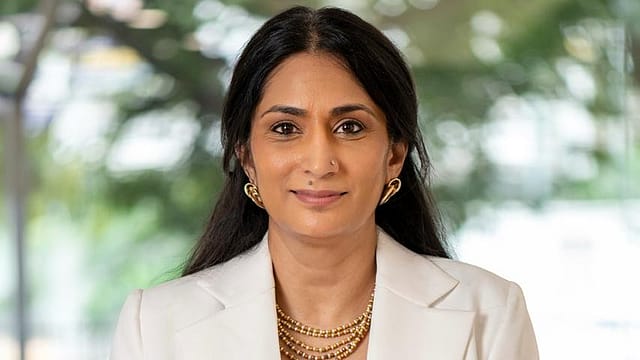
"You took my father."
"You took my mother."
"You took my marriage."
"Now you're taking this too?"
It wasn't a prayer. It was a woman putting God in the dock.
By 2023, Anika Parashar had stopped asking investors for money. She had started asking God for answers.
At the lowest point of her entrepreneurial journey, she turned to Jyotish (astrology), not because she was looking for miracles, but because she was searching for meaning. Her guru told her something she has never forgotten: sixty per cent of life may be written by destiny, but the remaining forty per cent is yours to shape. She decided to fight for that forty per cent. The rituals didn't solve her problems. They gave her the strength to face them.
Three years earlier, the future had looked very different.
On March 8, 2020, she launched The Woman's Company, a women's wellness startup built around safer, biodegradable menstrual hygiene products. Fifteen days later, India went into lockdown.

Flood and Fury
04 Sep 2026 - Vol 05 | Issue 36
Devighat, Nepal, August 29, 2026
The timing couldn't have been worse. Pads weren't classified as essential goods. Warehouses shut. Supply chains froze. Women still needed sanitary products, so Parashar found herself driving through red zones, carrying pads herself. Every sunrise demanded another improvisation.
Against the odds, the company survived.
In 2021, it raised $1.4 million. The team grew to 140 people, the mission found believers, and Facebook backed a ₹1-crore campaign around pregnancy loss. Celebrities such as Priyanka Chopra, Soha Ali Khan and Dia Mirza supported the brand without charging a fee. Then, in a single night, nearly 300,000 women came together to share stories of grief and healing. For a while, it seemed the hardest years were finally behind her.
They weren't.
Three years later, the funding winter arrived. The rules changed almost overnight. Growth no longer mattered. Profitability did. Parashar walked into meeting after meeting carrying the same conviction she always had: women deserved safer menstrual products, and impact would eventually create scale. More than forty venture capital firms, private equity funds and aggregators listened.
Then they asked the same questions.
Was the category too niche?
Were the products too expensive?
Would the business ever scale?
Different rooms, different faces, and the same answer: No.
The company that once employed 140 people slowly shrank until only five remained. The conversations changed too. She wasn't pitching anymore. She was pleading. Unlike many founders who quietly disappeared, Parashar walked into the offices of her creditors. She had nothing left to offer except her word.
"I just can't pay you back right now."
"Give me a chance."
"I am not closing this down."
Then came the sentence she never imagined she would say.
"I can do the dishes."
"Use me for whatever is required."
Years later, she would find a word for that period: Cockroaching. It meant surviving one day at a time and refusing to disappear. Her startup was collapsing.
But this wasn't where the story began.
Life had been dismantling Parashar for nearly two decades, one loss at a time, each blow arriving just after she had gathered herself from the last. To understand why a founder who had once raised millions was now offering to wash dishes to keep her company alive, you have to go back to a phone call from London.
HOW ANIKA PARASHAR’S FATHER’S DEATH CHANGED THE COURSE OF HER LIFE
It was 2006.
The phone rang in London. Parashar was twenty-six, her son was barely six months old, and London had begun to feel like home. Life was settling into a rhythm. Then her brother called.
There wasn't much conversation.
"We need you now."
Her father was dead. He was fifty-six.
Parashar has often described her brother as the love of her life. When he uttered those four words, there was never really a decision to make. She packed her bags, picked up her infant son and boarded a flight to India. She believed she was returning to help her family through its darkest moment before eventually resuming the life she had built overseas.
She never went back. The funeral ended. Her responsibility didn't.
Back in India, grief had barely settled when another crisis arrived. Her mother's heart was failing. Doctors had only one long-term solution: a transplant. Until a donor heart became available, life would be measured in hospital visits, medical reports and hope. Most people, confronted with that uncertainty, would have put everything else on hold. Parashar did the opposite. If life had brought her back to India, she wanted to make the return count.
Months after moving home, she wrote a business plan. It wasn't for a hospital or a startup but for something India barely spoke about then: prenatal and postnatal wellness. She imagined spaces where expecting and new mothers could find information, fitness, lactation support and community long after they had left the delivery room.
The proposal found its way to Mahindra & Mahindra. The company was launching its Mom & Me retail chain and saw promise in her idea. What began as a consulting assignment gradually evolved into something much larger. Over the next three years, Parashar helped build sixty-six Mom & Me stores across India while simultaneously creating Mahindra Mom's Lounge, a first-of-its-kind maternal wellness concept.
The idea was ahead of its time. Women loved the experience. The business struggled. The problem wasn't the concept. It was the location. A mother needing lactation counselling, obstetric physiotherapy or birth education wasn't looking for help inside a retail store. She needed to be where her doctor was. She needed a hospital.
Parashar realised the idea didn't need to be abandoned. It needed a different home. She pitched the concept to India's largest hospital chains. Fortis said yes. The model was reimagined inside Fortis hospitals and launched as Mamma Mia, bringing maternal wellness into a clinical setting where women could access doctors, counsellors and specialists under one roof. For Parashar, it marked the beginning of a journey that would define much of her professional life.
She didn't know it then. But the emergency C-section that had once left her unable to breastfeed had quietly become her first institution. And while she was helping thousands of mothers navigate childbirth, her own family was still waiting for a heart.
HOW A HEART TRANSPLANT INSPIRED THE BIRTH OF ORGAN INDIA
Every morning began the same way: Hope. And every night ended the same way: No call.
For months, Parashar's life revolved around a single uncertainty. Somewhere in India, another family would have to endure its worst day before hers could begin to heal. Her mother needed a new heart. The family eventually moved to Tamil Nadu, where doctors believed they had the best chance of finding a compatible donor. Life shrank to hospital rooms, medical updates and an endless wait that nobody could predict. Every ring of the phone could change everything. Most days, it changed nothing.
The waiting taught Parashar something she had never understood before. In India, illness wasn't always the biggest enemy. Time was. Patients weren't dying because medicine had failed them. Many were dying because the organs that could have saved them never arrived. Families didn't know how to donate. Hospitals struggled to coordinate. Myths travelled faster than facts. Between someone willing to give and someone desperate to receive lay a broken system.
Then, one day, the call finally came. A donor heart had been found. The transplant was successful. Her mother had been given another chance at life. Most families would have closed that chapter and quietly moved on. Parashar couldn't. She couldn't forget the faces she'd seen in those hospital corridors. The families still waiting. The patients who would never receive the call that her family did. She kept asking herself the same question. Why did a country of more than a billion people still know so little about organ donation?
That question became an obsession.
In 2013, she founded ORGAN India, a not-for-profit dedicated to spreading awareness about deceased organ donation, counselling families and helping build a national conversation around a subject most Indians preferred not to discuss. It wasn't a business. There were no investors, no revenue targets and no valuation to chase. Just a promise that another family shouldn't have to navigate the darkness alone.
Looking back, a pattern had begun to emerge. The emergency C-section had led to Mahindra Mom's Lounge and Mamma Mia. Her mother's transplant had led to ORGAN India. Pain, she was beginning to realise, had an unusual way of revealing her life's work.
But life wasn't done testing her. Just as one mission found its purpose, another storm was gathering.
In 2013, she made one of the hardest decisions of her life. She walked away. "I became a single mother with a five-year-old son," she recalls. "That was one of the most difficult phases of my life."
There was no time to dwell on it. Bills still had to be paid. Her son needed her. Work demanded everything she had. So she did what she had always done. Parashar buried herself in work.
Around the same time, Fortis came back with a bigger challenge. Mamma Mia had proved there was demand for specialised maternal care. Now the hospital wanted to think beyond pregnancy. Could women's healthcare itself be reimagined? The answer became La Femme, one of India's first dedicated women's hospitals. It brought together obstetrics, gynaecology, fertility, breast health, mental wellness and preventive care under one roof, challenging the fragmented way women's healthcare had traditionally been delivered. Professionally, she was operating at the highest level of her career. Personally, she was rebuilding her life one day at a time.
Then came another blow.
In 2018, her mother died. The woman whose illness had inspired ORGAN India was gone. For the second time in her life, grief arrived carrying a suitcase. Only this time, it stayed.
For a while, Parashar stepped away. She wasn't short of ambition. She was running on empty. She didn't know it then. The next idea would come from an unexpected conversation with her teenage daughter. And once again, it would begin with a deeply personal problem.
HOW A CONVERSATION WITH HER DAUGHTER LED TO THE WOMAN’S COMPANY
For the first time in years, there was no hospital to build. No campaign to launch. No crisis demanding every waking hour.
Parashar had stepped away from work, telling herself she needed time to breathe. But anyone who knew her understood something else. She had never been good at standing still.
By now, she should have known the pattern. The ideas that changed her life never arrived in boardrooms. They arrived at home. First, it was the birth of her son. Then, it was her mother's failing heart. This time, it was her teenage daughter.
One evening, an ordinary conversation about periods took an unexpected turn. She found herself looking at a packet of sanitary pads with fresh eyes. Parashar had spent years reimagining pregnancy, childbirth and women's healthcare. Yet she had never stopped to ask a simple question. What exactly were women using every month?
The answer unsettled her. The deeper she researched, the more she realised that while conversations around menstruation had become more open, conversations around menstrual products had not. Millions of women used them every month without knowing what they contained or what alternatives existed. She couldn't let the question go. She read scientific papers, spoke to doctors, met manufacturers, and listened to women. The research consumed her.
Soon, another familiar feeling returned: Obsession. It was the same feeling that had once led to Mahindra Mom's Lounge. The same feeling that had led to ORGAN India. This time, it was asking her to build again. Not another hospital or non-profit but a company.
On International Women's Day, March 8, 2020, she finally had a name for it: The Woman's Company. She believed she was launching the next chapter of her life. She had no idea the world was about to shut down.
Years later, Parashar would often think about the pattern.
An emergency C-section became Mahindra Mom's Lounge. A mother's failing heart became ORGAN India. A daughter's question became The Woman's Company. None of them began as business ideas. They began as wounds.
THE 60:40 PHILOSOPHY THAT HELPED ANIKA PARASHAR SURVIVE LOSS
The funding winter tested something deeper than her balance sheet. It tested her faith in people. She had always believed that if you trusted others, they would rise to that trust. Experience had taught her otherwise. There were moments when people disappointed her, moments when they walked away, moments when they chose themselves. Experience had taught her that trust isn't always returned with trust.
At forty-seven, she says she is still learning that lesson. And yet, she laughs. "There is still that sneaky optimist sitting inside me." It is an extraordinary thing to hear from someone who has buried a father, lost a mother, watched a marriage end, and fought to keep a company alive one day at a time. Perhaps optimism isn't something life gives you. Perhaps it's something you decide to protect.
During her darkest days, she found herself turning to Jyotish, not because she believed the stars would rescue her, but because she needed a way to make sense of the chaos. Her guru's words stayed with her long after the rituals ended. She spent the years that followed fighting for her forty per cent.
It explains why she walked into creditors' offices instead of disappearing. It explains why she could look someone in the eye and say, "Give me a chance. I am not closing this down." It explains why she later described that phase with an unusual word: Cockroaching. Not winning or thriving but simply refusing to disappear.
Ask Parashar what her biggest mistake has been, and she won't talk about strategy or fundraising. She'll tell you she trusted too easily. Ask her what she's learned, and the answer is surprisingly similar. She still chooses to trust. Because somewhere beneath the scars, setbacks, and betrayals, she has refused to become cynical.
And yes, maybe God did take her father. And her mother. And her marriage. And eventually, her company. But the Almighty left her something far more valuable: the stubborn belief that every loss can become the beginning of something worth building. At forty-seven, despite everything, there is still, as she likes to say, "that sneaky optimist sitting inside me."