India-US trade deal nears finish line: The tariff advantage India still wants from Washington
The India-US trade deal appears to be entering its final stretch. But there is still one important box to tick before the agreement can move from negotiation table to signed document: making sure Indian exporters get a preferential edge in the US market.
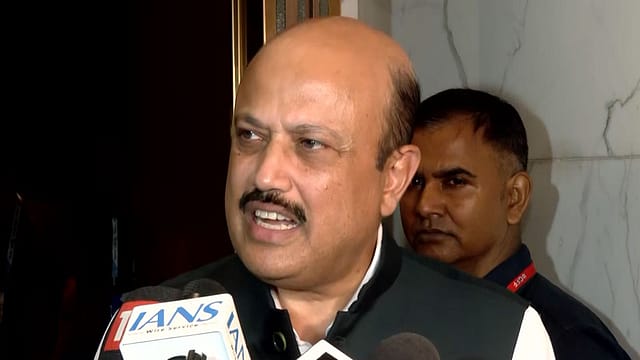
Commerce Secretary Rajesh Agrawal said on Wednesday that the agreement was “more or less” finalised, while cautioning that some issues were still being discussed. Speaking to reporters on the sidelines of the Global Fintech Fest 2026 in Mumbai, Agrawal said the pact would be signed “at an appropriate time”.
The remark marks a significant shift in tone, but it does not mean the agreement has already been signed or that every tariff detail is settled. The final architecture of preferential market access remains central to the negotiations.
India-US trade deal is nearly done, but the final tariff architecture matters

Losing Memory
16 Oct 2026 - Vol 05 | Issue 42
The making of a medical and social emergency
So what exactly is left?
Agrawal said India and the US are working on a framework that would ensure preferential access to each other’s markets. The challenge is partly rooted in the way the two countries structure tariffs.
India generally works through its most-favoured-nation tariff framework, while the US has been using executive tariff measures. Agrawal said the agreement therefore needs an architecture that creates tariff differentials and gives India preferential access.
That point has been at the heart of the negotiations for weeks.
Commerce and Industry Minister Piyush Goyal said on September 3 that India would finalise the bilateral trade agreement once Washington provided Indian exporters with a preferential tariff advantage over competing countries. In other words, New Delhi is not looking merely for a headline tariff number; it wants Indian goods to be competitively placed against exporters from rival economies.
Why India wants a tariff edge over its competitors
Imagine two exporters selling similar products into the same American market. If one faces a lower import duty, even by a few percentage points, that difference can affect the price offered to buyers — and ultimately where orders go.
That is why India has been emphasising relative tariff advantage rather than simply negotiating a lower tariff in isolation.
Goyal said last week that Indian exporters should get rates that are either better than those available to competitors or, in some cases, reduced to zero. The government has also argued that preferential access secured through trade agreements gives Indian companies a window to build supply chains and expand exports before competing countries negotiate similar arrangements.
The issue is particularly important for labour-intensive sectors such as textiles, where tariff differences can directly affect competitiveness.
The trade deal comes as India races to expand its export map
The US agreement is only one piece of a much larger trade strategy.
Agrawal said India’s free trade agreement with Chile is in its final stages, although some issues remain under discussion. He expects progress over the next two to three months. India is also hoping to make its trade agreement with New Zealand operational as soon as possible, potentially in October, according to reports on his remarks.
That wider push matters because India is trying to build a much larger export footprint. The country recorded total exports of about $863 billion in 2025-26, comprising roughly $442 billion in merchandise exports and $421 billion in services, according to government data.
The government has set its sights even higher, with a target of $1 trillion in exports for the current financial year.
India says exporters are absorbing freight pressure better than expected
There is another challenge sitting behind the trade negotiations: the cost of moving goods around the world.
Agrawal said the government was working with exporters to improve access to ships and containers and reduce delays and freight costs. Despite those pressures, exports grew by more than 15% in the first four months of the current financial year, according to figures cited by government officials.
The bigger message is that India is trying to make market access work alongside logistics, rather than treating an FTA as an end in itself.
A cheaper tariff means little if exporters cannot reliably get goods to the customer at a competitive cost.
India’s next export story may not be about software alone
There is another interesting part of Agrawal’s message from the Global Fintech Fest: India wants to change what the world thinks of when it hears “Indian exports”.
For years, the country’s services-export story has been dominated by IT and IT-enabled services, along with professional services. Agrawal said that model needs to broaden if India wants services exports to grow sustainably.
Services already account for nearly half of India’s total exports. But Agrawal said IT and IT-enabled services make up around half of services exports, while professional services account for another roughly 30%, leaving considerable room for newer categories.
And that is where fintech enters the picture.
India sees a $670-billion fintech opportunity hiding in plain sight
The global financial-services trade is worth more than $670 billion, according to figures cited by Agrawal. India currently accounts for only around $8 billion of that, or roughly 1.2%-1.3%.
The interesting part is how much of India’s existing financial-services exports are already digital: Agrawal said about 95% are delivered digitally.
His ambition is therefore much bigger than simply exporting software.
Agrawal said that if India could capture even 10% of the global financial-services trade, its exports in the sector could potentially rise from around $8 billion to $60-80 billion.
That would put fintech, digital payments, lending, insurance and trade finance at the centre of the next phase of India’s services-export strategy.
UPI could become an export story, not just an Indian success story
India already has a product that demonstrates what happens when digital infrastructure is built at population scale: UPI.
Prime Minister Narendra Modi said on September 8 that India should expand UPI’s integration with payment systems in more countries. Reuters reported that UPI was operating in 11 countries at the time, including Singapore, the UAE, France and Nepal, and processed 24.51 billion transactions worth about $314 billion in August 2026.
Agrawal similarly argued that India should take its fintech experience, including digital public infrastructure, to international markets, particularly in the Global South. India has signed digital public infrastructure cooperation agreements with around 23 countries, according to his remarks.
The ambition is clear: the next Indian export may not arrive in a shipping container at all. It could arrive as a payment system, a lending platform or a piece of digital infrastructure.
Cheaper remittances could put billions back into workers’ hands
Agrawal also pointed to remittances as another area where fintech could have a measurable impact.
He said reducing the average cost of remittances for Indian migrant workers from around 5%-6% to 3% could potentially put an additional $5 billion in their hands. A similar reduction globally could benefit migrant workers worldwide by around $30 billion, according to figures cited in reports of his remarks.
For India, the opportunity is not just about making transactions faster. It is about making cross-border money movement cheaper — and potentially turning that efficiency into an exportable service.
So when will the India-US trade deal actually be signed?
That is the one question New Delhi is not answering yet.
Agrawal said the agreement is “more or less” finalised and that the remaining issues are being discussed. But he did not announce a signing date.
His comments follow Goyal’s earlier insistence that India wants preferential tariff treatment compared with its competitors before finalising the pact. That makes the remaining negotiations less about whether there will be a deal and more about the precise terms under which Indian exporters will enter the US market.
And that may be the most important part of the story.
For India, the trade deal is not simply about signing another agreement with a major economic partner. It is about securing enough market access to make Indian goods more competitive, while simultaneously building new export engines in services, fintech and digital infrastructure.
The finish line may be close. But in trade negotiations, the last few metres can determine the entire race.
(With inputs from yMedia and agencies)