L’Affaire Tata: More Questions Than Answers
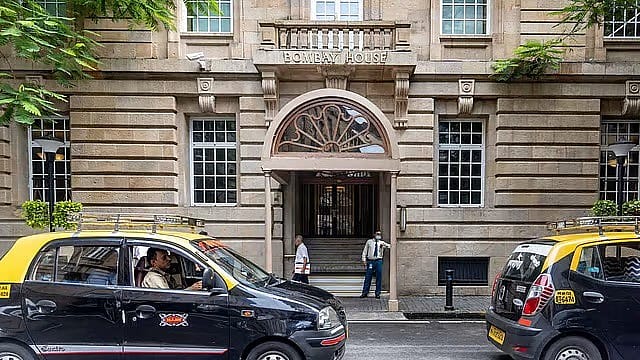
Hypothetically speaking, had Ratan Tata chosen his half-brother Noel Tata as his successor in 2011 instead of Cyrus Mistry, perhaps the House of Tata would have been spared two bruising succession battles in the last 15 years. There might have been no Ratan Tata-Cyrus Mistry war and, perhaps, no Noel Tata-N Chandrasekaran confrontation of the kind we are witnessing today.
Noel Tata might have had sufficient time to prove himself and eventually oversee another orderly succession. But life — and business — unlike fairy tales, rarely offers such happy endings.
The irony is unmistakable. Tata Trusts owns about two-thirds, or 66%, of Tata Sons, yet today there is an extraordinary debate over how much authority that ownership actually confers.

Zeroing In on ECI
09 Oct 2026 - Vol 05 | Issue 41
Constitutional legitimacy versus political opportunism
There are too many questions and few clear answers.
Why has the RBI rejected Tata Sons' attempt to surrender its registration as a Core Investment Company? Tata Sons was classified as an Upper Layer NBFC in 2022 under the RBI's scale-based regulatory framework. The more interesting question now is whether the regulator should explain more fully why Tata Sons' case merits different treatment from apparently comparable precedents.
There is, for instance, the case of Sun Pharma promoter Dilip Shanghvi's NBFC, Shanghvi Finance. It too was placed in the RBI's Upper Layer in 2022. After repaying its debt, it surrendered its registration in February 2023 and the RBI cancelled the registration effective May 2023. It thereby escaped the listing requirement.
Reportedly, Tata Sons attempted broadly the same route. The RBI has rejected its application.
If deregistration was acceptable for Shanghvi Finance, what is materially different about Tata Sons? There may well be sound regulatory reasons. But given the enormous implications for India's largest business group, greater clarity would help.
Now to Noel Tata's case for keeping Tata Sons private. His arguments broadly are:
• Tata Sons is not a conventional operating company.
• About 66% of Tata Sons is owned by philanthropic trusts.
• The company has a long record of governance and disclosures.
• Listing could create pressures inconsistent with the group's long-term philosophy.
Noel Tata's larger argument is that the Trusts' charitable ownership has enabled the Tata model to combine commercial objectives with long-term institution-building and philanthropy. He fears listing could alter this character.
He has a point worth considering. Quarterly market expectations and minority-shareholder scrutiny could influence decisions at Tata Sons in ways that do not exist today. Long before CSR became mandatory, philanthropy was embedded in the Tata structure for the last 134 years.
Some argue that listing would bring greater disclosure, market scrutiny and accountability to one of India's most influential holding companies. The question, therefore, is not simply whether listing is good or bad, but whether a structure created for a very different era can coexist with today's regulatory expectations.
That brings me to Venu Srinivasan.
What surprised me most, going by media reports, is his shifting stance. In March 2024, Tata Sons directors — including Venu Srinivasan, Harish Manwani, Anita George and Saurabh Agrawal — reportedly supported keeping Tata Sons unlisted.
Then, in July 2025, Sir Dorabji Tata Trust and Sir Ratan Tata Trust, of which Srinivasan is a trustee, reportedly resolved that Tata Sons should remain private.
But on April 28, 2026, Srinivasan made a representation/complaint to Maharashtra's Charity Commissioner concerning the Sir Ratan Tata Trust. Tata Trusts subsequently said publicly that it had not been aware of his complaint until the Charity Commissioner's direction arrived.
Acting on complaints that included Srinivasan's representation, the Charity Commissioner directed that the May 16 Trust meeting be deferred. That meeting was expected to consider important governance matters affecting Tata Sons.
Then came September 17. At the Tata Sons board meeting, Srinivasan supported Chandrasekaran's reappointment and the move towards listing, while Noel Tata opposed them.
As a journalist, one question keeps ringing in my mind: What changed Venu Srinivasan’s mind between 2025 and September 2026?
Likewise, Harish Manwani was among the directors who reportedly supported keeping Tata Sons private in March 2024. Yet the September 17 board moved towards listing.
What caused this change in thinking?
Perhaps the RBI's rejection of deregistration fundamentally altered the situation. If so, that itself deserves to be clearly articulated. Directors have fiduciary responsibilities to the company and are entitled — indeed obliged — to reconsider earlier positions when circumstances change.
But this brings us to the larger and far more intriguing question. Who really controls Tata Sons?
· Is it the Tata Trusts, which owns 66%?
· Is it the board of Tata Sons?
· What powers do the Trusts' nominee directors exercise?
· And when the wishes of the controlling shareholder and the judgment of the company's board diverge, which prevails?
This is no longer simply a debate over whether Tata Sons should list. It is becoming a test of the constitutional architecture that has governed the Tata empire.
The issue becomes even more interesting because the Tata Trusts have questioned the validity of Chandrasekaran's reappointment under Tata Sons' Articles of Association. Tata Sons and the Trusts appear to have different interpretations of how those provisions operate.
Only weeks earlier, Chandrasekaran had announced that he would not seek another term after his current tenure ends in February 2027. Now the September 17 board has approved another five-year term.
What changed?
The listing question raises another issue.
There are 41 to 46 listed holding companies in India, but Tata Sons is unusual. It sits at the apex of a sprawling group while its controlling shareholder is a collection of charitable trusts. Listing would not necessarily deprive Tata Trusts of control — with approximately 66%, their numerical majority would remain formidable.
But listing could change the ecosystem around that control.
There would be public shareholders, market valuations, continuous disclosure requirements and greater scrutiny of capital allocation. Minority shareholders would acquire a much more visible voice.
For the Shapoorji Pallonji Group, which owns roughly 18% of Tata Sons, listing could provide something it has sought for years: liquidity for an enormously valuable but unlisted asset.
Which brings us to perhaps the biggest paradox of all. Tata Trusts owns 66% of Tata Sons. Yet the present controversy suggests that ownership and control may not necessarily mean the same thing.
I began this column with a hypothetical question. Let me end with another.
Had Venu Srinivasan not approached Maharashtra's Charity Commissioner in April, then the May 16 meeting have taken place? That meeting was specifically intended to discuss the potential listing of Tata Sons, revoking Venu Srinivasan’s nomination and reviewing N Chandrasekaran’s reappointment for third term. The landscape would have been different today?
What we do know is that the intervention became one important event in a chain that culminated in the extraordinary September 17 board meeting. What we also know is an outsider’s action has struck a body blow to Noel Tata.
There is another question doing the rounds: which group will the Modi government back? If past history is any indication, no government would like to destabilise the promoter-management.
Even as we try to figure out the how and why, one thing is becoming increasingly clear: the next phase of this bitter battle may be fought less in Bombay House and more through lawyers interpreting a handful of crucial provisions in Tata Sons' Articles of Association.
For a group that has always prided itself on the Tata Way, the question now is remarkably simple:
Who defines the Tata Way — the owner, the board or the Articles of Association?
The jury is still out.