UPI charges above ₹2,000: What exactly is the new fee? Supreme Court questions its legal basis
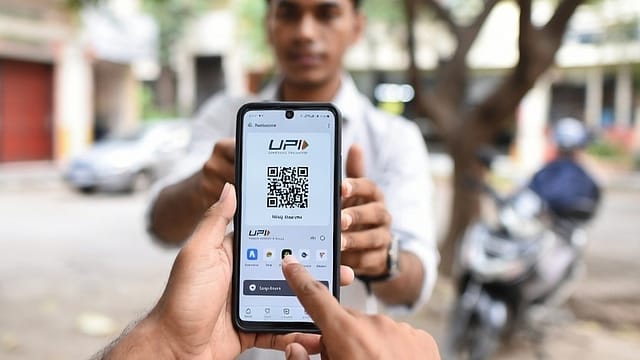
You scan a QR code, enter ₹5,000 and tap “Pay”. For most of us, that is where the story ends. But behind that two-second transaction sit banks, payment apps, NPCI and an entire digital payments network. And now, as India prepares to introduce charges on certain high-value UPI merchant transactions, the Supreme Court wants to know something more fundamental: what exactly is this charge, and where does the money go?
That question took centre stage in the Supreme Court on Monday as a bench headed by Chief Justice of India Surya Kant, along with Justices Joymalya Bagchi and V Mohana, heard a challenge to the new UPI Merchant Discount Rate (MDR) framework. Here is what the court is examining.
Why is the Supreme Court questioning the new UPI charge?
The immediate issue is not simply whether merchants should pay MDR. The court is examining the legal character and basis of the charge. During the hearing, Justice Joymalya Bagchi asked a basic but consequential question: “Who gets the payment? Who gets the fee?”
Zeroing In on ECI
09 Oct 2026 - Vol 05 | Issue 41
Constitutional legitimacy versus political opportunism
The court also questioned the executive authority behind the levy and asked what the charge should legally be called if it is not a conventional fee. The Supreme Court has now sought responses from the Centre, the Reserve Bank of India (RBI) and the National Payments Corporation of India (NPCI). According to Monday’s court reports, the respondents have four weeks to file their counter-affidavits.
So, what is changing for UPI payments above ₹2,000?
The new framework introduces an MDR of 0.4 per cent on specified person-to-merchant UPI transactions above ₹2,000. The framework is scheduled to take effect from October 15, 2026. For general eligible merchant transactions, the MDR is capped at ₹300 for payments of ₹75,000 and above. There are also separate rates for certain categories, including specified essential sectors and capital-market transactions.
But this does not mean that every UPI payment above ₹2,000 suddenly attracts a fee.
Will ordinary UPI users have to pay?
This is one of the biggest points of confusion — and the answer, under the current framework, is no for person-to-person payments. The government has said all P2P UPI transactions will remain free, regardless of the amount transferred. UPI payments to merchants up to ₹2,000 will also remain outside MDR. The Finance Ministry has further said that around 96 per cent of person-to-merchant UPI transactions will remain unaffected.
So, if you send ₹10,000 to a friend or family member through UPI, the new MDR does not apply merely because the amount is above ₹2,000.
Then who actually pays the MDR?
The charge is designed to operate within the merchant-payment ecosystem, rather than as a direct transaction fee imposed on consumers. The government has specifically clarified that MDR is not a tax and is not collected by the Government or NPCI. Instead, it is distributed among participants in the payments ecosystem, including banks and payment application providers.
That distinction is central to the Supreme Court's questions. During the hearing, counsel explained that a UPI transaction involves multiple participants — including the payer's bank, recipient's bank and the entities facilitating the payment platform. The argument presented to the court was that the charge represents the cost of providing and maintaining this payment service, rather than money being collected by the Union government.
Why did the court ask, “Who gets the fee?”
Because the legal classification matters. If a payment is described as a fee, there are questions about the service for which that fee is being collected and the authority under which it can be imposed. The court therefore examined where the money ultimately accrues and how the arrangement fits into existing law. It also referred during the hearing to provisions of the Income Tax Act while questioning the character of the receipt and whose hands it would constitute income.
That is why Monday's hearing was about more than the headline-grabbing question of whether UPI will remain “free”.
What law is the new UPI framework based on?
The legal background goes back to the Payment and Settlement Systems Act, 2007. Section 10A deals with restrictions on charges for specified electronic modes of payment. The Centre's September 14 notification specified RuPay debit cards and UPI transactions up to ₹2,000 for the statutory no-charge protection. That effectively created room for charges on UPI transactions above the ₹2,000 threshold, subject to the subsequent MDR framework.
A public interest petition filed by advocate Anjan Datta has challenged this framework, including the legal basis and the distinction between UPI and RuPay debit-card transactions. Indian Express reported that the plea challenges the September 14 notification and the government's subsequent framework.
Is the government calling this a UPI “tax”?
No: and this distinction is important. The Finance Ministry has explicitly said MDR is neither a tax nor a charge collected by the government or NPCI. Its stated purpose is to distribute the cost among participants in the UPI ecosystem and support the system's continued operation and expansion.
The Supreme Court's questions, however, show that the legal character of the payment is precisely what is now being examined.
What happens next in the Supreme Court?
The court has sought an affidavit from the Centre explaining the basis and nature of the charge, with responses also sought from the RBI and NPCI. For now, the new framework has not been stayed, according to reports of Monday's hearing. The scheduled October 15 rollout therefore remains the operative framework unless the court subsequently orders otherwise.
And that leaves the most interesting question hanging over India's next UPI chapter: when a payment feels instantaneous and almost invisible, who actually pays for the machinery that makes that “Pay” button work — and under what legal authority?
(With inputs from ANI)