#UNTOLD | The Terrace, The Towel & SolarSquare
Late 2019.
The blue water tank had been storing the day's heat since afternoon.
Shreya Mishra placed one foot on the narrow concrete ledge beside it, then the other, without looking down. By now, her body knew the climb better than her mind. The rough edge scraped lightly against her palms as she pulled herself up and folded her knees to her chest.
Below, Mumbai was changing shifts. Scooters buzzed through narrow lanes. Pressure cookers whistled from apartment kitchens. Someone laughed on a balcony across the street. Headlights gathered into slow-moving ribbons of white and red.
The city was ending another ordinary day.
She wasn't.
For the first few minutes, Mishra didn't think about anything. She simply watched. The sky dimmed by small degrees. One window lit up. Then another. Then an entire row. Somewhere nearby, a temple bell rang before dissolving into traffic.
The Modi Years
02 Oct 2026 - Vol 05 | Issue 40
A Nation Rebuilt
She had stopped checking the time on these evenings. It never changed anything. The question always arrived before darkness did. Where did it break? Not why. Why was too large. Too generous. Too philosophical.
Mishra wanted the exact moment. The crack. The decision. The meeting. The sentence. There had to be one.
Businesses didn't disappear in a day. They fractured quietly, somewhere beneath the noise, long before anyone noticed. She had begun replaying those years like an editor sitting before miles of raw footage, convinced that if she watched one more time, one more frame, she would finally catch what everyone else had missed.
She never did.
After Flyrobe: The Terrace Questions
Instead, another memory would interrupt. A conference room. Someone leaning forward across the table. Numbers on a screen.
No. Not yet. Mishra pushed it away. The terrace had become the only place where nobody expected answers. Downstairs, people wanted explanations. Friends wanted reassurance. Family wanted hope. Investors wanted clarity. Former colleagues wanted to know what came next. She had none to offer.
Up here, nobody asked. There was only the water tank. The concrete ledge. The city carrying on as though nothing extraordinary had happened. And the silence that followed the end of a dream she had once believed would outlive her.
So, for almost a month, she climbed onto the ledge beside the water tank and sat there until the city disappeared into darkness. She didn't feel like seeing anyone. Not friends. Not family. Sometimes, not even herself.
A few weeks earlier, Mishra had sold her first company. The sale had ended the business but it hadn't ended the search. Every evening, she came back to the same terrace, hoping the story would finally reveal the moment it had begun to fall apart.
She tried to replay it differently each time. Maybe it hadn't started with the cash crunch. Maybe it had begun much earlier. A decision nobody questioned. A number everyone celebrated. A meeting that ended with handshakes instead of difficult questions or perhaps it wasn't a moment at all. Maybe failure never arrived like an earthquake. Maybe it seeped in quietly, like water finding tiny cracks in a wall until one morning the whole structure simply gave way.
Mishra closed her eyes. Another frame appeared. Bright studio lights. A photographer asking her to turn slightly towards the camera.
"Perfect." One more shot. Someone handed her the magazine. She smiled. Everyone around her smiled. For a while, success had become astonishingly easy to believe.
No. Not this one. She pushed the memory away before it could settle.
The terrace had rules. She came here to find answers. Not nostalgia. A cool breeze finally reached the rooftop, taking away the heat the concrete had held all day. She wrapped her arms tighter around her knees.
Where did it break? The question returned. Always the same question. Never the same answer. Some evenings she blamed the market. Some evenings herself. Sometimes the investors. Sometimes timing. Sometimes nobody.
Grief had a strange way of changing its version of the truth. The city below remained wonderfully indifferent. Children were still playing cricket in the lane. Someone was arguing over parking. A vegetable vendor shouted his last prices before heading home.
Life had continued without asking her permission. That, more than anything else, felt unfair.
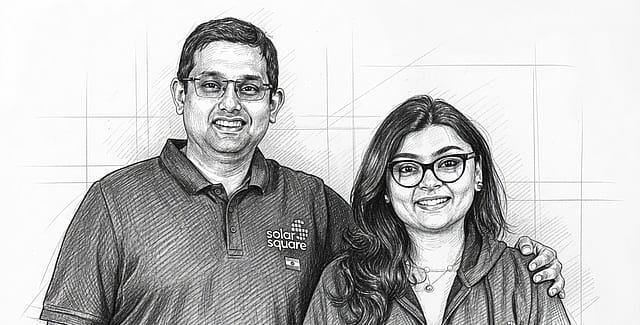
For four years, she had lived inside one company. There had been no weekends. No holidays. She and her husband Neeraj Jain hadn't even gone on a honeymoon after getting married. There had only been one thing: Build, raise, hire, grow, repeat.
From BCG to the $50-Billion Bet: How Flyrobe Took Flight
Now there was nothing. No office waiting. No team. No customer calls. No investor meetings. For the first time in years, she woke up every morning with nowhere she needed to be. She wasn't prepared for that kind of silence.
Silence, Mishra would discover, can be louder than failure itself. She opened her eyes. Across the city, another row of lights flickered on. Then her phone vibrated. She ignored it. A minute later, it vibrated again. And again. She already knew what it was. She turned the phone over anyway. The headline filled the screen. Flyrobe fails to fly.
She read the headline once. Then again. Four words, four years, and all reduced to a headline.
Mishra locked the phone and slipped it into her pocket. It vibrated again. This time she didn't look. She didn't need to. By tomorrow, there would be more messages. More calls. More people trying to make sense of something she herself couldn't yet explain.
Failure travelled faster than success ever had. Success had introduced her to the world. Now, failure was about to introduce the world to her. The calls started coming. One stayed with her. It was from Abhiraj Singh Bhal. They had both come out of BCG. They had both become founders around the same time. She had looked up to him in the early days. He wasn't calling to discuss Flyrobe. He was calling to ask how she was doing.
Mishra rested her head against the warm concrete of the water tank and closed her eyes. The headline refused to leave. Not because it was cruel. Because somewhere beneath the cruelty, it carried a question she had been avoiding for months. What if they were right?
The thought didn't stay long. Another memory arrived before it could. A cramped office. Clothes hanging from makeshift racks. Garment bags spilling into every corner. Two laptops. Too many ideas. Too little space.
Mishra started at Boston Consulting Group in 2012, moved briefly through Everstone, and in 2015 stepped out to build Flyrobe.
Late 2015. Nobody called it Flyrobe yet. It was just an idea that refused to leave Mishra, Pranay Surana and Tushar Saxena alone. The idea was deceptively simple: Rent designer wear instead of buying it.
Mishra could still hear herself making the pitch. "Women spend heavily on occasion wear they rarely repeat. We are reimagining this $50-billion industry with a pay-per-use model."
The pitch was convincing. It worked. The first investors believed. Then customers did. The seed round came the same year. A year later came Series A. Soon, the tiny office wasn't enough. By 2017, Flyrobe had moved into a 100–150-seat office in Ghatkopar. It felt like everything was happening exactly the way startups are supposed to happen.
It wasn't just the business that was growing. So was her confidence. Flyrobe's first funding round was $1.7 million. Funding followed funding. The team grew. Flyrobe was making headlines. Then came another milestone. 2017 and Forbes 30 Under 30. There were studio lights flashing in a room. A photographer adjusting the frame. Another photograph. Another smile. She sent the feature to her parents. Forwarded it to friends. For a while, success stopped feeling like a possibility. It began to feel inevitable.
The ₹1-Crore Bet: When the Runway Started Shrinking
Years later, sitting beside the water tank, that was the memory she found hardest to revisit. Not because it was false. Because she had believed every bit of it.
Memory rarely stops where you want it to. Once it began, it kept pulling her forward.
By 2017, Flyrobe had outgrown its first office. The new one in Ghatkopar could seat more than a hundred people. There was room to hire. Room to expand. Room to dream bigger. One corner of that office belonged to another startup. Five desks. That's all they needed. SolarSquare rented those five seats from Flyrobe.
It was an arrangement that barely deserved a second thought. Mishra didn't give it one. Flyrobe was raising capital. SolarSquare was paying rent.
Shreya found the contrast amusing. She would tease Jain. "You're an IITian. And this is the business you chose?" He was building commercial solar. She was building a venture-backed consumer startup.
At the time, the future seemed obvious.
Flyrobe was everywhere. Funding rounds. Media interviews. New hires. New offices. The graph kept climbing. Every milestone seemed to confirm the last one. This was what winning looked like.
Then came 2018. For the first time, the graph paused. The runway began shrinking. Growth wasn't keeping pace with the capital they had raised. The questions inside the boardroom changed. Not how fast can we grow? But how long can we keep going? And for the first time since Flyrobe began, confidence alone wasn't enough.
The business wasn't out of time. Not yet. But it needed money. Fast.
The team decided to raise a bridge round. Mishra walked into her cofounder's cabin with a proposal. "Let's put in ₹1 crore ourselves." Not because they had it. Because they needed everyone else to believe they still believed. Her cofounder agreed. "I can do ₹30–35 lakh." That left ₹65 lakh. She didn't have it. Not even close.
She stared at the number for days. She could ask her father or she could ask her husband. Neither conversation felt easy.
For four years, she had been the founder who convinced investors to write cheques. Now she was trying to convince the person who believed in her the most. "I don't even remember how many days I thought about it," she recounts, alluding to her feeling. "I was backing myself," she says. But the reality was something different. She explains. “Apart from conviction and confidence, I didn't really have anything in my pocket,” says Mishra.
One night, she finally spoke to Jain. She explained the situation. The runway. The bridge round. The ₹65 lakh. He didn't ask for projections. He didn't ask how long the money would last. He didn't ask what the chances were. "If this can salvage the company," he said, "we should do it." It was over in minutes.
For Mishra, the conversation had taken days. For Jain, the decision took seconds.
Looking back, she smiles. "There's a very fine line between founder optimism and delusion." Back then, she couldn't tell where one ended and the other began. She genuinely believed Flyrobe would recover.
The Last Forty-Five Days, When Hope Ran Out
The signal travelled faster than the money. Till then, investors had been dragging their feet. Once the founders committed ₹1 crore of their own money, the conversations changed. The same investors came back. The bridge round came together. For a while, it felt like they had bought themselves another chance.
Mishra threw herself back into the business. More meetings. More experiments. More conversations. More hope. She wanted to believe the hardest part was over. It wasn't. The business kept resisting every attempt to revive it. Pivots came. None held. The runway kept shrinking. Every week demanded another difficult decision. Then came a meeting that she can still replay, almost word for word.
Early 2019. Mumbai. Taj Lands End.
It wasn't a board meeting. Just a catch-up.
The business had stalled. Flyrobe had tried one pivot after another. Nothing was landing. Across the table sat one of her investors. He didn't sound disappointed or angry. If anything, he sounded calm. That made what he said even harder to hear.
"This is not worth your life's opportunity cost."
Mishra looked at him without responding.
"We sign up for this," he continued. "We invest in ten companies. Eight won't work. Some will shut down. Some will get acquired," he underlined. “That's part of our business,” hr reckoned.
And then he paused. "But this isn't our life's opportunity. It's yours."
The sentence stayed suspended between them. It wasn't about Flyrobe anymore. It was about time. Four years. More than $10 million raised. A team that still believed. Customers who still expected them to figure it out. How do you walk away from that? You don't. Not that day.
Mishra left the meeting carrying the sentence with her. She kept building. She kept calling. She kept pitching. She kept believing the next pivot would be the one.
It wasn't.
She tried anyway. For weeks, nothing changed. The acquisition they had been working towards fell through. The runway kept shrinking. Forty-five days. That was all Flyrobe had left.
The conversations inside the office became shorter. The silences became longer. Every morning began with the same question. How do we keep this alive? Every evening ended with another. Can we?
There were no easy answers left. Only difficult choices. One of them was finding someone willing to buy the company. Not because they wanted an exit. Because they were running out of time. Every meeting carried hope. Every unanswered call carried doubt.
Then, finally, one conversation moved. A term sheet followed. Months of building had come down to pages of legal language. The company they had once imagined building for decades was now being discussed in clauses, signatures and closing dates.
In November 2019, Rent It Bae acquired Flyrobe in a distress sale. Mishra walked out with something she had never imagined carrying. Not relief. Not triumph. Just exhaustion.
The paperwork ended. The questions didn't.
For the next few weeks, Mishra wasn't a founder anymore. She wasn't building. She wasn't fundraising. She wasn't hiring. For the first time in years, her calendar was empty. That frightened her.
The Last Forty-Five Days, When Hope Ran Out
Every evening, she climbed to the terrace. The city kept moving. She didn't. Friends asked what she would do next. Investors wanted to know whether she would build again. She had no answer.
The offers kept coming. Founders reached out. Investors reached out. Some offered roles. Some offered capital to start again. She listened. She thanked them. She even took a few meetings. Then she realised something. Once an entrepreneur, always an entrepreneur.
So, she stopped taking those conversations. The answer wasn't waiting inside a job description. It was waiting somewhere else.
Around that time, one evening, she asked Jain a casual question.
"How much revenue will you do this year?" He didn't hesitate. "Around ₹100 crore." She looked at him. She hadn't realised SolarSquare had reached that scale. They had spent years building different companies, living under the same roof, but fighting different battles. "Mine was a more public failure," she says.
Eventually, all those questions gave way to a simpler one. Do I still have it in me to go through the pain of entrepreneurship again? Not the thrill. Not the headlines. Not the fundraising. But the pain. Because every entrepreneurial journey eventually arrives there. "I still had a lot of entrepreneurial fire left," Mishra says. "In terms of pain threshold, I was not tired."
Around the same time, Jain was building something of his own: a bootstrapped, commercial solar. One evening, he floated an idea. "You've built a consumer business. I've built B2B. Why don't you build the residential business of SolarSquare with us?"
She didn't answer immediately. Solar wasn't the hesitation. Timing was.
Flyrobe had taken four years. Four years without a salary. Her father was approaching retirement. For the first time, she couldn't afford to ignore money. So, when the conversation came back, she treated it like any other job discussion. There would have to be a salary. She said it plainly. "I need one."
There was no awkwardness. No sentiment. No husband-wife negotiation. Just two founders discussing what made sense. In fact, Neeraj and his cofounder weren't drawing salaries themselves. She still asked. And held her ground. There would be no equity either.
In her mind, this wasn't forever. A year. Maybe two. She would build the residential business. Learn. Then perhaps start something of her own again. That was the plan.
In January 2020, she joined SolarSquare. She was pregnant, and the second innings had begun.
The rules were different this time.
For the first year, Mishra made a conscious decision. She would follow. Jain knew the business. She didn't. "I decided that I would take Neeraj's lead," she says. "He knew the business better, so I would follow him."
Around the same time, she came across a line by Andy Rachleff that stayed with her. "When a great team meets a lousy market, market wins. When a lousy team meets a great market, market wins. When a great team meets a great market, something special happens."
The ₹19-Crore Crisis & the Towel
She couldn't stop thinking about it. At Flyrobe, she believed she had picked the wrong market. This time, she wanted the opposite. "I made a mental note," she says. "I would play in an extremely large market." Residential solar wasn't just another business. It was her second chance to test that belief.
Then the world changed. Covid arrived. The country went into lockdown. They were in Bhopal. SolarSquare had around 40–50 employees. The company was bootstrapped. Then came another blow. One of SolarSquare's largest clients stopped paying. The amount due? ₹19 crore.
And then, the calls stopped. The replies stopped. The money stopped. Weeks turned into months. The ₹19 crore never came. Every day, the pressure grew. There were salaries to be paid. Interest on loans. Vendors. Forty to fifty employees who expected their salaries at the end of the month.
Mishra looked at the numbers. There seemed to be only one option. "Most companies have gone for pay cuts," she told Jain. "We should do it too."
He listened. Then he shook his head. "When that day comes," he said, "we'll take a call. But let's park this idea for now." He explained. His job was to push that day as far as possible. "It's not going to happen today," he said.
The day never came. Nobody took a pay cut. But the price of keeping that promise kept rising. The gold was pledged. The house was mortgaged. Loans piled up. Family friends stepped in. Money came from wherever it could. However little. However difficult.
And in the middle of all that, they were changing the business itself. Mishra could hardly believe the timing. Another existential crisis. Barely a year after Flyrobe. Another company fighting for survival. Another night wondering whether everything could disappear. "It did feel like déjà vu," she says. "It was devastating."
But there was one difference. This time, she wasn't fighting alone.
The defaulter client was in Surat. For months, Jain kept travelling there. Calling. Meeting. Waiting. Trying to recover the money.
One day, he stopped trying to do it the usual way. He picked up a towel, a bottle of water, and walked into the client's office. He didn't ask for an appointment. He didn't ask to be let in. He found a spot outside the promoter's office, spread the towel on the floor, and sat down. He wasn't leaving. Not until someone spoke to him. People walked past. Meetings continued. Employees came and went. He stayed where he was. One hour. Two. Three.
Eventually, the promoter stepped out. They spoke. A part payment came through. The rest would take longer. But that day, SolarSquare stayed alive. "We still have that towel," says Mishra. "Not as a symbol but a reminder."
Read this again. An IIT Bombay graduate, a founder, a CEO sitting on the floor outside a client's office and waiting…Mishra explains what does this mean. "No degree prepares you for that," she reckons.
Walking Away From ₹100 Crore
The money bought them time. Not certainty.
Back in the office, another decision was waiting. The ₹19 crore wasn't the real problem. It had exposed one. The business they had built depended on receivables. Payments stretched. Cash cycles broke. One delayed cheque could put the entire company under pressure. Jain had been thinking about it for a while. Now he had made up his mind. They would stop building the business that had taken years to create. They would walk away from B2B. And build only for homeowners residential solar.
Mishra couldn't believe what she was hearing. "Are you mad?" she asked. They had already built a business touching ₹100 crore. Money was stuck. Debt was mounting. And this was the moment he wanted to start again?
Jain didn't think they were starting over. He thought they were starting right. The ₹19 crore wasn't an accident. It was the business reminding them what had always been true. Receivables. Delayed payments. Long cash cycles. The problem had always existed. Now it had become impossible to ignore.
So, they made the call. SolarSquare would walk away from its B2B business. The one that had taken years to build. The one that had touched nearly ₹100 crore in revenue. The one everyone expected them to protect. Instead, they chose to rebuild almost from scratch. It sounded irrational. It probably looked irrational too. But the decision had been made. There was no looking back.
The pivot changed the business. It didn't change investors' minds. Meeting after meeting ended the same way. "Great job building this." "But we don't understand the space." "If you ever build something in consumer tech, call us." "We'll invest." Not here. Not now. The answer changed. The outcome didn't. Almost everyone passed. Each rejection sounded different. Each meant the same thing. No.
Then came a meeting with Good Capital. Mishra was supposed to lead the pitch. That morning, she and Jain had an argument. Nothing extraordinary. Just one of those disagreements founders carry into work.
"I'm not pitching," she told him. "You do it."
Jain smiled. "I'll do it." He walked into the meeting alone.
Ninety minutes later, Neeraj walked out with a yes. Even he hadn't expected it. Good Capital was in. Later, Mishra learnt what had happened inside that room. The conversation hadn't stayed limited to residential solar. It had come back to her. Someone had described her as one of the best unfunded entrepreneurs they had met. "We're not just betting on the horse," they said. "We're betting on the jockey."
Six Months’ Runway, the PMO Call & “I'll Do It”
That changed everything. Soon, more believers arrived. Ashish Goel came in. Vijay Shekhar Sharma came in. The seed round came together. Around $4 million. The business started expanding. From Madhya Pradesh to Maharashtra. Then came Series A. Most investors still didn't understand residential solar. One did. Elevation Capital. Then Lowercarbon Capital. And gradually, things started moving.
Then came 2023, and another setback.
This one looked different. SolarSquare was now operating across multiple cities. Revenue was growing. Demand was visible. From the outside, the business looked stronger than ever. Inside, cracks had begun to appear. Burn had climbed. The balance sheet had stretched. Financial discipline had slipped. "We made mistakes," says Mishra.
Slowly, almost without noticing, she found herself staring at a number she had promised never to see again: Six months. That was the runway left.
The number--six months--hit differently this time.
When she had joined SolarSquare, she had made herself a promise. If she ever raised venture capital again, she would never allow the company to have less than two years of runway. And yet, here they were. Back where she never wanted to return.
There was only one option. Raise a bridge round. Lowercarbon Capital agreed to put in $2.5 million. But SolarSquare needed $4 million. There was still a $1.5 million hole. And almost no money left in the bank. Then her phone rang. The caller introduced himself as someone from the Prime Minister's Office. Her first reaction was simple. "This has to be a prank."
The call didn't make sense. They were on vacation in Sri Lanka. There was barely any network. Mishra looked at the screen again. Prime Minister's Office. She thought someone was pulling a prank.
But the calls kept coming. They left immediately. The nearest place with a reliable signal was the airport. They drove there just to answer the phone. When the call finally connected, it wasn't just someone from the Prime Minister's Office. Senior officials from the Ministry of New and Renewable Energy were on the line. Leaders from some of the country's largest companies were there too.
The message was brief. India was preparing to make a massive push into residential solar. Demand was about to explode. "Be ready."
At that time, around 700,000 Indian homes had rooftop solar. The government's ambition was far bigger. Ten million homes. Three years. For a few seconds, Mishra forgot about the bridge round. She forgot about the runway. She forgot about the $1.5 million still missing. All she could think was: If this happens, everything changes.
She knew she needed advice. Not from another venture capitalist. From someone who had already built through a once-in-a-generation tailwind. She called Nitin Kamath.
Somewhere during the conversation, Kamath interrupted.
"Are you raising money?"
"Just a small bridge round."
"How much?"
"$4 million."
"How much is left?"
"$1.5 million."
There was a pause. Not a long one.
"I'll do it."
The View From the Terrace
That was it. No pitch deck. No partner meeting. No weeks of diligence. Just a conversation.
By the time the call ended, the bridge round was complete.
The next morning brought another surprise. Nikhil Kamath's office called. They wanted to invest too. For the third time in her entrepreneurial journey, Mishra had bought herself something far more valuable than capital: Time. That was all they had wanted. Now they had to prove they deserved it.
The bridge round didn't solve the problem. It postponed the deadline. Everything else still had to change. Every assumption was questioned. Every expense was scrutinised. Every plan was pulled apart. Nothing was sacred anymore. The company slowed itself down before circumstances forced it to. Growth became secondary. Discipline didn't.
For three months, SolarSquare rebuilt itself. The burn came down. The balance sheet steadied. The runway stretched. The business found its footing again. When they returned to investors, the conversations no longer sounded familiar. Months earlier, they had been searching for one believer. Now there were several. By the time the process ended, six offers were on the table.
Six offers. It was a strange place to arrive. Not because the company had finally become investable. Because Mishra had lived long enough to see how quickly fortunes change. There had been a time when nobody wanted to fund residential solar. There had been another when SolarSquare had just six months of runway. Now investors were competing to get in.
Mishra doesn't romanticise any of it. If anything, the journey made her simpler. "Entrepreneurship is not about money," she says. If money is your goal, this is the worst path. There are far easier ways to make money. "This path comes with extreme responsibility, high risk, and very dark moments," she says. "The only reason to do it is if you truly care about building something."
Years earlier, she had sat alone on a terrace, trying to understand where everything had fallen apart.
Years later, another image stayed with her. A towel spread outside a debtor's office, one founder trying to recover ₹19 crore, and another trying to recover herself. Between that terrace and that towel lay one of the most extraordinary survival stories in Indian entrepreneurship.