SEBI Turns to AI to Crack Down on Illegal Investment Advice
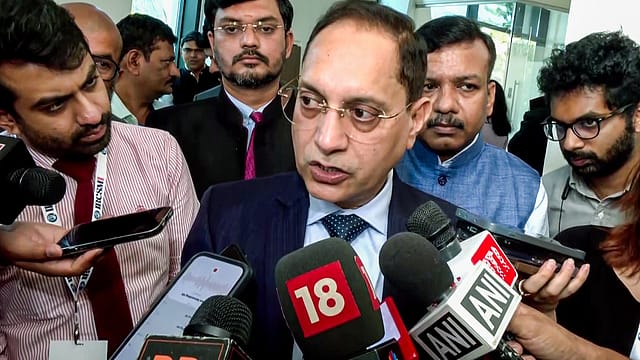
India’s market regulator is stepping up its tech game. At a press conference in Mumbai, SEBI Chairman Tuhin Kanta Pandey outlined how Artificial Intelligence is being deployed to track illegal investment advice, monitor influencers, and detect insider trading in real time, while also warning of AI’s emerging risks.
How is SEBI using AI to track market misconduct in real time?
At the National Institute of Securities Markets campus in Mumbai, Pandey detailed how SEBI is embedding AI into its enforcement architecture.
Stating that SEBI is using AI tools for real-time insider trading detection, Pandey said, “We are using them on financial influencers and those transgressing the lines on investment advice.”

Losing Memory
16 Oct 2026 - Vol 05 | Issue 42
The making of a medical and social emergency
He added, “AI is being increasingly used by us. We are using them on financial influencers and those transgressing the lines on investment advice. It is also being used on certain advertisements to ensure they are under SEBI rules,” while responding to a query on how the regulator is using Artificial Intelligence (AI) tools for real-time insider trading detection.
Beyond surveillance of influencers and advertisements, SEBI is also deploying AI to strengthen cyber resilience. “AI is also being used by SEBI in terms of looking at audit of cyber security so that we can proactively find out where the problems are,” he said.
Significantly, Pandey underlined a shift from reactive enforcement to proactive monitoring. Responding to queries regarding market stability, he said that SEBI is exploring the potential of Artificial Intelligence for “real-time detection, rather than just reactive enforcement” of market malpractices.
What risks does AI pose to markets and who will be accountable?
While embracing advanced tools, Pandey was equally clear that AI deployment cannot be unchecked.
Explaining its role, he said, “It's like a tool much like we were using different other IT tools like spreadsheets, and other things. Now you know there are more advanced tools in the form of AI.”
But the growing use of AI raises regulatory questions. “We will also have to see whether there are any risks to the market from the use of AI, and also pinpoint clearly the responsibility on those who are deploying the AI tools,” he added.
Looking ahead, Pandey indicated that regulation and adoption would evolve together. “I think regulation of AI will go in tandem with the use of AI, both by the regulator and the market participants,” he said.
What changes are coming for PMS regulations and corporate bonds?
Beyond AI enforcement, SEBI is preparing regulatory updates in other areas.
Pandey confirmed that a “consultation paper will be released for public input on the proposed changes to Portfolio Management Services (PMS) regulations.”
He clarified that while the “review of PMS regulations is driven by the need to rationalize certain aspects identified since 2020,” the exact “scope of the PMS regulation review is not yet finalised, as proposals are still maturing.”
In parallel, the SEBI chief revealed that “SEBI and RBI are jointly working on developing a corporate bond index and related products,” which are intended to be “traded on exchanges.”
This joint initiative between SEBI and the Reserve Bank of India aims to deepen India’s debt markets. Pandey noted that the product “falls under both jurisdictions due to trading on exchanges.”
As SEBI accelerates its technological push, the message from Mumbai is clear: AI will not just power the markets, it will police them too.
(With inputs from ANI)