India on Track for USD 2 Trillion Exports by 2030, Says Piyush Goyal
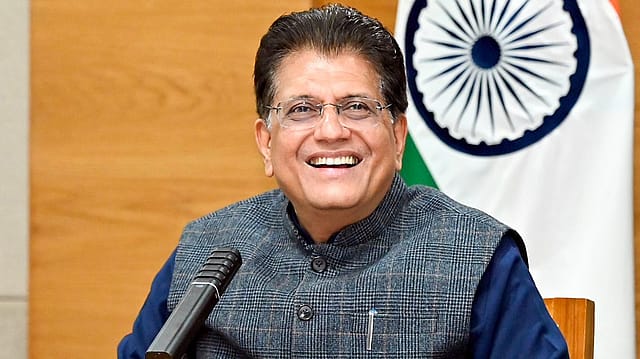
India’s exports reached an all-time high of USD 863 billion in FY26, even as global trade slowed due to geopolitical tensions, tariffs, and conflicts. According to Commerce Minister Piyush Goyal, the achievement stands out against a weakening global trade environment.
“This year's export has been announced in Delhi -- 863 billion dollars, record export,” Goyal said. “In the whole world, export is decreasing, international trade is badly affected because of the prevailing situation, but it is increasing in India,” he added.
The resilience comes from diversification of markets, policy support, and India’s ability to adapt quickly to shifting global conditions.
How is India planning to reach USD 2 trillion exports by 2030?
The government has set an ambitious target of USD 2 trillion in exports by 2030. This will be driven by improving export processes, modernising infrastructure, and expanding global market access.
“As it increases to 2 trillion dollars, our processes will improve,” Goyal said.
A key part of the strategy is signing Free Trade Agreements (FTAs) to open up new markets for Indian goods and services.
What role are free trade agreements playing?
India has significantly accelerated its FTA strategy in recent years. According to the minister, nine FTAs have been signed in the past three-and-a-half years, covering 38 developed countries.

Exclusive: To the Heavens and Back
19 Jun 2026 - Vol 04 | Issue 76
Shubhanshu Shukla relives the space odyssey that put India into orbit
“All of these collectively give us an opening on a preferential basis to two-thirds of global trade,” he said.
These agreements reduce tariffs and improve access, making Indian exports more competitive globally.
How did India respond to US tariffs and global disruptions?
India faced challenges such as tariff actions from the United States and instability in West Asia. Instead of relying on traditional markets, the country pivoted quickly.
“America had 50% tariff... but we immediately looked for alternate markets. We immediately got cracking on new free trade agreements to open new markets,” Goyal said.
This diversification helped cushion the impact of external shocks.
What is the status of the India-US trade deal?
Negotiations between India and the United States are progressing, with most major issues already resolved.
“It's a very significant deal. We are in continuous dialogue with them. We have already settled most of the major terms,” Goyal said.
The proposed agreement aims to resolve disputes such as the Section 301 investigation while expanding bilateral trade.
“We are looking at a holistic solution which will sort out the 301 investigations. It will sort out the opening of newer opportunities for export and import on both sides and will ultimately give India preferential access to the US market,” he added.
Why has India increased import duties?
The government has raised import duties as a precautionary measure to protect foreign exchange reserves during global uncertainty.
“We have increased the import duties because we believe that we must conserve foreign resources at this point in time,” Goyal said.
Despite this move, India’s external financial position remains stable.
How strong are India’s foreign exchange reserves?
India currently holds around USD 700 billion in foreign exchange reserves, providing a strong buffer against global volatility.
“We have 700 billion dollars, which is enough to cover 11 months of imports. The IMF says anything above 8 months is very good,” Goyal noted.
This level of reserves indicates macroeconomic stability and resilience.
What role does diplomacy play in boosting exports?
India’s global outreach, led by Prime Minister Narendra Modi, is closely tied to trade expansion, energy security, and investment flows.
“He has entered into very massive agreements to create a strategic petroleum reserve in India for increasing the LPG supplies to India,” Goyal said.
Such agreements strengthen supply chains and reduce vulnerabilities.
How do remittances contribute to India’s economic strength?
India continues to receive the highest remittances globally, which supports domestic consumption and strengthens the external sector.
“Today our world has the highest remittances -- 135 billion dollars,” Goyal said.
Higher remittances reflect stronger global economic engagement and diaspora contribution.
(With inputs from ANI)