Ramayana on JioHotstar: Can India Build a Second Box Office at Home?
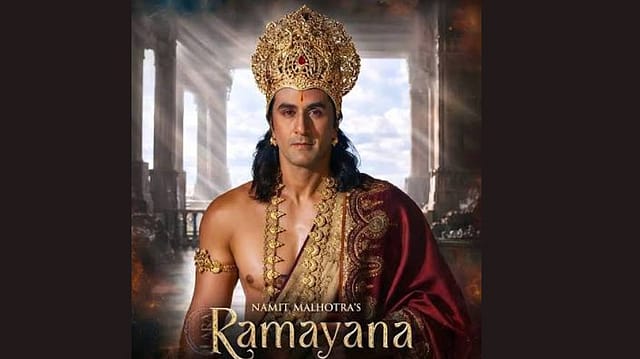
At the cinema, a family of four usually buys four tickets. A paid home-viewing transaction can gather the same family around one screen.
That difference changes more than the evening’s logistics. It changes what a distributor sells and how a film earns.
JioHotstar’s agreement with Prime Focus Studios puts that opportunity into focus. As JioStar announced on October 21, Ramayana: Part One will be offered as a separate on-demand purchase in India after an exclusive theatrical window. The film opens in cinemas worldwide on November 5, 2026.
The proposal gives a major production another way to reach viewers and collect payment for a particular film. It also places a familiar Indian story within a wider commercial experiment: how much business can a film do in the living room when it is sold individually?
THE LIVING ROOM HAS CHANGED
There is a useful reason to examine the opportunity now.

Losing Memory
16 Oct 2026 - Vol 05 | Issue 42
The making of a medical and social emergency
According to the Ormax OTT Audience Report 2026, India’s connected-TV audience reached 206.9 million people, up 60% from 129.2 million in 2025. The estimates come from research conducted among 15,000 respondents in June and July. These are people, rather than television sets or paying households. Even with that distinction, the growth points to a larger audience watching online video on the television.
For a film designed as a shared experience, the setting matters. A television can bring several viewers together for an evening in a way that a personal mobile screen may not.
It creates room to sell a viewing occasion: choose a film, gather the household and make time for it.
The commercial opportunity lies in connecting that occasion to a payment. A household that watches online video already has the means to receive the film. The distributor’s job is to offer something it wants to make an evening of.
A DIFFERENT WAY TO SELL A FILM
A subscription and an individual film purchase serve different needs.
The subscription offers continuing access to a catalogue. Its appeal builds through the range of programming a household expects to use over time.
An individual purchase can appeal to someone who wants one particular production. The decision concerns that title, that price and that viewing occasion.
Both can sit within a platform’s business. Regular viewers supply recurring demand, while separately priced releases offer another way to serve occasional buyers or subscribers interested in a particular film.
That flexibility has Indian precedent. Amazon launched Prime Video Store on April 28, 2022, offering movie rentals to Prime members and non-members, including early access to Indian and international films.
The precedent is useful because it establishes the commercial format. Ramayana’s opportunity lies in bringing its own audience and appeal to an existing way of selling entertainment.
It also gives JioHotstar another use for its distribution capability. The same service that helps people discover and watch a catalogue can introduce a separately priced film to potential buyers.
THE PRODUCER’S EXTRA WINDOW
For a filmmaker, the attraction is the possibility of earning from different audiences at different stages of a film’s life.
The cinema release serves people who want the theatrical experience. A subsequent paid home window can serve those who missed the run, prefer watching at home or want another viewing.
A film’s theatrical reputation can also travel with it. Reviews, performances, music and audience conversations help establish what the home buyer is considering.
Namit Malhotra, the producer, framed the partnership partly around physical access. He reportedly said in the announcement that “our country’s cinema infrastructure cannot reach everyone who holds this epic close”.
Digital distribution offers a route to those viewers without requiring another cinema to open.
For the producer, a home window is a way to keep serving demand after the theatrical event. Its commercial value depends on the agreement with the platform; the Ramayana deal’s payment structure has not been disclosed.
THE HOUSEHOLD CALCULATION
Home viewing also changes the unit of sale.
A cinema ticket generally admits one person to a particular screening. An authorised home-viewing transaction can serve several people watching together, subject to the offer’s conditions.
That gives the household a different value calculation. Its comparison can include the price of several cinema tickets, travel and the convenience of choosing when everyone sits down.
For the distributor, the equation changes too. Several viewers gathered around one screen generate one transaction. Reaching an audience and generating paid purchases become distinct measures.
The useful opportunity is therefore broader than moving an existing cinema customer to a cheaper screen. Home access can attract a household that would otherwise miss the film, or sell an additional viewing to one that has already seen it.
Some purchases may also substitute for a cinema visit. The release sequence helps determine the balance.
Ramayana’s digital price, availability date and detailed eligibility rules have yet to be announced. Those choices will shape which households the offer serves and how it fits into the film’s theatrical life.
HOLLYWOOD IS WORKING ON THE SAME BALANCE
The relationship between cinema and paid home viewing is an active business question globally.
At Bloomberg Screentime, NBCUniversal’s Donna Langley discussed rebuilding the cinemagoing habit, according to TheWrap’s October 1 report. Universal’s pandemic-era arrangements had allowed some films to reach premium home viewing as early as 17 days after opening in cinemas.
Langley reportedly described the need to address expectations created by that availability, including “trying to undo some of the training that we’ve done”.
The commercial lesson concerns the way one release window influences the next.
A theatrical run gives a film a distinctive occasion and helps establish its public reputation. Paid home access can then reach another audience while that interest remains alive.
Move home availability forward and it may capture demand sooner. Leave more space and the cinema experience retains a longer period of exclusivity. Studios are managing both sources of value.
For India, this makes the Ramayana arrangement interesting as a sequence: a cinema event followed by an individually purchased digital experience. The task is to make each stage useful to its intended audience.
FROM A FILM TO A REPEATABLE BUSINESS
A major title can introduce people to a purchasing habit. Building a durable business means giving them reasons to use it again.
For a household, that could mean finding films it considers worth a separate evening and payment. For a platform, it means assembling enough appealing releases to make the transactional offer useful beyond one launch.
The same model may also serve different kinds of demand. A widely anticipated production can attract a broad audience; a more specialised film might appeal to a smaller group willing to pay for access. Distribution and promotion would still have to make the economics work for each title.
Ramayana offers a particularly visible starting point because the story is familiar across generations. That familiarity can help a new adaptation enter the family conversation. The production’s own appeal will shape whether the conversation becomes a purchase.
The larger opportunity is to give Indian films more ways to reach and earn from their audiences.
Cinema sells the collective experience of a public screening. Subscriptions make a continuing catalogue available. Individual digital purchases can add a separately priced home-viewing occasion to that mix.
A growing connected-TV audience makes that proposition more relevant. JioHotstar supplies a route to market; Ramayana supplies a film around which households may choose to gather.
India’s second box office could grow one living-room purchase at a time.