How Gold ETFs and EGRs Can Turn India’s Household Gold into Productive Assets
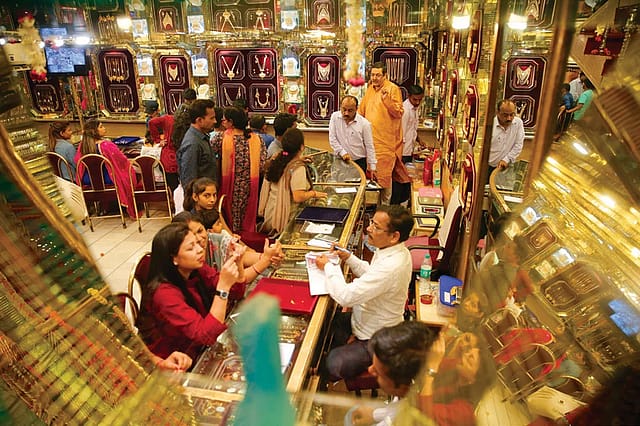
India’s massive household gold reserves, estimated at nearly USD 3 trillion, are largely lying idle in the form of jewellery and bullion.
According to Devarsh Vakil, Head of Prime Research at HDFC Securities, this dormant wealth can be transformed into a productive economic resource through wider adoption of Gold Exchange-Traded Funds (ETFs) and Electronic Gold Receipts (EGRs).
In an exclusive conversation with ANI, Vakil said much of the gold owned by Indian households currently acts as a passive safety asset and remains outside the formal financial system.
He stated, “To transform this traditional commodity from a stagnant security into a productive financial instrument, broader adoption of digital vehicles such as Gold Exchange-Traded Funds (ETFs) and Electronic Gold Receipts (EGRs) is crucial.”
Rise of the Pivotal Power
18 Sep 2026 - Vol 05 | Issue 38
The BRICS declaration is a strategic victory for Modi
Why Is India’s Dependence on Gold Imports a Concern?
India is one of the world’s largest consumers of gold and relies heavily on imports to meet domestic demand. Large-scale imports increase pressure on the country’s foreign exchange reserves and widen the current account deficit.
Vakil argued that bringing household gold into the formal financial ecosystem could reduce the country’s dependence on imports while also supporting the rupee and generating a large domestic funding pool for infrastructure and long-term economic development.
According to him, mobilising idle gold wealth could become an important economic lever for India at a time of global uncertainty and elevated commodity prices.
What Are Gold ETFs and How Do They Help?
Gold Exchange-Traded Funds are market-linked investment products that allow investors to gain exposure to gold without physically owning it. These instruments are traded on stock exchanges and are backed by physical gold.
Vakil explained that Gold ETFs eliminate several problems associated with physical gold ownership, including storage risks, purity concerns and resale complications. He added that these products improve liquidity and transparency while helping channel household savings into the institutional financial system.
According to Vakil, Gold ETFs also contribute to improving overall banking liquidity by integrating savings into regulated financial channels.
What Are Electronic Gold Receipts (EGRs)?
Electronic Gold Receipts are SEBI-regulated digital instruments that allow physical gold to be converted into dematerialised assets which can be traded on stock exchanges.
Vakil said EGRs provide guaranteed purity, easier trading and instant liquidity, making them significantly more efficient than traditional gold holdings.
He added, “By providing guaranteed purity and instant liquidity, these mechanisms convert a static family heirloom into a dynamic asset that can be used as commercial collateral, effectively fuelling the nation's credit cycle and economic expansion.”
The ability to use gold-backed instruments as collateral could also improve credit availability within the financial system.
Why Are Gold Prices and Import Policies in Focus?
Vakil’s comments come at a time when gold prices in India remain elevated. At the time of filing the report, 24-karat gold was trading at Rs 1,55,611 per 10 grams.
The government has also taken several measures to curb gold imports. It recently increased the effective import duty on gold and silver from 6 per cent to 15 per cent. The revised structure includes a 10 per cent Basic Customs Duty and a 5 per cent Agriculture Infrastructure and Development Cess.
In addition, the Directorate General of Foreign Trade has capped duty-free gold imports under the Advance Authorisation Scheme for gems and jewellery exporters at 100 kilograms per licence.
Future import licences have also been linked to export performance. Under the revised framework, fresh imports will only be permitted after at least 50 per cent of previously imported gold is exported as finished jewellery.
Can Idle Gold Help India’s Long-Term Economic Growth?
Vakil believes India’s household gold reserves represent a major untapped financial opportunity. By converting physical gold into tradeable and regulated financial assets, India could potentially strengthen its banking system, reduce external vulnerabilities and create new channels for economic expansion.
He said unlocking the country’s idle gold wealth could strengthen the financial sector while supporting long-term growth and economic resilience.
(With inputs from ANI)