‘Fail Loudly, Fix It, Try Again’: Anand Mahindra Backs India’s Second Student-Built Chip Lab
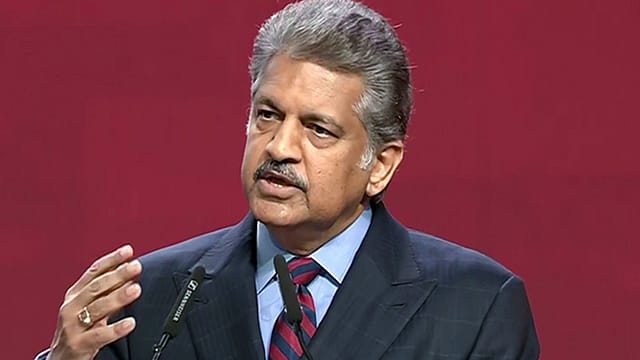
As India pushes to build its own chip-making muscle, Mahindra Group Chairman and Mahindra University Chancellor Anand Mahindra is betting on a simple idea: let students break things first. The industrialist has thrown his weight behind a hands-on model of innovation, encouraging students to experiment, fail, and build solutions on their own as the country works to strengthen its semiconductor capabilities.
"HackerFab gives students a license to do exactly that. To fail loudly, fix it, try again, no permission needed. That's how you build a generation unafraid to build. That's the India I want Mahindra University to help create," Mahindra said.

The Identity Project
11 Sep 2026 - Vol 05 | Issue 37
Amit Shah leads the mission for a national demographic correction
His remarks come as Mahindra University announces the launch of India's second HackerFab, following the student-led HackerFab at IIT Bombay. The facility is the first university-sponsored, student-led open-source semiconductor fabrication set-up in the country.
The initiative gives students practical, on-ground experience in semiconductor fabrication, helping build the technical skills needed to strengthen India's domestic chip capabilities. Led by students from the university's B.Tech. in VLSI Design & Technology programme, the HackerFab will focus on developing low-cost fabrication equipment for education and research, with students working on core gear including a maskless photolithography system, RF sputtering chamber, spin coater and tube furnace.
The university says the hands-on model lets students work on actual semiconductor fabrication rather than restricting their learning to the design side of the technology. The initiative will also complement Mahindra University's plans to set up a cleanroom facility for teaching and research.
HackerFab isn't a home-grown idea — it was originally started in 2023 at Carnegie Mellon University's Department of Electrical and Computer Engineering as an open-source initiative aimed at making semiconductor microfabrication more accessible through low-cost, student-built equipment. The model has since travelled to institutions across the world, and now, India. IIT Bombay got there first, kick-starting the country's debut student-built HackerFab in August 2025. Those students have already developed prototypes of equipment used in semiconductor manufacturing, including systems for maskless lithography, spin coating, sputtering and furnace operations.
With this new HackerFab, Mahindra University is looking to bring semiconductor design, fabrication and research closer together, giving students real experience in building and testing fabrication equipment while sharpening the skills India's growing semiconductor ecosystem will need. The focus, the university says, is on engineers with both technical knowledge and practical, in-the-lab experience — as India works towards domestic chip capabilities and greater technological self-reliance.
(With inputs from ANI)