Indian economist raised by single mom wins Janet Yellen’s praise for gender budgeting work
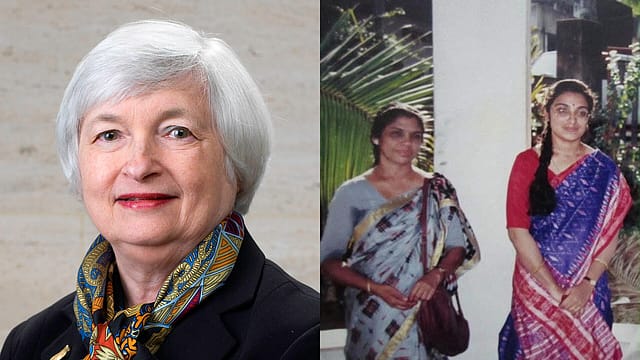
Delhi-based Lekha Chakraborty, who is among the 22 global economists whose life stories are featured in a book on women in public finance, has won high praise from none other than Janet Yellen, former US Secretary of the Treasury, who has lauded her for her “personal conviction” and for incorporating lived experiences as a daughter of a single mother into policy insights.
“Economists are trained to keep personal experience separate from analysis. But the questions we choose to study often reflect what we have seen in our own lives. Lekha Chakraborty’s chapter shows how personal experience led her to an important question, and how careful research helped move it from the margins of public finance toward the mainstream,” Yellen wrote in a note about her chapter in the book titled Women in Public Finance: Stories of Gender in Budgeting, edited by well-known public financial management experts Manal Fouad and Maja Bosnić and published recently by Routledge.
The Modi Years
02 Oct 2026 - Vol 05 | Issue 40
A Nation Rebuilt
Born into a Muslim family in Thiruvananthapuram, Kerala, in 1973, Chakraborty endured a traumatic childhood. By the time she was slightly conscious of the world around her aged three, her father, a scientist with the Indian Space Research Organisation (ISRO) in Kerala, had left her mother, who was then pregnant with her brother. It meant that her mother, a nurse whom Chakraborty credits for working hard to give her children a good education, had to take everything in her stride and raise her children.
Chakraborty, an alumnus of the Centre for Development Studies, which is affiliated to Jawaharlal Nehru University, is also associated with several institutions abroad. She was a promising student who secured scholarships for excellence, making things less harsh for her struggling mother. She went on to focus on gender budgeting early on in her career; this branch of public finance works towards reducing gender disparities in jobs, pay, social security and so on. She also went on to work closely with lawmakers and bureaucrats to influence governmental decisions on the subject. Currently, she is a professor at the National Institute of Public Finance and Policy (NIPFP), a research institute of the Ministry of Finance of India.
Yellen goes on about Chakraborty’s write-up: “Her chapter intertwines two stories. She describes growing up in Kerala after her father sent her mother a divorce notice by inland letter late in her second pregnancy. Her mother, a government hospital nurse, continued working and raised two children alone. The second story concerns gender budgeting in India, a field Professor Chakraborty entered in 2000. Early meetings often left her shaken because the issues felt inseparable from her mother’s experience. Over time, she learned to translate that understanding into evidence and policy analysis.”
The acclaimed American economist, who is a Yale University alumnus, says that she found Chakraborty’s response to institutional resistance especially instructive, with a lesson for anyone seeking to change an established field. “Professor Chakraborty showed that the values motivating her work could be supported by rigorous economic analysis. That combination gave her argument credibility and influence. The economic case is now more widely understood. Budgets that appear neutral can affect women and men differently. For a labour economist, unpaid care work is directly relevant to fiscal policy. Access to child care, water, electricity, transportation, and health care affects whether women can undertake paid employment and what jobs they can hold,” Yellen explains, emphasising that while Amartya Sen’s work on missing women demonstrated the human consequences of gender inequality, Chakraborty helped show how taxing and spending decisions can reinforce or reduce it.
In her note, Yellen also offers a peek into the history of gender budgeting in India, which was initiated in 2004, followed by the Gender Budget Statement in 2005–06. Yellen, meanwhile, says that she was particularly moved by Chakraborty’s observation that gender budgeting, and the scholars working on it, gave her a way to understand and describe what had happened to her mother and herself. The 80-year-old American economist is also thrilled at the prospect of Chakraborty writing a book on gender budgeting for young girls. “I hope she does. Until then, this chapter deserves to be read by students and young economists who worry that their most compelling question has no accepted place in their field. Her experience shows that personal conviction can sustain a serious and consequential program of economic research.” Besides being Treasury Secretary, Yellen, who is the Eugene E. and Catherine M. Trefethen Professor of Business Administration and Economics at the University of California, Berkeley, was also chair of the Federal Reserve from 2014 to 2018. She was the first woman to hold both positions.
Chakraborty, an award-winning economist, is also a Research Associate at the Levy Economics Institute of Bard College and an honorary elected member of the Governing Board of the International Institute of Public Finance (IIPF) in Munich. “My chapter reflects on my personal and professional journey into gender budgeting and how lived experiences shaped my commitment to making public finance more responsive to gender equality,” she tells Open. She writes in her chapter, “When I began pioneering gender budgeting work in India, every meeting on the subject stirred deep turmoil within me, because every time a gender issue was raised, I felt they were speaking about my mother.” Before she got married to fellow economist Pinaki Chakraborty in 1998, her name was Lekha S.
Chakraborty, who was asked to write her “personal story” by Manal Fouad, one of the editors of the book, also writes affectionately in it about her maternal grandmother, who helped her mother -- Salma -- raise her two children, one of whom became a highly successful economist and the other an engineer.