Happy Birthday, UPI. You Changed India. But Who is Paying for the Cake?
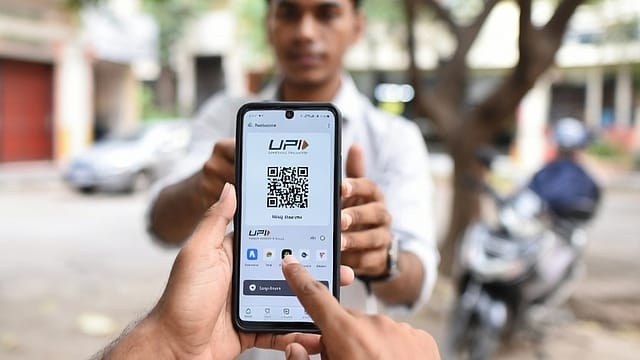
UPI has celebrated its tenth birthday by presenting India with a bill.
Do not panic. The bill is not coming to the person scanning a QR code for chai. It is unlikely to trouble the vegetable vendor, neighbourhood barber or roadside momo seller either. The government has promised that citizens will continue using the Unified Payments Interface free of charge. Person-to-person transfers will remain free. Small merchants have also been assured protection.
But somebody must eventually pay for the servers, software, fraud prevention, customer support, bank infrastructure and technological armour required to move tens of lakh crore rupees without making the machinery visible.
Free payment is an experience. It is not a business model.
That difference has become impossible to ignore as UPI completes ten years. What began as a pilot with 21 banks in April 2016 has become the default reflex of Indian commerce. A transaction once required cash, change, a card machine or several bank details. UPI reduced the ritual to a square code, four digits and a reassuring electronic voice.

Zeroing In on ECI
09 Oct 2026 - Vol 05 | Issue 41
Constitutional legitimacy versus political opportunism
The numbers resemble a typographical accident. UPI recorded only 1.78 crore transactions during FY17. By FY26, annual volume had climbed to 24,162 crore transactions, according to the finance ministry. Their value reached ₹314 lakh crore.
In July 2026 alone, UPI processed 2,365.8 crore transactions worth ₹29.88 lakh crore, according to the National Payments Corporation of India. That is more than 76 crore payments every day.
UPI still has ground to cover. As of June 2026, 55.49 crore users had been onboarded, leaving millions of Indians beyond its reach. Rural penetration, digital literacy, connectivity, trust and protection from fraud remain serious challenges.
But adoption is no longer UPI’s existential problem. A payment system handling more than 76 crore transactions a day does not need to prove that Indians want it. It needs to prove that banks, payment companies and public incentives can continue supporting its astonishing scale without charging the citizen or abandoning the small merchant.
India has learnt how to scan and pay. It must now decide who pays for the scan.
The Birthday Gift Was a Change in the Law
UPI has carried a statutory zero-price tag since January 2020. The government amended the law to prohibit banks and payment-system providers from imposing charges on prescribed electronic modes, including UPI and RuPay debit-card transactions. The decision accelerated adoption by removing the cost for merchants accepting digital payments.
The price disappeared from the checkout. The cost did not disappear from the ecosystem.
Acquiring banks onboard merchants. Issuing banks process payments from customers’ accounts. Payment-service-provider banks connect applications to the banking system. Third-party applications build interfaces, acquire users, operate technology and handle complaints. NPCI runs the rails holding everything together.
Every successful “payment received” notification travels through an expensive institutional relay race.
For years, the government has partially compensated participants through incentive schemes. Official data shows that the Centre paid ₹957 crore as BHIM-UPI incentives in FY22, ₹1,802 crore in FY23 and ₹3,268 crore in FY24. A further ₹1,500-crore scheme was approved for FY25, covering transactions of up to ₹2,000 made to small merchants at an incentive rate of 0.15 per cent.
The government has therefore been helping to pay for the free cake.
Its contribution, however, has not necessarily matched the appetite at the party. Transaction volumes have grown much faster than the incentive pool, while banks and payment companies have repeatedly argued that zero MDR makes it difficult to invest adequately in infrastructure and earn revenue directly from UPI.
The Taxation and Other Laws (Amendment) Bill, 2026, passed by Parliament in August, has changed the legal equation. It does not impose a UPI fee. It does not announce a rate. It does not send a payment request to consumers. What it does is remove the rigid statutory architecture that prevented an MDR from being levied. The government can now determine which digital-payment modes or transaction categories will remain exempt.
The locked door has been opened. Nobody has walked through it yet.
Free for You. Perhaps not for big business
The finance ministry moved quickly to address fears that every UPI payment would become chargeable.
It said citizens would not face transaction charges, all person-to-person payments would remain free and the vast majority of merchant transactions would also continue without MDR.
Finance Minister Nirmala Sitharaman told Parliament that small traders such as tea vendors, vegetable sellers and hawkers would not be covered. The possible target is the large merchant receiving a higher-value payment.
Reuters reported that one option under consideration involved an MDR of approximately 0.3 to 0.5 per cent on UPI payments above ₹2,000 made to businesses with annual turnover exceeding ₹1.5 crore. No final decision has been announced.
That proposal would create three broad categories. The customer pays nothing. The small merchant pays nothing. The larger merchant may contribute towards the infrastructure carrying the payment.
Based on FY26 transaction patterns, only about 4 per cent of merchant-payment volumes could cross the suggested threshold, while those transactions represent approximately 67 per cent of merchant-payment value.
The proposed slice of cake is narrow. Its calorie count is enormous.
Reuters estimated that such a charge could generate between ₹5,000 crore and ₹10,000 crore in annual revenue for the payments ecosystem. That money could help banks and payment companies strengthen infrastructure, reduce failures, fight fraud and develop new products. It could also reduce their dependence on annual government incentives and the uncertainties surrounding budgetary support.
The merchant, naturally, may see matters differently. Cash does not display an MDR on the invoice. A business asked to surrender part of every large digital payment may encourage customers to use cash, quietly raise prices or find ways to split transactions below the threshold. A carefully designed charge could finance UPI’s future. A clumsy one could reward the payment habit UPI spent a decade trying to defeat.
The Government Built a Public Rail. Two Foreign Giants Run Most of the Trains
UPI carries another delicious contradiction. India owns the infrastructure. Indians generate the transactions. But two foreign-owned platforms dominate the gateways through which those transactions travel.
PhonePe, controlled by Walmart, and Google Pay together processed approximately 78 per cent of UPI’s transaction volume and nearly 82 per cent of its value in July 2026. PhonePe alone accounted for roughly 46 per cent of volume, while Google Pay handled another 32 per cent. BHIM, the government-backed application whose name is frequently attached to official UPI incentive schemes, remains a much smaller consumer platform.
India created one of the world’s most successful pieces of digital public infrastructure. American companies built the busiest doors into it.
This does not mean PhonePe and Google Pay own UPI. They do not. Customers can theoretically use any compatible application because the underlying system is interoperable. But consumer habits harden quickly. Saved accounts, familiar interfaces, rewards and simple repetition make switching less attractive. Once an app becomes the instinctive place where a user scans, pays and checks a balance, interoperability does not automatically produce competition.
NPCI announced a 30 per cent market-share cap for individual third-party UPI applications in 2020. Its implementation was repeatedly deferred and is currently scheduled for the end of December 2026.
The approaching deadline presents another version of UPI’s central dilemma. India wants greater competition. It must avoid disrupting the two apps carrying most of its payments. India wants payment companies to invest. It gives them little direct revenue from the core transaction. India celebrates UPI as technological sovereignty. Much of its consumer traffic remains concentrated in foreign-controlled applications.
Zero MDR helped create the scale. It may also have favoured companies wealthy enough to finance the race without earning from the road.
The QR Code Ate the Card Machine
UPI has not merely expanded digital payments. It has rearranged them. By July 2026, UPI accounted for a record 77.3 per cent of digital person-to-merchant transaction value, according to data reported by The Times of India. Credit and debit cards continued losing share.
The QR code has humiliated the card machine. It costs less to deploy, works for the smallest merchant, accepts payments from multiple applications and does not require the customer to carry another object. A printed square stuck to a wall can perform the commercial function of hardware that once required installation, electricity and maintenance.
That achievement explains why the government is being cautious about MDR. UPI has reduced the cost of joining the formal payment system. It has created transaction histories for small businesses, accelerated settlement and made digital acceptance possible far beyond organised retail.
Charging small merchants could reverse that inclusion. Charging only large merchants, however, changes the comparison. Supermarkets, airlines, ecommerce companies and major retailers already pay fees on card transactions. Exempting their UPI receipts indefinitely gives them free payment processing while transferring the cost to banks, fintech companies and taxpayers.
The argument is no longer whether a tea seller should surrender part of a ₹20 payment. It is whether a large corporation should receive ₹20,000 through the same public rail without contributing anything towards its maintenance.
Cash Has Refused to Leave the Party
UPI’s success has not killed cash. Currency in circulation continues to grow even as digital payments occupy a larger share of everyday transactions. RBI Deputy Governor Shirish Chandra Murmu described this as India’s “cash paradox” during an address in August.
The apparent contradiction is partly explained by economic growth. India’s economy has expanded, creating demand for more currency in absolute terms, while cash has declined as a share of GDP and individual transactions. UPI has removed cash from many moments without removing it from India.
Urban consumers scan codes for cabs, groceries and restaurant bills. Cash remains powerful among sections of the rural economy, older citizens, informal businesses and people with weak connectivity, limited digital literacy or low trust in online systems. Cash also possesses one commercial advantage UPI cannot completely replicate. It works when the server does not.
Payment outages, bank-side failures and delayed confirmations remind users that digital convenience depends upon several invisible systems behaving perfectly at the same time. Fraud adds another vulnerability. The technology may be secure, but the human being holding the phone can still be manipulated through fake requests, impersonation and social engineering.
UPI’s second decade therefore requires more than adding users. It needs better grievance redressal, cyber awareness, fraud detection, system resilience and protection for the people least equipped to recover after losing money. Every additional user expands inclusion. Every additional user also enlarges the field available to fraudsters.
UPI Goes Abroad and Meets the Credit Card
India also wants to convert UPI into an international success. By June 2026, UPI acceptance had expanded to Singapore, the United Arab Emirates, France, Mauritius, Nepal, Bhutan, Qatar, Sri Lanka and Cambodia, according to the government. More partnerships are being constructed.
The geopolitical attraction is obvious. UPI allows India to export digital infrastructure, deepen payment connectivity and offer travellers an alternative to global card networks.
But a country appearing on an acceptance list does not mean UPI works at every shop within it.
International usefulness depends upon the number of participating merchants, local partnerships, foreign-exchange conversion, customer awareness and consistency across locations. An Indian tourist may be able to scan UPI at selected establishments while still needing a credit card for hotels, deposits, large purchases and merchants outside the network.
UPI has become close to universal inside India because the QR code is everywhere. Abroad, it remains a passport with a growing but limited number of visas. The next international leap will require India to move beyond announcing country partnerships and demonstrate usable merchant density. The test is not whether UPI can technically work in Paris or Singapore. The test is whether an Indian traveller can leave the hotel without carrying a backup card.
Who Finally Pays for the Cake?
UPI’s first decade was financed as national infrastructure.
The government removed MDR to accelerate adoption. Banks and payment companies absorbed costs. Public incentives helped compensate the ecosystem. Technology platforms used free payments to acquire consumers and sell other services.
The arrangement produced one of India’s greatest technological achievements. It may not be sufficient for the next 24,000 crore transactions. There are three possible payers. The taxpayer can continue funding incentives. Banks and applications can continue treating UPI as a cost of acquiring customers for loans, insurance, wealth products and advertising. Or selected large merchants can pay a small MDR for higher-value transactions. India will probably use a combination of all three.
The design matters enormously. Citizens must remain protected. Small merchants should not be pushed back towards cash. The fee must be low enough to preserve UPI’s advantage over cards and targeted carefully enough to prevent avoidance.
Any revenue generated must also produce visible improvements: stronger security, fewer failures, faster dispute resolution and continued investment in underserved markets. Otherwise, MDR becomes merely a toll on a road that citizens were told belonged to them.
UPI has already answered the question that surrounded its launch in 2016. Indians did not merely adopt it. They rearranged daily commerce around it. The next question is less glamorous but more important. Can a payment system remain free, innovative, resilient and secure while the companies operating it struggle to earn directly from its central function? UPI’s first decade made the payment disappear. Its second will decide where the cost reappears.
Happy birthday, UPI. The country has eaten the cake. The invoice has finally reached the table.