Gold Crash in March: What Triggered the 12% Fall—and Why Asia Is Still Buying
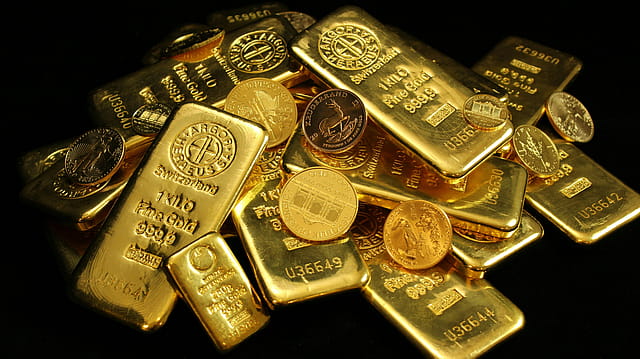
March broke gold’s momentum. Prices plunged 12% to $4,608 per ounce—marking the sharpest monthly fall since 2013—dragged down by a wave of selling that cut across markets, investors, and geographies.
What looked like a correction quickly turned into a cascade.
At the heart of it was momentum unwinding. Global gold ETFs saw a staggering $12 billion exit—the largest monthly outflow on record.
Positions that had built up over months were dismantled in weeks. Retail exposure thinned. Institutional money followed. And once the slide began, it fed on itself.
A key trigger came mid-March.

What Rahul Gandhi Wants
28 Aug 2026 - Vol 05 | Issue 35
He is desperately courting the angry youth. That won't be enough to credibly challenge Modi
Gold slipped below its 50–55-day moving average for the first time in seven months. That breach acted like a switch.
Commodity Trading Advisors (CTAs), heavily long until then, began cutting positions aggressively. The unwind accelerated the fall, turning a dip into a rout.
But this wasn’t just about technicals.
The pressure was systemic. Rising US bond yields—sparked by near-term inflation shocks—pushed opportunity costs higher.
Suddenly, holding gold looked less attractive. At the same time, the US dollar strengthened, compounding the sell-off. Investors who had treated gold as a winning trade began liquidating positions to free up cash.
Liquidity needs took over strategy.
Across asset classes, deleveraging kicked in. Equity markets saw selling. Bond markets reacted. And gold—despite its safe-haven tag—was not spared.
Multi-asset investors cut exposure wherever they could, and gold became part of that equation.
Even central banks entered the narrative.
A move by Turkey’s central bank to deploy around 50 tonnes of gold as collateral added to market anxiety, fuelling speculation of potential selling.
While the move was liquidity-driven, not strategic, it added another layer of pressure in an already fragile market.
And yet, zoom out—and the picture shifts. Because while the West was selling, the East was buying.
Asian markets moved in the opposite direction, absorbing the shock. ETFs in the region posted their strongest quarterly inflows on record—USD 14 billion in Q1.
March alone saw USD 2 billion in inflows, extending a seven-month streak of consistent buying.
China led the charge.
Falling local equities and a weakening currency pushed investors toward gold as a safety net. India followed, contributing $177 million in March and taking its quarterly total to $3 billion.
A classic dip-buying response—one that cushioned global flows even as North America recorded $13 billion in outflows, ending a nine-month inflow streak.
Europe, meanwhile, remained subdued, with modest outflows reflecting sensitivity to price swings and rising yields.
The divergence is telling.
In developed markets, gold became a source of liquidity. In emerging markets, it remained a store of trust.
Despite the March shock, the broader trend hasn’t fully broken. Global gold ETFs still recorded their seventh consecutive quarter of net inflows, with total assets under management at $606 billion.
Liquidity, too, stayed strong. Daily trading volumes rose 11% month-on-month to USD 525 billion. Over-the-counter activity surged even higher, indicating that participation remained deep even during the sell-off.
Now the question shifts. Was March a reset—or a warning?
Early April offers some clues. ETF flows have begun turning positive again. The dollar is struggling to sustain gains. And underlying demand signals—especially from Asia—remain intact.
But risks linger. Oil price volatility, cross-asset deleveraging, and rate expectations could continue to test gold’s resilience.
Still, the core narrative hasn’t disappeared. Gold didn’t lose relevance in March. It lost momentum. And as the dust settles, one thing is clear: the centre of gravity in the gold market is shifting—quietly, steadily—eastward.
(With inputs from ANI)