Gold at Record Highs, Yet Akshaya Tritiya Sales Surge Across India
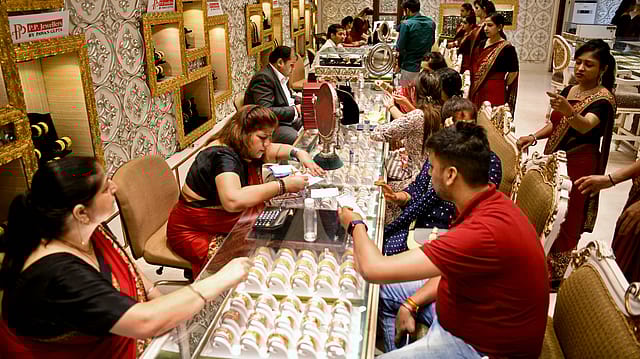
Defying soaring gold prices, this year’s Akshaya Tritiya turned into a powerful show of consumer confidence, with jewellery buyers across India stepping out in large numbers and driving strong nationwide sales.
Why did high gold prices fail to dampen demand?
Even as gold prices surged dramatically over the past year, buyers showed little hesitation in making purchases on the auspicious day. Cultural significance, combined with gold’s enduring appeal as a safe investment, kept sentiment buoyant.
"On the occasion of Akshaya Tritiya, overall trade across India remained very strong, with an estimated 18 to 20 tonnes of business recorded. While South India picked up momentum early in the day, regions like Maharashtra saw increased activity post 2 PM, with stores operating late into the night to cater to sustained demand," said GJC chairman Rajesh Rokde.
How strong was the nationwide buying momentum?
Jewellery showrooms reported heavy footfall from morning through late evening, with demand staying consistent across regions and time zones.
"Traditionally, Akshaya Tritiya is considered an auspicious time for purchases, and this year it is evident that consumer trust in the industry has strengthened further," Rokde added. "Despite gold prices rising from around Rs 90,000 per 10 grams last year to nearly Rs 1,54,000 now, interest in gold, silver, and diamonds has grown, driven both by cultural significance and investment appeal."
Which segments drove the biggest sales?
From bridal jewellery to small-ticket purchases, demand cut across categories, reflecting both necessity-driven and sentiment-led buying.

Open Minds 2026
26 Jun 2026 - Vol 05 | Issue 26
The power of ideas and arguments in 50 portraits
"Demand during the festival was exceptionally strong, with robust growth across our pan-India network," said Kalyan Jewellers Executive Director Ramesh Kalyanaraman, who also said that markets in North, West and parts of South India showed particularly strong momentum.
“Intent-led bridal purchases were well complemented by traditional 'shagun' buying, including gold coins and lightweight jewellery," he noted further.
What are younger buyers choosing differently?
A noticeable shift is emerging in consumer preferences, especially among younger and first-time buyers, who are moving toward lighter, more practical designs.
"We have seen approximately a 15 per cent year-on-year increase in sales, supported by healthy ticket sizes and renewed buyer confidence," said Kama Jewelry MD Colin Shah
"Consumer preferences are shifting, especially among first-time young buyers who are increasingly opting for lightweight, practical jewellery, including diamond-studded pieces in 9k, 14k, and 18k categories," Shah added.
Did silver also benefit from the festive surge?
The momentum wasn’t limited to gold. Silver witnessed steady growth across coins, artefacts, and jewellery, complementing the broader festive demand. Industry insiders attribute this to rising awareness of structured, investment-led buying during auspicious occasions.
(With inputs from ANI)