Public Wi-Fi Gets Easier: Government Rolls Out PM-WANI Reforms with QR Access
The Department of Telecommunications has introduced a series of citizen-friendly reforms under the PM-WANI (Prime Minister's Wi-Fi Access Network Interface) framework aimed at simplifying public Wi-Fi access and improving digital connectivity across India.
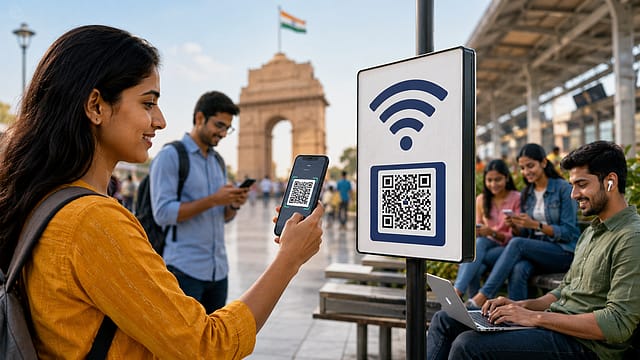
According to the Ministry of Communications, the reforms include QR code-based authentication for laptops and secondary devices, introduction of flexible short-duration Wi-Fi plans and standardisation of hotspot names for easier identification and reliability.
According to the ministry, the new measures were introduced through DoT Circulars issued on May 22.
All PM-WANI stakeholders have been directed to implement the revised guidelines within eight weeks, making the upgraded features operational across the ecosystem by July 2026.

Look Who's Talking Regime Change
23 Oct 2026 - Vol 05 | Issue 43
The move is part of the government's broader push to strengthen India's digital public infrastructure and improve affordable internet accessibility for citizens under the Digital India initiative.
What are the new short-duration plans under PM-WANI and how will they benefit users?
Under the revised framework, users will now be able to connect laptops and secondary devices to PM-WANI hotspots through QR-based authentication by scanning a code using an authenticated smartphone application.
The Department said the feature is aimed at reducing login friction and improving user convenience while ensuring secure internet access.
The department has also advised hotspot operators to introduce sachet-style short-duration internet plans of 15, 30 and 60 minutes, particularly for users at transit hubs, malls and public places who require brief internet access.
According to the ministry, the flexible plans are expected to improve affordability for commuters, students and occasional users while also increasing hotspot utilisation and operator revenue.
In another key reform, hotspot names or SSIDs will now follow a standardised PM-WANI branding format to help users identify authentic public Wi-Fi networks more easily.
The reforms come as the government seeks to improve accessibility, interoperability and citizen adoption under the PM-WANI ecosystem.
Speaking on the initiative, Chandra Sekhar Pemmasani, Minister of State for Communications and Rural Development, said, "PM-WANI is our platform for universal public Wi-Fi access -- and we are making it easier to use."
The ministry further said that public Wi-Fi is increasingly emerging as an important digital utility supporting students, commuters, travellers, professionals and small businesses across the country.
(With inputs from ANI)