Biofuels are not in the business of competing: Global Biofuels Alliance's Joshua Wycliffe
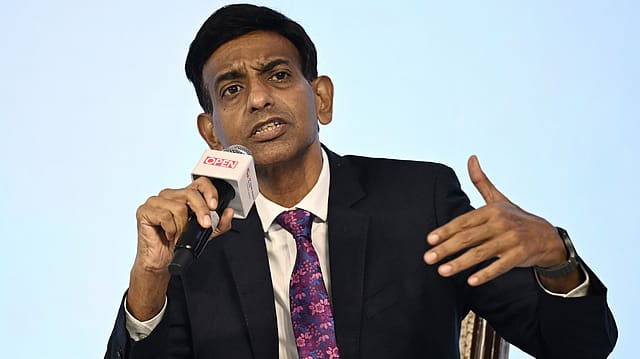
Biofuels should not be viewed as competitors to solar, wind or electric mobility but as one part of a broader clean energy ecosystem, with policy certainty emerging as the single biggest catalyst for scaling the sector, according to Joshua Wycliffe, director at the Global Biofuels Alliance.
Speaking at OPEN Green Shift, Wycliffe argued that the debate around competing clean-energy technologies misses the larger objective of strengthening energy security while accelerating the transition to low-carbon fuels.
"Biofuels are not in the business of competing," he said. "No two energy sources should compete with each other."
Instead, he described the future of clean energy as a "mosaic strategy", where biofuels, electric mobility and hydrogen complement one another by serving different sectors of the economy rather than competing for dominance.

The Vanguard
21 Aug 2026 - Vol 05 | Issue 34
BJP Rearmed for 2029
According to Wycliffe, the biggest misconception surrounding biofuels is that scaling them is primarily a technological challenge.
"The scaling up is actually not a challenge," he said, arguing that countries should view biofuels through the lens of energy sovereignty rather than environmental compliance alone.
Unlike imported fossil fuels, he said, biofuels can be produced from locally available agricultural residues, municipal waste and other decentralised feedstocks, reducing dependence on global energy markets while strengthening domestic energy security.
The real constraint, he argued, is policy.
Governments that establish clear blending mandates and long-term regulatory certainty create the confidence investors need to finance production capacity, he said.
Illustrating the point, Wycliffe recounted discussions with the leader of a small island nation that wanted to expand ethanol blending but lacked investment. Rather than focusing on subsidies or technology, he advised the country to introduce a mandatory blending policy.
Within six weeks of enacting the legislation, he said, the country attracted a $378 million investment from a Japanese investor.
"The policy should de-risk," Wycliffe said, arguing that legislation creates the certainty needed for private capital to flow into clean-energy infrastructure.
He also pushed back against narratives that frame biofuels as being in conflict with food security or electric vehicles.
Urban mobility, he said, will increasingly be served by electric vehicles, while hydrogen is likely to play a significant role in hard-to-abate industries. Biofuels, meanwhile, are well suited for regional transport and sectors such as aviation, where sustainable aviation fuel is expected to see rising demand.
India has already announced a mandate for sustainable aviation fuel, but Wycliffe noted that production capacity has yet to catch up with future demand. As policy mandates expand, he said, investment in manufacturing facilities and supporting infrastructure is expected to follow.
Looking beyond biofuels, Wycliffe said the clean-energy transition requires countries to rethink infrastructure in a broader sense.
Long-term success, he argued, depends not only on physical assets but also on resilient supply chains, skilled manpower and systems capable of adapting over decades.
"It's not just biofuels," he said. "Any form of energy would require a long-term view of your infrastructure."