Piyush Goyal's New Pitch to Japan: Don't Just Invest in India. Move In.
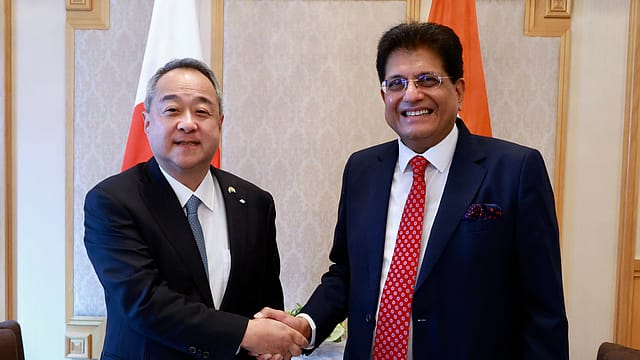
When Piyush Goyal landed in Japan this week, he was not carrying a single project proposal.
He was carrying a challenge.
India wants more Japanese companies to invest, manufacture and build for the future from Indian soil. Not a few more. Not incremental growth. The Commerce and Industry Minister's message was far more ambitious: the number of Japanese companies operating in India should double during this decade.
That makes the story bigger than a routine diplomatic visit.
Because behind the meetings, handshakes and investment pitches lies a fascinating question: Why is India suddenly making such a strong pitch to Japan, and why now?
What Exactly Did Piyush Goyal Tell Japanese Industry Leaders?
During his visit to Tokyo, Goyal met leading Japanese CEOs, investors and business leaders, urging them to deepen their engagement with India and expand investments across sectors ranging from advanced manufacturing to emerging technologies. He said India would like to see the number of Japanese companies operating in the country double by the end of the decade.

Zeroing In on ECI
09 Oct 2026 - Vol 05 | Issue 41
Constitutional legitimacy versus political opportunism
The minister's visit is part of a wider effort to strengthen the India-Japan economic partnership and attract long-term investment into sectors that India sees as critical to its next phase of growth.
Why Is Japan So Important to India's Economic Plans?
Think about some of the biggest Japanese names Indians interact with every day.
Maruti Suzuki. Toyota. Honda. Sony.
Japan has been one of India's most important economic partners for decades and has consistently ranked among the country's largest investors. According to official figures, Japanese companies have invested heavily in automobiles, electronics, infrastructure, logistics and manufacturing.
The relationship goes beyond business.
Japan financed the Mumbai-Ahmedabad bullet train project, has backed major infrastructure initiatives and has repeatedly committed billions of dollars in long-term investments in India. Reuters reported in 2022 that Japan announced plans for 5 trillion yen (about $42 billion at the time) in investment over five years.
Why Is India Making This Pitch Now?
Because the global economy is changing.
Companies worldwide are increasingly looking to diversify supply chains, reduce dependence on a single manufacturing base and explore alternative production hubs.
India sees an opportunity.
The government has spent the last few years promoting initiatives such as Make in India, production-linked incentive (PLI) schemes and manufacturing-focused reforms aimed at attracting global investment. The PLI programme alone has drawn significant commitments across electronics, automobiles and advanced manufacturing sectors.
Japan's expertise in precision manufacturing, semiconductors, automotive technology, robotics and industrial innovation fits neatly into India's ambitions.
Which Sectors Are Attracting The Most Attention?
This is not just about factories making cars.
According to government and industry reports, discussions during Goyal's visit are focused on semiconductors, artificial intelligence, clean energy, advanced manufacturing, start-ups and next-generation technologies.
Nagoya, one of the cities on Goyal's itinerary, is considered the heart of Japan's automotive and industrial ecosystem, while Osaka and Tokyo offer opportunities across technology, innovation and investment.
In other words, India is not merely asking Japanese companies to sell products in the country.
It wants them to build, design, innovate and export from India.
How Big Is This Outreach Effort?
The scale itself offers a clue.
According to government announcements reported by The Economic Times, Goyal is leading India's largest-ever business delegation to Japan, with around 200 business representatives accompanying him.
That makes this less of a diplomatic visit and more of a roadshow for India's economic future.
The delegation includes representatives from sectors where India is actively seeking greater foreign participation and technology partnerships.
What Is The Bigger Story Here?
Look closely and this is not really a story about one minister's meetings.
It is a story about where India wants to be by 2030.
The country is trying to position itself as a global manufacturing hub, a technology destination and a key link in international supply chains. To achieve that, it needs investment, technology and long-term partnerships.
Japan brings all three.
That is why Goyal's message in Tokyo was not framed around a single factory or a single deal.
It was framed around a decade.
And if India's pitch succeeds, the next wave of Japanese investment may not simply build more factories. It could help shape the industries that define India's next chapter.
(With inputs from ANI)