Tata Group: The House that History Built
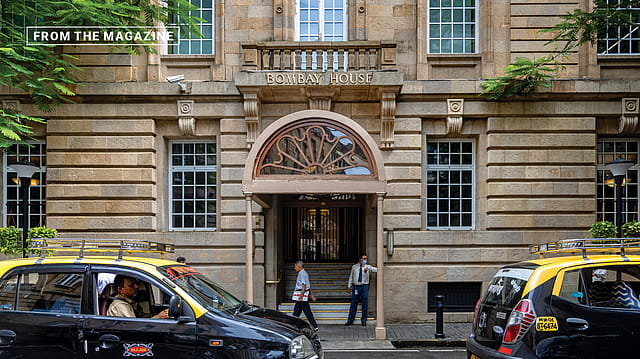
THERE IS A peculiar Indian habit of confusing size with substance. We celebrate valuations, applaud market capitalisation and mistake noise for narrative. Then, every once in a while, a business house comes along and reminds us what institutional durability actually looks like.
The Tata Group is that reminder—not once or twice, but with a consistency that borders on the metronomic. In a country where businesses are built through ambition and often destroyed by hubris, the Tatas have managed something far rarer: they have built an institution that survives its own crises and often emerges from them stronger, cleaner and more trusted than before.
I have watched the Tata Group for decades—as a brand strategist, a commentator and, frankly, an admirer who has never pretended to be neutral about it. What strikes me every time is not the scale of the group, formidable though it is. It is the group’s temperament.
The Tatas do not panic. They do not flail. They absorb the shock, recalibrate and move on, usually with their values intact and their reputation, if anything, enhanced.
Built to Outlast the Founders
Most Indian business houses are, at their core, extensions of a family’s ambition. The Tatas are the exception that disproves that rule. Jamsetji Tata did not merely build companies; he articulated a philosophy in which commerce and conscience need not be strangers, and profit and purpose could sit at the same table.
When he spoke of building a steel plant, a hydroelectric project, an institute of science and a hotel that would put India on the map, he was not simply diversifying a portfolio. He was constructing the scaffolding of a nation that did not yet exist in its modern form.
This is why the Tata Group has never been merely a business. Since its inception, it has represented an idea of what Indian enterprise could—and should—look like. Ideas, unlike balance sheets, do not fluctuate with quarterly results. They provide ballast. They are the reason that when storms come—as they often have—the group does not list dangerously to one side. It rights itself because its keel was set true a century and a quarter ago.
Swadeshi Test
Consider one of the earliest crises: the effort to build an Indian steel industry under a colonial administration that had little incentive to see it succeed. Tata Steel, conceived at the turn of the 20th century, was an act of defiance dressed up as an industrial project.
The British establishment scoffed. Foreign experts doubted that Indian ore, labour and capital could produce steel of any consequence. Jamshedpur proved them wrong—not through bluster, but through engineering doggedness and a refusal to compromise on quality or the welfare of the workforce.

That pattern—adversity met with quiet, stubborn competence—became the group’s signature. It is worth remembering this whenever we are tempted to see the Tatas’ composure today as a form of corporate-communications polish. It is not polish. It is muscle memory, built over generations.
Weathering Licence Raj
The decades after Independence were not kind to enterprise in India. The Licence Raj strangled ambition with a thousand permits, while many business houses either retreated into caution or found ways to game a broken system.The Tatas did neither. They played the long game, investing in core sectors such as steel, power, chemicals and engineering—unglamorous but foundational industries that a newly independent nation needed most. When liberalisation arrived in 1991, the group did not have to reinvent itself from scratch. It had never abandoned the discipline of building for the long term, even when the short term offered little reward.This crisis receives too little attention in conventional retellings of the Tata story because it was not dramatic. There was no single villain and no single collapse. There were simply decades of grinding regulatory hostility. The group’s response was not to lobby the loudest or shout the longest, but to keep building—a strategy that looked unremarkable in the moment and like genius in hindsight.
Liberalisation and Going Global
When the Indian economy opened up, many legacy conglomerates discovered, painfully, that decades of protection had left them unprepared. Global competition arrived, and several storied names could not compete.
The Tatas did the opposite of retreat. Ratan Tata took the helm at a moment when the group’s companies operated almost as independent fiefdoms. He then did something that required immense institutional courage: he consolidated and professionalised the group before pushing it outward into the world, rather than waiting for the world to arrive on Indian terms.
The acquisitions that followed—Tetley, Corus and Jaguar Land Rover—were mocked by many as overreach: an Indian company supposedly punching above its weight. Corus, in particular, was pilloried as a debt-laden gamble.
Yet an Indian company ended up owning a major British steelmaker and, later, Jaguar Land Rover (JLR), a marque associated as strongly with Britain as the monarchy itself. When the 2008 financial crisis hit and JLR began bleeding cash, critics were quick to declare the acquisition a disaster. The group did not sell in panic. It restructured, invested in new design language and product lines, and helped JLR regain its footing.
That was not simply luck. It reflected the temperament described earlier: a refusal to mistake a bad quarter—or even a bad few years—for a bad company.
Nano and Limits
Not every chapter has been a triumph. It is precisely the group’s handling of setbacks that reveals its character.
The Tata Nano was conceived with genuine idealism: an inexpensive car intended to give India’s aspiring middle class safe and affordable mobility. It did not achieve the commercial success for which it was designed.
Many companies bury such failures and pretend they never happened. The Tatas absorbed the lesson, redirected the engineering and manufacturing capabilities developed through the Nano programme towards other platforms, and moved forward without the defensive bluster that so often accompanies corporate failure.
There is a quiet dignity in how the group has treated its failures: as data, not shame.
Succession Crisis of 2016
If there was ever a moment that tested whether the Tata Group’s institutional strength was real or merely mythologised, it was the boardroom upheaval of October 2016, when Cyrus Mistry was removed as chairman in a dramatic and very public fashion.
By any measure, this was the most severe governance crisis the group had faced in living memory. The legal battle dragged through the National Company Law Tribunal and ultimately the Supreme Court, while newspapers and television studios covered it with a relish usually reserved for cricket controversies.
Yet notice what did not happen. Tata Consultancy Services did not stumble. Tata Steel did not lose its operational footing. Tata Motors’ factories did not grind to a halt. The operating companies, run by professional management teams with considerable autonomy, continued to function while the battle over the holding company’s leadership played out above them.
This was perhaps a truer demonstration of institutional design than any acquisition or expansion. Ratan Tata returned briefly as interim chairman to steady the ship and then handed it over to N Chandrasekaran, a professional manager who came from outside the group’s traditional Parsi leadership lineage. In most Indian business houses, such a transition would have been unthinkable. The Tatas executed it with the same unhurried competence they had applied to earlier crises.
Air India Comes Home
Then there is the story that reads almost like a fable: Air India, the airline JRD Tata built and nurtured, was nationalised by the government in 1953 and returned to the Tata fold in 2022 after nearly seven decades of government ownership. The Tata Group took control of the airline on January 27, 2022.
Few business narratives anywhere in the world offer such a poetic closing of the loop. The group did not gloat. It set about the unglamorous and difficult task of turning around an airline burdened by ageing aircraft, tired service standards and decades of institutional atrophy.
The transformation will take time. But the group’s approach is unmistakable: patience, capital and an almost stubborn belief that things built with care can be rebuilt with the same care, however long it takes.
Reading the Pattern
Look across all of this—colonial hostility, Licence Raj stagnation, the 2008 financial collapse, an internal governance war fought in open court and the long project of reviving a fallen national airline—and a single thread runs through every episode.
The Tata Group does not treat crises as aberrations to be survived. It treats them as tests of the values it has always claimed to hold. It tends to pass those tests precisely because those values were never merely marketing copy.
The charitable trusts that collectively own a majority of Tata Sons and direct dividends towards education, healthcare and research are not incidental to the group’s resilience. I would argue that they are central to it. A company answerable primarily to shareholders demanding quarterly gratification behaves differently in a crisis from one whose ultimate owners operate with a much longer horizon.
India’s Answer
We live in an era when trust in institutions—political, corporate and even religious—is in short supply, not just in India but across the world. Against that backdrop, the Tata Group’s repeated appearance in rankings of India’s most trusted and valuable brands is not simply the result of clever advertising. It is the compounding interest of 150 years of choosing the harder, slower and more principled path whenever a crisis has offered a shortcut.
I have always believed that brands are built in good times but truly revealed in bad ones. By that measure, the Tata Group is not merely India’s greatest business house. It is India’s most convincing argument that enterprise conducted with conscience is not a contradiction. It is a competitive advantage—one that compounds precisely when everything else is falling apart.
That is no small achievement to have demonstrated, again and again, for a century and a half.
On August 12, 2026, N Chandrasekaran decided not to offer himself for reappointment when his current term ends on February 20, 2027. His decision prompted the usual brouhaha, with some observers almost predicting the death of the House of Tata and the professionalism associated with it.
To those doomsayers, I have only one thing to say: the House of Tata is built on the pillars of culture and empathy. It possesses a distinctive DNA—one that is unmistakably Tata. The person who succeeds Chandra, I believe, will be as steeped in Tata values and professionalism as Chandra has been.
The reasons for worry are therefore specious. The House of Tata never trembles.