Vikram, Betaal & One Sawaal: How Cars24 Put Doubt in the Driver’s Seat
“CEO Vikram.”
The voice does not belong to an investor, board member or television anchor.
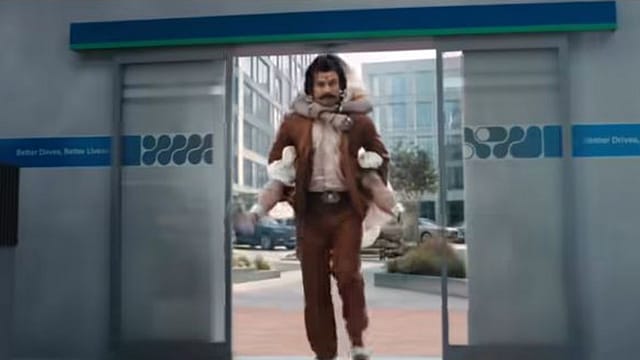
It belongs to Betaal, hanging upside down and preparing to conduct what may be the strangest due-diligence exercise in India’s used-car business.
Cars24 co-founder and CEO Vikram Chopra is carrying him through a stylised forest. Betaal has heard something difficult to believe. Does Cars24 really allow a buyer to return a car within 30 days?
“Sacchi?” he asks.
What if the car is not enjoyable to drive?
Return.
What if the colour begins to offend the buyer?
Return.
What if the wife dislikes it?
Return.
The questions keep arriving. Chopra keeps supplying the same beautifully economical answer.

Look Who's Talking Regime Change
23 Oct 2026 - Vol 05 | Issue 43
The 37-second film, “Sawaal tough ho sakta hai. Jawab simple hai,” converts Cars24’s 30-day return policy into a Vikram–Betaal story. The casting gag is hiding in plain sight: the man carrying Betaal happens to be Vikram. He also happens to run the company being interrogated.
This is the rare founder appearance that does not resemble a compulsory address delivered after a branding workshop.
Chopra is not staring into the camera to recite purpose, disruption and customer obsession. He has accepted the role mythology accidentally wrote for him.
That choice matters in a category that usually searches outside the company for a trustworthy face. Used-car advertising has repeatedly recruited fame, sporting credibility and family warmth to reassure the buyer. Cars24 looked at its founder’s name and found an ancient creative platform waiting to be used.
Spinny hired the God of Cricket. Cars24 discovered it already had a king on the payroll.
That gives Cars24 a creative lead over its rivals, at least in this campaign. Competitors may match inspection counts, warranties, fixed prices and celebrity heft. They cannot copy Vikram–Betaal without appearing to advertise Cars24. The company has locked its founder, the consumer’s anxiety and the product promise into one mnemonic. The service benefit may be matched. The memory structure is considerably harder to steal.
The reason the device works so naturally is that the ancient tale already resembles a modern used-car purchase.
Every Used-Car Buyer Has a Betaal
In the old stories, King Vikramaditya repeatedly carries Betaal away from a tree. During each journey, Betaal narrates a tale and poses a difficult question. Vikram must answer if he knows the truth. The moment he speaks, Betaal escapes, and the exhausting exercise begins again.
It is an excellent operating model for the used-car business.
Every vehicle brings another story. Who drove it? Was it damaged? Is the odometer honest? Will the engine sound different next Tuesday? What happens after the payment? Is that reassuring silence mechanical health or merely the calm before an expensive noise?
The buyer may smile in the showroom, but a small Betaal travels home on the shoulder.
Cars24’s smartest choice is to give that anxiety a body and a voice. Betaal is not the villain. He is the customer’s perfectly reasonable suspicion, made funny enough to welcome into the advertisement.
Much advertising in this category attempts to remove doubt by declaring that the company is trustworthy. A celebrity smiles. A checklist appears. A delighted family drives away. The customer is asked to believe.
Cars24 lets disbelief climb onto the CEO.
The visual performs the argument before the dialogue can explain it: responsibility sits on the founder’s shoulders. Chopra is not endorsing the promise from a comfortable distance. He is carrying the questioner while answering him.
That is a warmer and more intelligent use of a founder than the usual corporate cameo. Vikram is not presented as an all-knowing entrepreneur descending from LinkedIn. He is a patient king condemned to answer one more customer question.
Betaal gets the better part.
Borrowed Trust Versus Owned Memory
Spinny’s use of Sachin Tendulkar is entirely logical. In its 2026 “The Master” campaign, Tendulkar anchors messages about fixed pricing, inspection, refurbishment and post-sale support. The association offers instant reassurance in a market where reassurance is commercial currency.
Spinny pushed the idea further with “God Promise”, extending the famous God-of-Cricket halo into a pledge about used-car trust. It is polished category advertising. A national reservoir of credibility is directed towards the brand.
Cars24 has found something smaller, stranger and more proprietary.
Sachin can endorse several companies. Only Cars24 has Vikram Chopra, Betaal and a return policy that gives their interrogation a commercial reason to exist. The humour emerges from the collision of a founder’s actual name, a familiar story and a product truth.
Remove Cars24, and the idea collapses.
That is a useful test of distinctiveness. If a rival can replace the logo without disturbing the commercial, the agency has produced attractive category wallpaper. Here, a logo swap would require a new CEO, a different myth and a fresh explanation for why Betaal is asking about a return policy.
Advertising cannot grant operational superiority to the company that tells the funniest story. But it does place Cars24 ahead in the battle for creative ownership.
The brand has stopped saying only, “We can be trusted.” It has found a repeatable way of demonstrating how it responds when trust is questioned. That difference matters. Rivals are presenting evidence to the customer; Cars24 has turned the customer’s cross-examination into entertainment.
The campaign gives the company the benefit of another doubt too. Cars24 is attempting considerably more than celebrity procurement. It is building popular culture around the most uncomfortable part of the purchase: the moment after the buyer wonders whether the decision was a mistake.
The ad does not ask a famous man to promise that the car is good. It asks Vikram what happens if it is not good for you.
A Policy Becomes a Plot
Return policies are normally written for webpages, invoices and legal departments. They arrive in advertising as an asterisk, rarely as the protagonist.
Cars24 makes the policy generate the story. The company says buyers have 30 calendar days and up to 999 kilometres to decide whether a used car fits their lives. A return requires the vehicle to remain in the prescribed condition, with documents, keys and accessories intact; deductions can apply after reinspection.
The marketing leap is larger than the length of the window. Cars24 has recognised that a policy can function as evidence.
“Trust us” is a claim. “Live with the car, then return it if the relationship fails” is a mechanism.
Carvana reached a similar insight in the United States with its seven-day return policy, giving customers time to decide whether a vehicle genuinely fitted their lives. Its great visual invention, however, was the car-vending machine, which converted online purchase into physical theatre.
Carvana dramatised delivery. Cars24 dramatises doubt.
The latter is especially suited to India’s used-car market, where the product is more than transportation. It can represent savings accumulated over years, family consultation, mechanical uncertainty and the lingering fear that somebody else knows something about the vehicle that you do not.
The 30-day window gives the buyer time. Betaal gives that time a personality.
When the Founder Becomes Brand Property
Founder-led advertising can be powerful and perilous. Founders possess provenance, authority and a real relationship with the product. They may also believe a company presentation becomes fascinating once they deliver it directly to the camera.
The successful ones become symbols rather than spokespeople.
Colonel Harland Sanders turned himself into KFC’s most durable distinctive asset: the white suit, goatee and face still lead the logo decades after his death. KFC’s history. He does not merely certify the chicken. He remains part of the visual recipe.
Progressive Insurance achieved a related feat without using a founder. Flo, its relentlessly upbeat insurance expert, has explained a complicated, low-affection category since 2008. Dr Rick later gave another invisible anxiety a comic diagnosis: new homeowners turning into their parents. Progressive on Flo, Progressive on Dr Rick.
Both characters make an abstract problem recognisable before the sales pitch begins.
Vikram–Betaal gives Cars24 the beginnings of such a platform. Betaal can ask about inspections, pricing, loans, repairs, documents, selling and the mysteries of RC transfer. Vikram can answer, explain, learn or occasionally admit that a question deserves a longer walk through the forest.
That possibility is more valuable than one clever commercial. It creates a repeatable grammar for the brand: Betaal asks what the buyer is thinking. Vikram carries the responsibility. Cars24 supplies the answer.
The founder’s name provided the coincidence. Consistency could turn it into intellectual property.
Betaal Has One More Question
Affection does not require sending the questioner back to his tree.
The headline promise is wonderfully simple: 30 days. The lived policy naturally contains conditions. The car must travel no more than 999 kilometres, remain in the required condition and return with its original materials. Cars24’s detailed terms explain applicable deductions and different refund timelines.
Betaal, being Betaal, could return in the sequel.
“Return toh kar denge, Vikram. Lekin kitna katega?”
That is not a gotcha. A used car is not a shirt being placed back on a retail rack. Registration, finance, transport, inspection and physical wear create real costs. Sensible conditions do not invalidate the promise.
They do create an excellent second episode.
A campaign built around answering awkward questions acquires a charming obligation to keep answering them. Cars24 should bring the caveats into the same comic universe instead of leaving its website to play the humourless villain. If Betaal can make “wife dislikes the colour” entertaining, he can surely help “RC-transfer deduction” survive 30 seconds.
The gain would be larger than disclosure. The brand would demonstrate that no customer question is too inconvenient for the format.
“Cars24 has converted a coincidence—the founder’s name—into distinctive brand property,” says Ashita Aggarwal, professor of marketing at SPJIMR. Rival platforms may match functional promises or hire famous endorsers, but they cannot easily copy a story in which the founder, customer anxiety and return mechanism are fused together. The strategic challenge is ensuring that the simplicity of ‘return’ remains equally persuasive when consumers encounter the policy conditions.
That is the campaign’s central argument: Trust in a suspicious category is not built by silencing doubt. It is built by giving doubt the best lines and making the person in charge answer.
Spinny’s Sachin tells the customer that a master stands behind the process. Cars24’s Vikram allows the customer’s scepticism to sit on top of him. Both seek trust. One borrows stature; the other turns accountability into theatre.
For Cars24, the route carries more comic risk and considerably more proprietary promise. Used-car advertising has spent years asking buyers to put their doubts aside. Cars24 has invited doubt to climb aboard.
Betaal may be heavy. He is also the most useful passenger Vikram Chopra could carry.