The New Middle Child: Can Hyundai’s Bayon Find its Place Between Venue & Creta?
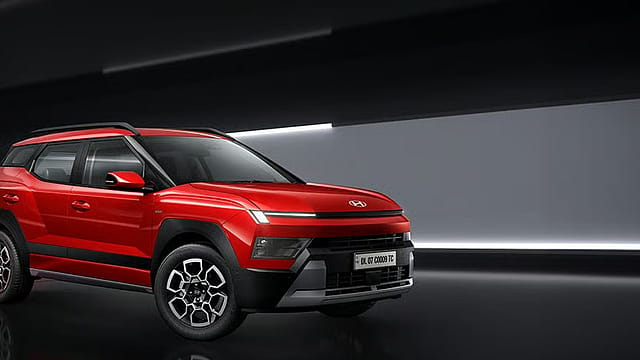
Hyundai’s BAYON may sit at the bottom of the company’s SUV ladder, but it has quietly become one of its most strategically important models. Launched in Europe in 2021 and named after Bayonne in the French Basque country, the compact crossover was designed for Europe’s narrow streets, crowded cities and value-conscious families—while carrying Hyundai’s broader ambition to make SUVs feel accessible rather than aspirational.
Bayon is not merely another badge in India’s crowded SUV bazaar. Positioned between the Venue and Creta, it is the company’s attempt to capture the buyer who has outgrown the Venue’s compact footprint but is not yet ready for the Creta’s price—and expectations. In India, the tagline is “Intelligence ON,” signalling that the SUV’s core pitch is not just size or power, but connected, intuitive technology.

Zeroing In on ECI
09 Oct 2026 - Vol 05 | Issue 41
Constitutional legitimacy versus political opportunism
“With Hyundai Bayon, we are introducing more than a new SUV. Bayon represents a new mindset – one that reflects our ambition to create experiences that are intelligent, intuitive and meaningful for our customers,” says Hyundai Motor India’s MD and CEO Tarun Garg.
The India-spec Bayon follows Hyundai’s “Art of Steel” design language, with a sculpted bonnet, bold fender volumes and distinctive H-Edge lighting. Inside, it moves toward a dual-screen, technology-first cabin aimed squarely at younger, digitally native buyers.
Simon Loasby, senior vice president and head of Hyundai Design Center, says the intention is a “confident first impression,” adding that the “high-tech interior within a tough exterior” gives Bayon a presence that feels “capable, modern and distinctly its own.”
At roughly 4.2 metres, Bayon occupies the 4–4.3 metre space that Hyundai believes can support two differently positioned SUVs. It will take on the Maruti Suzuki Victoris and Honda Elevate, with an ex-showroom price band of about Rs 9–15 lakh.
The India version uses a 1.5-litre naturally aspirated petrol engine producing 115 PS and 144 Nm, while features such as Level 2 ADAS, a 360-degree camera and multilingual connected infotainment could become its differentiators.
Bayon’s challenge is familiar: in India, a smart cabin and sharp design open the door, but pricing, fuel efficiency and after-sales value close the sale. If Hyundai gets the positioning right, Bayon could become the intelligent bridge between its two best-known SUVs—and a serious contender in the country’s fastest-moving automotive battleground.