The Second Act Playbook: How Shub Bhowmick Built Tredence
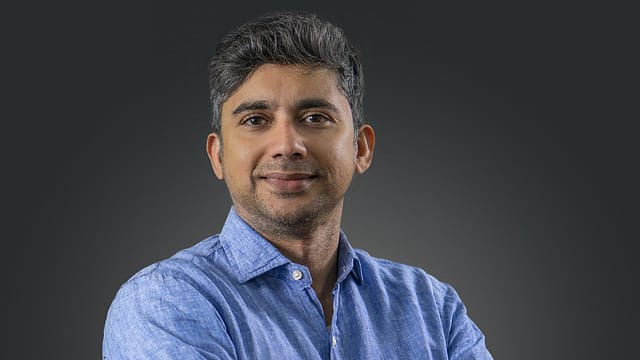
At 35, you buy a car. At 45, you buy a house.
This is what the clichéd Indian middle-class dream looked like, especially if you were in college in the noughties.
And somewhere in between those years, you build a life that looks like progress on paper. A steady income. Predictable milestones. A path that makes sense when you explain it to others and to yourself. Sounds familiar?
Shub Bhowmick knew that script well. He had lived it in its most textbook form. He grew up in a middle-class family in Kolkata, where success follows a well-rehearsed script: stable income, set milestones, and a secure life.
By the time Bhowmick was in the US, he had done what the script asked of him. A stable job. A comfortable income. A career moving in the right direction. He was in his late 30s. His second child had just been born.

Zeroing In on ECI
09 Oct 2026 - Vol 05 | Issue 41
Constitutional legitimacy versus political opportunism
On the outside, nothing was missing. And why would it be? He had everything a perfect life is supposed to look like. A loving wife. A young family. A version of the American dream for a chemical engineer from India. A complete life.
But inside, there was an itch. The kind you’ve probably felt at some point—one that shows up, lingers, and fades.
For Bhowmick, it didn’t. It was persistent. Irresistible. An itch to break the script and do something that, on the surface, might even look like bravado. And it wasn’t new. He had been living with this itch for years, if not over a decade. “I wasn’t happy in what I was doing,” he says.
The problem wasn’t the work. It was everything around it. Organizational constraints. Politics. Territorialism. Simple decisions taking longer than they should. Over time, it all compounded. And it began to take a toll. “It started to choke me as a person and a leader,” says Bhowmick.
For 17 years, that itch never really left. It stayed in the background, returning just enough to not go away.
From Britannia to Business: The Making of a Late Founder
To understand why, you have to go back.
It was 1996. A 22-year-old chemical engineer on a factory floor at Britannia in Mumbai, running night shifts with 250 workers, most of them older than him. There wasn’t much room for theory. You learned quickly, or you fell behind.
That’s where Bhowmick learned how people work. How teams hold. How decisions get made when they have to get made.
That grounding stayed.
From there, the moves followed. Manufacturing to technology. A pay cut to join Infosys because the shift felt inevitable. India to the US. Technology to business. Over time, he moved closer to how companies actually create value. Not just how they operate, but how they grow, how they scale, how they make money.
That journey shaped how he thought about work. Corporate life gave him structure, discipline, and exposure. It also taught him how to operate within boundaries. For a long time, that worked.
Until it didn’t. By the time Bhowmick was in his late 30s, the system he had learned to operate in was the same system that was starting to hold him back. Decisions took longer, ownership blurred, and speed dropped.
For someone who had spent years learning how to build and move fast, that started to feel like friction.
That’s where the itch sharpened.
And by 2013, it was no longer something he could ignore. Bhowmick knew he had to take the jump. But these decisions don’t happen overnight. Not in one evening. They build over time. In fragments. In conversations. At home, mostly. His wife could sense it too. “She saw that I wasn’t happy,” he says.
This wasn’t a solo call. There was something practical too. His wife was working. There was income continuity. Not comfort, but cover. Enough to think about a move that would otherwise stay theoretical.
And yet, even with that, it wasn’t easy.
“Yeah, it was scary,” he says. Because by then, the trade-off was real. Walking away didn’t mean chasing something new. It meant breaking something that was already working.
If there was a way to make sense of that decision, it came from his years in the US. Outside of technology, in private equity, hedge funds, healthcare, many founders don’t start early. They start in their 40s, after they’ve seen enough to understand how the system works.
Bhowmick wasn’t experimenting. He had spent years inside companies, across roles, across geographies. He had seen how businesses are built, how clients think, how deals get done.
So, when the move came, it wasn’t an impulsive bet. It was considered. “It was not an easy decision. I have to be honest here,” he says.
And his wife? “Maybe at some level—and I’m joking here—she may have thought, chalo karne dete hain,” he says. Maybe let him try it for a couple of years. He’ll come back to a job.
How Tredence Was Built: Early Struggles and Survival
We’ll get to whether Bhowmick ever did. But for now, go back to when it all began.
So, back in 2013: three cofounders. A shared context. A working spouse. Some financial continuity. None of it reduced the risk. But it made the risk clearer. “Failure was not an option for us,” he says. “We could not have failed.”
Bhowmick cofounded Tredence, a global data and AI solutions company, with Shashank Dubey and Sumit Mehra. For the three of them, it was better late than never.
But the rules change when failure is not an option. You don’t get to be selective. You don’t get to wait for the perfect opportunity. You roll up your sleeves, get your hands dirty, and do everything.
That’s what the early days at Tredence looked like. “The three of us were just getting into that grind,” recalls Bhowmick. Every Sunday morning, they would get on a sales call. Not a quick check-in. A four- or five-hour stretch. Efficiency wasn’t the point. Prioritisation wasn’t either. So, what were they chasing?
Back then, it wasn’t about doing only a few things where there is the largest bang for the buck. “It was like, let’s go after every opportunity we can get,” he says. A deal with a 50% chance. Yes. Another with 5%. Why not? They went after both. “You don’t leave any stones unturned,” he says.
Those were survival years. Optimisation was a luxury. Bhowmick remembers the end of 2013 clearly. There were three proposals on the table. They won two. “If I had not won two out of three--even if it had been zero or one--things would have been different,” he confesses. Early on, everything comes down to cash.
And cash didn’t come easy. In their line of work, payments take time. Sixty days. Ninety days. Sometimes more. But hiring decisions don’t wait. They still had to bring in good people. Pay salaries. Keep things moving.
And getting that first set of clients wasn’t straightforward either. Everyone talks about backing startups. Until it’s time to sign. When it comes to real decisions, most companies fall back on what’s safe and credible. IBM. Accenture. The big names are a no-brainer. Not because they’re always better, but because they’re easier to justify if something goes wrong. So, those first one or two clients matter more than they seem. They got them. Call it timing. Maybe luck. But it gave them a way in.
But that wasn’t the only hurdle.
Hiring was no easier. The logic was the same. Just as large companies hesitate to write big cheques to an unknown firm, good talent hesitates to join one. “Technically, the office was a bedroom,” he says.
In that context, convincing people to take that bet wasn’t easy. So, they leaned on what they had: Each other. “It was the three of us doing this together,” he says. “If it were me by myself, I don’t think I’d have been able to pull it off.” The others would say the same.
From Survival to Structure: How Tredence Built Discipline at Scale
And then came failures. “Plenty of failures,” he says. Not the kind that make headlines. Not enough to break them. But enough to test the system. Enough to force adjustments.
That’s also when another gap started to show: culture. When you’re small, you don’t think about it. You’re in the same room, talking constantly, working as a tight group. You know everyone. You fix things as they happen. It feels natural.
Until the company grows. There’s a point where size changes the equation. Where culture stops being implicit and starts becoming structural.
It didn’t show up as one big failure. It showed up in signals. People started leaving. Good people. Feedback got sharper. “I see a drop in the quality of work that you’re producing,” one client said. That’s when it becomes harder to ignore. Because by then, it’s no longer about one hire or one project. It’s systemic. “I didn’t pay attention to that,” he says.
So, the cofounders stepped back. They rethought how the company runs. How teams are built. How ownership is defined. What gets rewarded. What doesn’t. It wasn’t a quick fix. But it was necessary. Because by then, the company had moved past survival. The questions had changed.
It was no longer just about getting through the next quarter. It was about how to build something that holds. That shift shows up in how you think about the business. The core has to work. It has to be profitable. It has to run with discipline. At the same time, not everything can run on the same rules. “I am very happy to burn cash on innovation,” he says, “but within limits.”
That’s how they started to structure it. One part of the business focused on what already works. Stability. Efficiency. Predictability. Another part focused on what could work next. Testing ideas. Building capabilities. Taking small bets before they become obvious.
Not everything makes it through. What works moves forward. What doesn’t gets cut. It’s not about chasing everything. It’s about knowing where to place the bet.
That clarity didn’t come early. He learned that the hard way. Holding on longer than he should have, with clients, with people, with decisions that needed to be made earlier. “Sometimes I’ve been penny wise and pound foolish,” he says.
And these things are never obvious in the moment. They crept in through smaller decisions. They showed up in small delays. Decisions pushed by a few weeks. Calls avoided for a little longer than they should be. Over time, those delays add up. And in a business, they compound.
There’s another layer to this: Context. The conversation around AI tends to swing between extremes. It will replace everything. Or it will change nothing. He doesn’t buy either. “I don’t subscribe to the gloom and doom,” he says.
Reimagining the Business: The Late-Founder Advantage
But Bhowmick doesn’t dismiss the shift. He reframes it. Every business like his sits across three parts. Understanding the problem. Building the solution. Driving adoption. That’s where he sees the real gap. And the real opportunity. “We are behind in pure research,” he says. That’s a given.
But India hasn’t built its strength there. It has built it in services. In solving real problems at scale. In execution. That doesn’t disappear. It evolves. What needs to change is how that capability is packaged, which means less dependence on headcount and more leverage from capability. “Reimagine the business model,” says Bhowmick. That’s the shift. It’s not whether AI will change things but who adapts fast enough when it does.
And over time, the business started to reflect that thinking.
Tredence operates in what the cofounders call the last mile of data and AI. Not just building models, but making them work inside companies. Integrating systems. Solving for what happens after the idea is approved.
Today, the company works with some of the largest global enterprises. Eight of the top ten retailers globally are clients. Revenue is on track to close FY26 at around $350 million, with a clear path to $1 billion by 2030.
But the underlying approach hasn’t changed. Build with discipline. Experiment with intent. Cut quickly. And double down when it works.
There’s one more shift that comes with time: Perspective. “I’m actually a very greedy person,” he says. Not in the way you’d expect. “I’m 52. There are so many other things to do in life,” says Bhowmick, hinting at why he doesn’t believe in holding on to power or titles.
And that changes how you look at the role itself. If this is all you do—run the company, hold the title—what happens to everything else? Time starts to matter differently. What you choose to do with it matters more. Bhowmick speaks about spending time with his kids, about stepping away when he can, and about not letting the role consume everything else. It’s not something he would have thought about earlier. It comes with time.
And maybe that’s the real difference with starting late. You don’t have the luxury of drifting. You’ve seen enough to know what matters. And what doesn’t. You’ve made enough mistakes to recognise patterns faster. You don’t chase everything. You choose. More carefully and more deliberately. Because by then, the cost of getting it wrong is clearer. And so is the cost of not trying at all.
That’s the late-founder advantage. Not speed. Not fearlessness. But clarity and the discipline to act on it. But it also shows up in quieter ways. In knowing when to step away. In knowing what not to miss.
But clarity isn’t just about how you build. It’s also about how you live.
A perfect reset day, for him, isn’t dramatic. A good meal. Time with his wife. Maybe a close friend. Rabindra Sangeet playing in the background. Simple things. Things that would have been easy to postpone earlier. There’s a part of that which stays with him. “You get jhalmuri in the US,” he says, smiling. “But you don’t get good macher jhol,” rues Bhowmick. His wife is Punjabi. A vegetarian. So, macher jhol isn’t on the menu.
He laughs. It sounds like a small thing. But it isn’t something he shrugs off. Because somewhere along the way, the definition of success changes. It’s no longer just about building something big. It’s about not losing everything else while you’re at it.
And maybe that’s the real shift. When you start late, you don’t just build differently. You live differently.