The Government Saved Vodafone Idea. Can Shah Rukh Khan Make India Choose Vi?
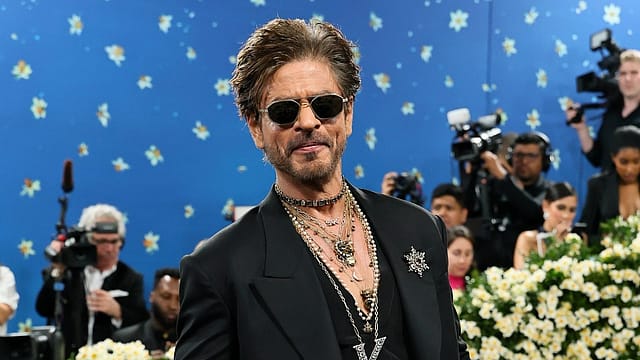
We will, we will rock you.
For Vodafone Idea, the old Queen anthem requires only a tiny rebrand: Vi will, Vi will rock you.
It would have been the perfect soundtrack for a telecom operator telling India that “Vi badal raha hai… tayaar rahiye.” The government has rescued Vodafone Idea from a financial cliff. The network is beginning to recover. Quarterly subscriber additions have finally turned positive. And Shah Rukh Khan has arrived to persuade India that the comeback is real.
But can Vi rock anyone other than its logo?
On September 1, the company unveiled the first expression of a wider brand transformation. The colourful visual particle attached to the existing Vi identity has become a dynamic three-dimensional sphere and moved above the wordmark. The refreshed identity will travel across its app, stores, digital platforms and communication. Over the coming weeks, Vi has promised campaigns, strategic launches and new customer experiences as it attempts to move from being seen merely as a connectivity provider to a technology company.

Zeroing In on ECI
09 Oct 2026 - Vol 05 | Issue 41
Constitutional legitimacy versus political opportunism
The message is movement. The timing is deliberate. The choice of ambassador is predictable.
The burden of proof is enormous.
Six years after Vodafone and Idea became Vi, the company is asking consumers to look at it again. Jio and Airtel, meanwhile, spent those years adding users, expanding 5G and deepening their place in the customer’s digital life. Vi must now persuade India that the change rising above its name is also taking place beneath the signal bars.
The government can convert dues into equity. It can recalculate liabilities, postpone repayments and move a financial cliff several years down the calendar.
What it cannot do is issue a notification ordering Indians to love Vi.
Vi apparently believes Shah Rukh Khan can help. Corporate India has spent decades acting on the same faith: when a brand has a difficult question, place a celebrity in front of it. The star arrives. The commercial collects views. Social media reports buzz. The marketing department presents a glowing report card filled with reach, recall, impressions and earned media.
Then comes the number the presentation rarely isolates: how many consumers changed brands?
The Government Saved the Company. Consumers Must Save the Brand
Vodafone Idea has received more than a lifeline. It has received time, oxygen and a government with almost half the company riding on its survival.
The Centre reduced the company’s adjusted gross revenue liability from ₹87,695 crore to ₹64,046 crore and pushed most repayments into the next decade. In 2023, it converted ₹16,133 crore of interest dues into equity. Another ₹36,950 crore of spectrum-related dues was converted in 2025, raising the government’s holding to 48.99 per cent.
The relief helped Vodafone Idea report a one-time profit after tax of ₹34,552 crore in FY26 and gave it room to invest in the network. It also helped answer the most immediate question surrounding the operator: could it remain alive?
Its latest numbers suggest the patient is moving.
Vi’s subscriber base rose to 193.1 million in the first quarter of FY27 from 192.8 million in the preceding quarter. It was the first quarter of positive net additions since Vodafone India and Idea Cellular merged in 2018, although analysts have cautioned that machine-to-machine connections may have contributed to the increase.
Its 4G and 5G base reached 130.1 million. Customer average revenue per user, excluding machine connections, increased to ₹195 from ₹190 in the previous quarter. Revenue rose six per cent year-on-year to ₹11,689 crore, while its quarterly loss narrowed to ₹3,754 crore.
Those are signs of recovery. They do not amount to competitive equality.
Vi’s total customer base remained 4.6 million lower than a year earlier. Its customer ARPU trailed Airtel’s ₹264 and Jio’s ₹215.6. At the end of June, Vodafone Idea had 193.1 million connections, compared with 533.3 million for Jio and 492 million for Airtel.
TRAI data placed Jio’s share of India’s wireless subscriber market at 39.27 per cent and Airtel’s at 37.96 per cent. Vi stood at 15.5 per cent.
India has three large private telecom operators. More than three-fourths of the market belongs to two.
The government can preserve the third operator. It cannot manufacture a three-way contest. That requires consumers to return.
“A company can be rescued institutionally, but a brand can only be rescued behaviourally,” says Ashita Aggarwal, professor of marketing at SP Jain Institute of Management & Research. “Government relief can improve Vodafone Idea’s ability to invest and survive. It cannot by itself change what consumers believe about Vi or persuade them to port their number to it.”
The government needs a credible third operator to prevent a private telecom duopoly and protect nearly 200 million existing connections from disruption. Vodafone Idea needs something more demanding: customers who actively prefer it.
Jio Owns Scale. Airtel Owns Premium. What Does Vi Own?
Jio entered telecom as the great disruptor. Free calls, cheap data and Reliance Industries’ financial strength allowed it to redraw the market. Its identity now extends from scale and digital access into entertainment, payments, commerce, cloud and artificial intelligence.
Airtel built another position. It speaks the language of premium customers, network quality and experience. Its ₹264 ARPU gives that claim commercial evidence.
Vi occupies less obvious territory.
It cannot outspend Jio in ecosystem building. It cannot immediately out-premium Airtel while its network investment catches up. Permanent discounting would damage its economics when it needs tens of thousands of crores for spectrum, towers, 4G expansion and 5G.
Being third is not fatal. Smaller brands can thrive by owning a customer, geography, use case or emotion more completely than larger rivals. Being a distant third without a distinctive reason for purchase is dangerous.
“A third brand can be strategically valuable to the market and commercially meaningful to consumers,” Aggarwal says. “But it cannot survive merely by announcing that it is the alternative. It must define what kind of alternative it is. If Jio owns scale and Airtel owns premium network perception, Vi needs one clear territory that customers can immediately associate with it.”
Vi now says it wants to become a technology company serving retail and enterprise customers while keeping connectivity at the core. That ambition sounds modern. It is also the direction in which every large telecom operator wants to travel.
“Tech co” describes a destination. It does not yet give the consumer a reason to change SIM cards.
Two Famous Brands Entered. Vi Emerged
Vodafone India and Idea Cellular arrived at their 2018 merger with abundant brand capital.
Vodafone had the pug, the ZooZoos and “Wherever You Go, Our Network Follows”. It turned coverage into companionship and telecom services into a strange, charming advertising universe.
Idea had Abhishek Bachchan, “What an Idea, Sirji!” and campaigns that connected mobile technology with social possibilities. It spoke with mass-market warmth and a recognisably Indian voice.
One brand brought global polish and extraordinary advertising properties. The other brought reach, familiarity and an optimistic vocabulary of possibility.
The unified Vi identity arrived in September 2020. Its name joined the first letters of Vodafone and Idea and invited consumers to pronounce them as “we”. “Together for Tomorrow” attempted to give the corporate marriage a consumer meaning.
Six years later, the name is familiar. Its sharpest meaning remains unsettled. “Vodafone and Idea each had a recognisable personality,” says Aggarwal. Vi gained a compact new identity, but it also had to rebuild meaning after retiring two brands that consumers already understood.
That was the hidden cost of the original rebranding. Vi did not begin with zero awareness. It began with abundant but fragmented memory.
The latest refresh tries to place movement, possibility and optimism above that administrative-sounding abbreviation. Then it places Shah Rukh Khan above everything.
The decision becomes more revealing when Vi studies the advertising histories of its parents. Vodafone built extraordinary fame in India without depending on a film star. Idea used Abhishek Bachchan to create advertising that entered popular culture, but celebrity and recall could not protect the business from the structural weaknesses that eventually pushed it into a merger.
Vi has inherited both lessons. Vodafone showed that a telecom brand did not need a celebrity to become loved. Idea showed that a celebrity and a famous line could not save a telecom company.
The merged brand examined both report cards and hired Shah Rukh Khan.
SRK Can Make India Watch. Can He Make Anyone Port?
Khan is a formidable advertising property. Kroll valued his celebrity brand at $177.9 million for 2025 and ranked him India’s most valuable celebrity. His portfolio reportedly expanded to 36 endorsements.
Those numbers prove that advertisers want Shah Rukh Khan. They do not prove that consumers buy, subscribe or switch because he appeared in the commercial.
His relationship with Hyundai is frequently offered as the great Indian case study. Khan helped introduce the unfamiliar Korean carmaker and its Santro to India in 1998. Hyundai went on to become the country’s second-largest carmaker. That was an enormously successful launch partnership.
It also establishes the limit of celebrity power. Nearly three decades of Shah Rukh Khan did not make Hyundai India’s largest carmaker. Maruti retained an overwhelming lead. Hyundai’s market share fell to 14 per cent in FY25, its lowest since FY13, and Mahindra later moved ahead of it in retail sales.
Hyundai’s rise required cars that Indians wanted, factories, dealers, pricing and service. Its subsequent market-share pressure arose from products and competition. Khan could make people notice the Santro. He could not permanently determine which car they bought.
Lux produced one of Indian advertising’s most discussed celebrity stunts when Khan entered a bathtub for its centenary campaign in 2005. The commercial generated conversation by placing a male superstar inside a category historically endorsed by female film stars. It did not make Lux invincible. Santoor eventually moved ahead as consumer preferences and regional strength reshaped the soap market.
BYJU’S bought Khan’s credibility as a reassuring parent and national superstar. It became one of India’s most visible education brands. His presence could neither validate its business practices nor protect the company when the underlying enterprise unravelled.
These examples do not establish that Khan damaged the brands. They establish something more useful: celebrity fame and brand performance follow different scoreboards.
A star can create attention, familiarity and borrowed emotion. Market leadership depends on the product, price, distribution, service, competition and repeated consumer experience. The endorser may open the door. The business must walk through it.
Vi’s wager is especially questionable because Khan now appears across technology, payments, automobiles, food, beauty and several other categories. Which Shah Rukh Khan has Vi purchased? Hyundai’s dependable family man? A beauty brand’s symbol of confidence? A technology evangelist? The comeback king?
At some point, omnipresence weakens meaning transfer. The celebrity remembers the cheque. The consumer remembers the celebrity. The brand hopes somebody remembered the logo.
Telecom makes the test brutally measurable. Liking Khan costs nothing. Porting a number requires a customer to believe Vi offers better coverage, value or service. An advertisement can produce applause. It cannot complete the porting request.
Wonderful Advertising Cannot Repair a Weak Signal
Telecom advertising suffers from a discipline few other categories face: the promise is tested several times every hour.
A packaged-goods company may survive a gap between imagery and experience until the next purchase. A telecom operator enters the consumer’s judgement whenever a call drops, a video freezes, a signal disappears or a rival’s phone connects first.
The network is part of the brand.
Vi says its 4G network covers more than 1.1 billion people, approximately 86 per cent of India’s population. It has expanded 5G to more than 80 cities and plans to spend ₹45,000 crore between FY27 and FY29 on 4G and 5G.
The investment is essential. The competitive clock began much earlier. Jio and Airtel launched 5G in 2022 and built national coverage while Vodafone Idea was still trying to secure funding for its rollout.
Vi must now close two gaps at once. It has to improve the network and make consumers notice that the network has improved.
“Advertising can accelerate a changed reality; it cannot manufacture one indefinitely,” reckons Aggarwal. Vi should communicate network improvements aggressively, but the claims must be experienced by customers in the places where they live and travel. “In telecom, the product is the most frequent advertisement,” she adds.
The new campaign’s smartest phrase is also its greatest vulnerability. Vi badal raha hai invites India to look for proof. Shah Rukh Khan can make that invitation famous. His fame cannot decide what the customer finds.
A customer discovering that an old assumption about Vi is no longer true will be more persuasive than a hundred films saying the company has changed. A customer discovering that the old problem remains will turn the campaign into a punchline.
Vi Cannot Discount Its Way Back
The obvious weapon for a distant challenger is price. For Vi, it may be the most dangerous.
Jio built its disruption around affordability and has the scale, ecosystem and balance sheet to fight aggressively. Vi cannot sustainably purchase market share through permanent discounting while carrying enormous obligations and financing a delayed network expansion.
Nor can it merely imitate Airtel’s premium position. Premiumisation requires reliability, service quality, affluent users and the confidence to charge more without inviting churn.
Vi needs to find value between cheapness and generic premium claims.
That territory could be built through customer service, transparent pricing, fewer digital irritants, stronger family products, roaming, entertainment or network leadership in selected circles. It could use the human warmth of its inherited brands to position itself as the challenger that makes increasingly complicated telecom feel simpler.
The company also possesses a strategic asset that rarely receives sufficient attention: nearly 200 million existing relationships. It need not begin by stealing millions of customers from Jio and Airtel. It must first stop giving its own customers reasons to leave.
Retention can become positioning when the experience behind it improves.
The Comeback Cannot Remain a Teaser
One positive quarter cannot carry the full weight of a turnaround narrative.
Vi must show sustained subscriber growth, demonstrate that valuable mobile users are driving it, increase the share of 4G and 5G customers and translate those gains into higher revenue and lower churn.
It must also complete its funding plan. Vodafone Idea has secured ₹6,400 crore through warrants and financing facilities, is pursuing ₹35,000 crore in bank debt and has placed network orders worth approximately ₹9,000 crore. Its ₹45,000-crore ambition requires more capital while Jio and Airtel continue investing.
The government has granted Vi an extraordinary strategic asset: time.
Time, however, depreciates.
Every year of delayed investment allowed its rivals to add users, improve coverage and deepen their digital ecosystems. Vi’s breathing room will matter only if it converts quickly into stronger coverage, better retention and a proposition belonging to Vi rather than to the memories of Vodafone, Idea or its new ambassador.
The refreshed logo is explicitly the first expression of a transformation that will unfold over the coming weeks. That makes the exercise a teaser. It also gives Vi an opportunity to demonstrate that the sphere above its name represents movement taking place throughout the company.
The next reveal cannot merely add more vocabulary, colour and film. It must answer the question the original Vi identity left unresolved: what can this operator do for a customer that Jio and Airtel cannot do as well?
From Lifeline to Love
A healthier Vodafone Idea matters to India. A country with more than a billion mobile connections should not drift casually towards a private-sector duopoly. A competitive Vi can constrain tariffs, improve service and give consumers somewhere credible to go when they become dissatisfied with Jio or Airtel.
But public interest cannot become a permanent substitute for commercial relevance. The state has converted dues, reduced liabilities and pushed repayments into the next decade. It has kept the third operator in the contest.
Vi must supply the reason for staying there.
“The next phase cannot simply say that Vi is back,” says Aggarwal. It must tell consumers what Vi has returned to do for them. Survival may reassure investors and policymakers, but customers choose a telecom brand for performance, value and meaning. “A lifeline keeps a company breathing. It does not make the market fall in love with it,” she adds.
Shah Rukh Khan can make India watch. He can lend Vi his comeback story, fill its launch film with optimism and help the marketing department declare the campaign a success.
He cannot lend Vi a network.
Vi may want “Vi Will Rock You” as its comeback anthem. That song belongs to a winner already stomping inside the stadium.
Vodafone Idea is still fighting its way back through the gates. For now, Shah Rukh Khan must sing a humbler anthem: Vi shall overcome.
Whether India joins the chorus will depend on the signal.