Swiggy Shuts Snacc: What Went Wrong With Its 10-Minute Food Delivery Bet
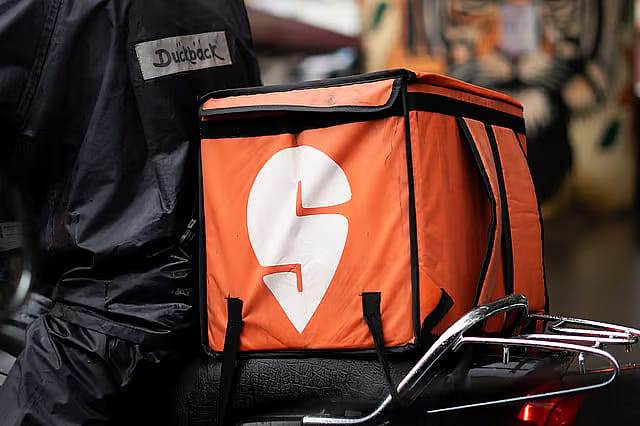
A 15-min-app did not even last 15 months. When Swiggy launched Snacc in January 2025, it looked like a natural extension of India’s quick-commerce boom. If groceries could reach consumers in minutes, delivering snacks, beverages and ready-to-eat food at similar speed seemed like the next logical step. The Bengaluru-based company built Snacc as a standalone app focused on ultra-fast delivery through centrally stocked hubs rather than restaurant kitchens.
Less than a year later, the experiment has ended. Swiggy has shut down Snacc, according to an internal email to employees, as reported by entrackr, while reiterating that its core food delivery business continues to grow strongly. The company reported 20.5 percent year-on-year growth in food delivery, driven by higher order volumes and improving average order values.

Losing Memory
16 Oct 2026 - Vol 05 | Issue 42
The making of a medical and social emergency
What was Snacc and how was it different from Swiggy’s main app?
Unlike the primary Swiggy platform, which depends on restaurant preparation time, Snacc was built around a dark-store model. Inventory of ready-to-eat items was stocked in hubs, allowing orders to be dispatched almost immediately.
This setup aimed to remove kitchen delays and enable 10–15 minute deliveries. The service initially launched in parts of Bengaluru before expanding to Gurugram and Noida, but it never moved beyond a limited set of cities.
The model positioned Snacc closer to quick commerce than traditional food delivery, focusing on impulse consumption rather than planned meals.
Can ultra-fast food delivery actually make money?
The biggest challenge for models like Snacc is economics. Ultra-fast delivery only works when order density is extremely high. Dark stores, rider fleets and inventory all involve fixed costs that require constant throughput to remain viable.
Groceries tend to work better in this model because consumers buy them regularly and in predictable categories. Snack and ready-to-eat purchases, however, are often spontaneous and inconsistent. That makes forecasting difficult and raises the risk of unsold stock or wastage.
For a company already running a large restaurant-based delivery network, building a parallel supply chain for ready-stocked food adds operational complexity without guaranteed scale.
Do customers really need 10-minute food delivery?
Another issue is whether the speed advantage solves a widespread consumer problem. While grocery emergencies are common, food orders are often more flexible. Many users are comfortable waiting 25 to 35 minutes for a restaurant meal if the choice is broader or quality is better.
Snacc’s value proposition was strongest for impulse snacking or convenience moments, but those occasions may not occur frequently enough to sustain a dedicated infrastructure-heavy platform.
That gap between perceived convenience and actual daily demand may have limited its growth potential.
Are other companies also struggling with fast food delivery models?
Swiggy’s decision reflects a broader industry pattern. Zepto Café, the quick-service food arm of Zepto, recently shut nearly 200 of its 600 stores as part of a restructuring aimed at addressing weak demand in certain areas. Ola has also put its Ola Foods delivery service on hold following its relaunch.
These moves suggest that the challenge is not unique to Swiggy but linked to the underlying economics of ultra-fast prepared food delivery.
While quick commerce has worked well for groceries, extending the same promise to prepared food appears to be more difficult, though Bistro by Blinkit seems to be doing fine than other players.
Is this about cost cutting or a strategic shift at Swiggy?
Swiggy’s internal note emphasised disciplined capital allocation and prioritising scalable initiatives. That language reflects a broader shift across tech-enabled consumer businesses, where investors and management teams are focusing more on profitability and sustainable growth than on experimentation.
With the core food delivery business growing at over 20 percent annually, concentrating resources there may offer clearer returns than funding a niche, infrastructure-heavy vertical.
In that sense, shutting Snacc may be less about failure and more about reallocating capital toward segments that already demonstrate strong demand and scale.