Stay for Your Daughter? Clinic Plus Questions the Advice
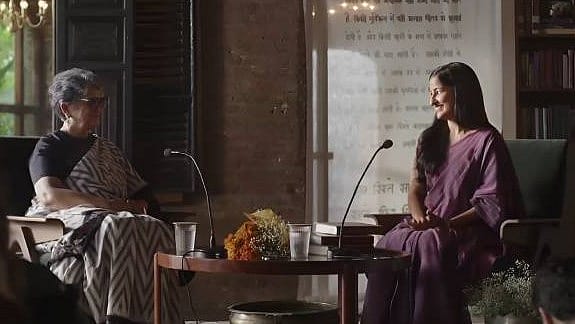
A woman has written a book. Asked about the inspiration behind her poetry, she points to her daughter.
It could be the beginning of a comfortable advertisement. A mother thanks her child, the child smiles, and a brand borrows the warmth. Indian advertising knows its way around that room.
Clinic Plus opens another door.
The story travels back to a difficult marriage, to the advice that a woman should adjust, and to a daughter who helps her mother imagine a different life. The child who might have been invoked as the reason to endure becomes a source of strength to leave. The book launch gives the mother something advertising does not always allow her: an identity that has grown beyond the crisis.

Losing Memory
16 Oct 2026 - Vol 05 | Issue 42
The making of a medical and social emergency
She has a voice. She has work. She has an audience listening to something other than an account of her sacrifice.
The new Clinic Plus film extends its Meri Beti Strong platform into uncomfortable domestic territory. Its proposition is contained in the line Maa ki majboori nahi, beti hoti hai maa ki mazbooti: a daughter can be her mother’s strength rather than her helplessness.
The sharper thought sits underneath. What exactly does a daughter learn when her mother is repeatedly instructed to put up with unhappiness for her sake?
The lesson nobody announces
Children are taught values through explicit instruction. Respect your elders. Work hard. Be kind. Families also teach through the arrangements they leave unquestioned.
A daughter can hear that she is strong while watching her mother being denied the right to act on her own strength. She can be encouraged to speak confidently at school and then return to a home where accommodation is expected chiefly from one adult. The words and the example begin to pull in different directions.
Clinic Plus finds its argument in that gap.
The familiar defence of endurance places the daughter’s future against the mother’s present. Stay because the child needs a family. Adjust because the child must not suffer. The woman’s distress becomes a cost that somebody has decided she should absorb.
The film asks the audience to reconsider the calculation. A child is also learning what a woman may reasonably expect from life. The decision to remain has consequences for that education, just as the decision to leave does.
This is where the campaign earns attention. It challenges a piece of advice that can sound responsible precisely because it has been repeated so often. The person saying it may even believe they are protecting the daughter. The commercial makes room for another possibility: the daughter may want her mother to have the freedom everyone claims to be preserving for her.
That is a more demanding idea than telling a girl to be fearless. It asks the adults around her to examine the conditions under which they are willing to admire courage.
Strength travels both ways
There is a useful evolution here for the brand.
The mother–daughter relationship gives Clinic Plus a familiar emotional setting. A mother caring for her daughter’s hair provides an intimate, everyday point of contact. The word strength can travel from the product’s vocabulary into the ambitions a mother holds for her child.
But a long-running platform eventually needs movement. Repeating the instruction to raise a strong daughter can produce a procession of worthy films in which only the child’s challenge changes.
This execution changes the direction of influence. The daughter has learnt enough to help her mother question the life she has been told to accept. The mother’s investment in her child returns as solidarity.
That makes the campaign more interesting than a generic celebration of girls. It gives the brand’s established idea a consequence. If the daughter grows strong, she may challenge the rules governing her own home.
Branding and marketing experts reckon that Clinic Plus gives its promise of a strong daughter a consequence within the family. The girl begins to question what her mother is expected to tolerate. "That makes strength more meaningful than a word attached to a shampoo,” says Ashita Aggarwal, professor of marketing at SP Jain Institute of Management & Research.
That consequence gives the film a life beyond the occasion. Remove Daughter’s Day from the release calendar and the central conflict remains recognisable. The mother’s obligation to adjust does not expire when the occasion passes. Nor does the daughter’s observation of it.
The commercial’s relevance therefore rests on the relationship it examines. The calendar supplies the opportunity to speak.
A life after the family photograph
Indian advertising has found other ways of questioning what a respectable family is supposed to look like.
Tanishq’s 2013 remarriage film included a bride’s daughter in the wedding ritual. The groom’s acceptance of the child was central to its emotional resolution. Jewellery, with its established role in weddings, helped present a second marriage as an occasion deserving celebration.
Clinic Plus approaches an earlier and less comfortable point in the journey. Its mother must first be allowed to imagine an alternative to the marriage she is in. Her future acquires value without requiring another romantic relationship to validate it.
That difference matters. A woman’s story need not wait for a better husband to become hopeful. The book launch allows her to be recognised through what she has made of her life.
IKEA’s Swedish film Every Other Week, released in 2016, addressed children living between the homes of divorced parents. It brought a changed family arrangement into the ordinary business of making a home. Furniture had a practical role in helping a child feel that there was a place for them.
These campaigns work at different points. Tanishq celebrates a new union. IKEA attends to life across two homes. Clinic Plus questions the instruction that the original arrangement must be preserved regardless of what it asks of the mother.
Together, they suggest a productive direction for family advertising: pay attention to the quality of the relationships in that family. A conventional composition alone cannot guarantee that everyone in it is thriving.
The child cannot carry the whole story
The applause leaves a difficult question unanswered.
Why does the daughter need to become the person who helps the mother find her way out?
As a dramatic device, it is affecting. It completes the brand’s idea of strength passing between generations. As a broader expectation, it deserves caution. A child should not have to supply the judgement, emotional reassurance or practical support that adults and institutions fail to provide.
The most generous reading is that the daughter offers recognition: she helps her mother see that choosing differently need not mean failing her child. That is distinct from making the child responsible for repairing the adult’s life.
The distinction should remain visible. Otherwise, advertising can replace one demanding ideal with another. The mother must stop being endlessly self-sacrificing, but the daughter must now be exceptionally wise, brave and emotionally available.
The daughter’s support is moving, but the mother’s right to make a choice should stand on its own. "The campaign is strongest when the child helps her recognise that right. It becomes more complicated if the child appears responsible for rescuing her,” says Aggarwal.
A strong girl should also be allowed to be a girl.
There is a second risk in the book launch. Success gives the story an uplifting destination, but freedom should not require an impressive subsequent career to justify it. A woman who leaves and builds a quiet, secure daily life has an equally compelling claim to dignity.
Nor can a short film account for every condition shaping such a decision. Money, housing, support and the circumstances within a marriage do not disappear because a campaign has found an elegant line. The film is most persuasive as a challenge to automatic advice. It cannot serve as a universal prescription for individual lives.
What is the shampoo doing here?
The commercial question is equally fair.
Shampoo does not resolve a difficult marriage. The connection is symbolic, carried by the brand’s established relationship with mothers and daughters and its repeated use of strength as an organising idea.
That makes execution and continuity especially important. A brand arriving at this subject for a solitary burst of attention would have a harder case to make. Clinic Plus benefits from having a platform whose central relationship can sustain the story.
Even so, the emotion needs to return to a distinctive brand memory. If viewers remember only a moving film about a mother, the advertiser has financed a social message without necessarily strengthening its own position. The mother–daughter bond is valuable territory; it is also territory many brands can enter.
The useful question is whether this particular reversal feels like a development of Meri Beti Strong. Here, it does. The girl’s strength has grown large enough to change what the mother believes she must endure.
For all the qualifications, that is an intelligent and consequential turn. The campaign refuses the easy arrangement in which a daughter’s empowerment can be celebrated while the mother’s choices remain untouched.
At the book launch, the mother is finally being asked what inspired her. The achievement of the film is that she has been allowed a life worth asking about.