Situationship Hurts? Apply Zandu Balm: How Gen Z’s Feelings Became ‘Peeda’
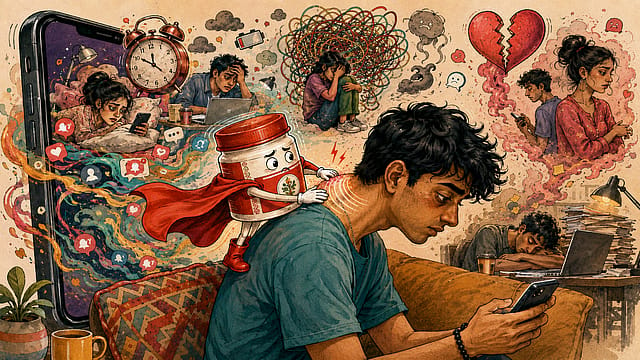
There was a simpler time when pain knew where to live.
A headache occupied the forehead. A stiff neck sat between the shoulders. A sprain announced itself at the ankle. Zandu Balm arrived in a small bottle, produced heat, released a familiar smell and gave the household something to do about the ache.
Then Gen Z entered the room carrying a smartphone.
The headache came from screen time. The neck bent under doomscrolling. The back protested against work-from-bed. The mind began overthinking. Monday acquired blues. Careers caused burnout. Romance became a situationship. Suddenly, pain was everywhere, including places where a balm could not safely be applied.
Zeroing In on ECI
09 Oct 2026 - Vol 05 | Issue 41
Constitutional legitimacy versus political opportunism
Zandu has decided to follow it.
In its new #UndoWithZandu campaign, the Emami-owned brand transports young consumers into “Peedaland”, a surreal universe populated by the aches, annoyances and emotional friction of contemporary life. A lively rescuer appears, Zandu enters the scene and the instruction follows: “Peeda ko karo undo with Zandu.” The campaign, created by Tree Communications and Abbas Mirza, targets consumers between 16 and 28 and is being rolled out across television, digital, OTT and social media.
The product proposition has barely moved. The definition of pain has. Zandu once promised relief from headaches, body aches and colds. It now wants cultural ownership of “peeda”, an elastic word capacious enough to hold tech neck, screen fatigue, career stress, burnout, overthinking and romantic confusion.
The strategy is smart. It is also wonderfully ambitious. A balm that can work on the temples would now like a speaking part in your situationship.
A Balm Walks into a Situationship
Heritage brands carry a peculiar pain of their own. Everybody recognises them.
Recognition, however, is frequently inherited rather than chosen. A young consumer may know Zandu because it stood in a grandparent’s medicine cabinet, entered childhood through its smell and became a pop-culture punchline through Munni Badnaam Hui. That memory does not automatically place the product inside a teenager’s backpack or beside a gaming console.
Zandu’s task, therefore, is not awareness. It is generational adoption.
The campaign solves that problem by locating physical discomfort inside unmistakably young behaviour. Long hours on a phone can cause eye strain, headaches and neck discomfort. Poor posture is real. Screen-heavy routines create plausible occasions for topical pain relief. “Tech neck” may sound like advertising slang, but the ache underneath it is not imaginary.
Then Peedaland widens its borders. Burnout, career stress, overthinking, Monday blues and situationship drama enter the same verbal universe. They make the campaign recognisable, memeable and shareable. They also expose its central sleight of hand. These may all be forms of peeda in everyday speech, but they are not the same kind of pain and do not submit to the same remedy.
Rub Zandu on a stiff neck and the product can be judged. Rub it on romantic ambiguity and only the copywriter feels better. “The campaign begins with a strong behavioural truth: younger consumers are developing genuine physical discomfort from screen-heavy lives,” says Ashita Aggarwal, professor of marketing at SP Jain Institute of Management & Research. The risk begins when the brand stretches a credible product occasion into every emotional inconvenience associated with being young. Cultural relevance helps people notice a balm. "It cannot expand what the balm is actually capable of treating,” she adds.
That distinction matters because advertising routinely turns metaphor into market size. Once every irritation becomes “pain”, every irritation can be recruited as a reminder for a pain-relief brand. Zandu is not simply refreshing its language. It is enlarging the semantic territory surrounding the bottle.
Munni Was Zandu’s Accidental Influencer
There is delicious history here. In 2010, Dabangg released Munni Badnaam Hui, whose most commercially useful lyric compared Munni’s condition to Zandu Balm. Emami initially objected to the unauthorised use of its trademark and sent the film’s producers a legal notice. The headache soon became an opportunity. The dispute was settled, the company gained the right to use parts of the song in advertising and Malaika Arora, who performed the number, became Zandu Balm’s brand ambassador.
The woman who had become “Zandu Balm” in a film song was hired to sell Zandu Balm in a commercial. It was an extraordinary example of a brand recognising that popular culture had given it something advertising money might struggle to manufacture. Zandu did not create the phrase that travelled through the country. It eventually climbed aboard.
Sixteen years later, the company presents that association as evidence of its ability to shape popular culture. There is some justice in the boast. The song fused the brand with a metaphor for relief and embedded its name in mass memory. Yet the chronology also supplies a warning for Peedaland.
Munni Badnaam Hui became culture first and advertising property later. #UndoWithZandu has been designed as advertising that hopes to become culture.
The direction of travel has reversed. “A brand cannot declare cultural relevance into existence,” reckons Aggarwal. The Zandu reference in Munni Badnaam Hui succeeded because people adopted it spontaneously through music, humour and repetition. Peedaland will pass a harder test: whether young consumers use its language after the media spend and campaign machinery disappear.
That is the report card Zandu must await. Views can establish exposure. Likes can record momentary amusement. A trending phrase can demonstrate distribution. None proves that a 20-year-old has placed the balm inside a new repertoire of self-care.
Old Bottle, New Pain Points
Zandu is not a fragile antique searching desperately for one last audience. It is a formidable business asset.
Emami acquired Zandu Pharmaceutical Works in 2008 for roughly ₹730-750 crore. By 2024, Zandu had reportedly become an approximately ₹800-crore brand, and Emami said it expected it to cross ₹1,000 crore within a couple of years. The wider Indian pain-management market, including pills, sprays, creams and other formats, was estimated at about ₹16,000 crore in 2025. The topical pain-relief segment alone is intensely contested by old household names and newer formats promising faster, cleaner and more convenient relief.
That explains why youth matters. The category has spent decades speaking fluently to tired parents, workers, older consumers and households accustomed to balms. Gen Z brings different habits. It has roll-ons, sprays, patches, gels, wearable devices, wellness routines, online pharmacies and an endless supply of advice from creators. The traditional balm must compete with products that feel less messy, less medicinal and more compatible with life outside the family home.
Peedaland performs an important repositioning job. It moves Zandu away from the image of something another generation reaches for and towards a portable response to digitally produced discomfort. The brand does not abandon Ayurveda, familiarity or efficacy. It changes the world surrounding them.
This is the campaign’s strongest defence. Heritage brands die when they behave as if inherited trust guarantees future purchase. Zandu is refusing to sit inside the medicine cabinet and wait for young consumers to develop their parents’ aches.
It is meeting them early, at the neck bent towards the phone. “A legacy brand should not become young by scattering slang across a commercial,” says Aggarwal. It becomes young when it identifies a new behaviour, demonstrates a relevant use and earns a place in the consumer’s routine. "If Zandu can own relief from the physical consequences of screen-led living, it has found a credible bridge between heritage and youth,” she underlines.
That is a large enough opportunity. The temptation to include every contemporary frustration may actually weaken it.
Can Everything Be Undone?
The campaign rests on a very Gen Z promise: undo. The word belongs to screens. Delete the line. Reverse the edit. Restore the file. Remove the mistake. Zandu places an old topical remedy beside the most comforting command in digital life.
But the body has no keyboard shortcut. Screen fatigue accumulates. Posture becomes habit. Burnout cannot be dismissed with a click. Emotional distress needs language, time, support and, sometimes, professional help. A situationship may require clarity. Monday blues may require a different job. Career anxiety may require an economy less willing to treat young workers as replaceable tabs.
The danger is not that consumers will literally mistake balm for therapy. Gen Z understands exaggeration, memes and absurdity perfectly well. The sharper concern is strategic. When a product with a precise functional role claims an indiscriminate universe of “peeda”, it risks turning a useful insight into a costume party.
The comedy attracts attention. The product must still find somewhere credible to land. Zandu’s own statement captures the optimism behind the campaign: life’s peedas may change, but consumers still want solutions that work instantly. The first half is persuasive. The second contains the oldest fantasy in consumer marketing.
Some pains respond to speed. Others become worse because a generation has been trained to expect an undo button for everything. Peedaland may help a century-old brand enter youth culture with energy and humour. It gives Zandu a recognisable enemy in screen-produced physical discomfort and a flexible content universe capable of generating reels, characters and future campaigns. For a heritage balm competing in a fragmented attention economy, that is good marketing.
Its real victory will come when young consumers reach for Zandu after the phone bends the neck, strains the eyes and produces a genuine ache.
The situationship should be left to its own painful ending. Zandu can undo tech neck. Gen Z will have to block the ex itself.