Nippo Turns Up the Voltage: Can a Battery Brand Power a Bigger Business?
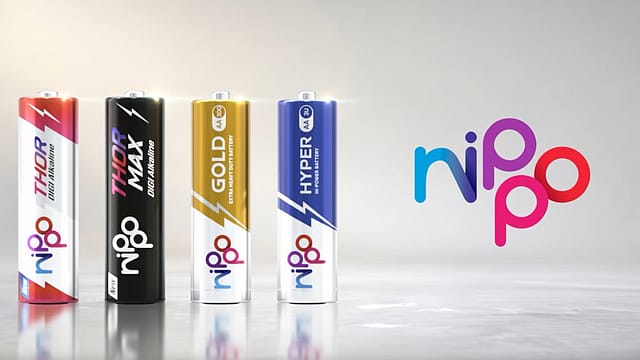
For five decades, Nippo has built its business around a product that is rarely noticed when it works and immediately missed when it does not. Now, the company wants consumers to notice the brand itself.
Indo National Limited, which owns the Nippo brand, has launched its new ‘Silent Warriors’ digital campaign, celebrating people whose everyday contributions often go unnoticed. The campaign draws a parallel between these unsung contributors and Nippo batteries, which quietly power everything from household devices to torches without demanding attention.
The emotional idea, however, comes at a distinctly commercial moment for the company. Indo National's advertising expenditure rose 44% in FY26 to Rs 19.82 crore from Rs 13.75 crore a year earlier, even as its revenue from operations fell to Rs 451.01 crore from Rs 457.97 crore. That makes the campaign part of a much bigger business push.

Zeroing In on ECI
09 Oct 2026 - Vol 05 | Issue 41
Constitutional legitimacy versus political opportunism
Nippo is spending more on visibility while simultaneously trying to defend its core battery franchise, premiumise its portfolio, expand distribution and find growth in categories where it faces very different competitors.
“Nippo is a brand India has trusted for generations but rarely highlighted; and that indifference, not unawareness, is what we set out to change. The film brings the idea alive through vignettes from everyday Indian life, a working woman carrying two roles, a nurse on a night shift, a soldier at the border—each a quiet contribution that goes unseen. As the brand expands into torches, mosquito bats, home care and air care, 'Silent Warriors' gives every new category a name worth asking for." Arun Sriram, Chief Marketing Officer, Indo National Limited, said.
The pressure is already visible in the company's bottom line. Total expenses increased to Rs 468.17 crore in FY26 from Rs 465.56 crore, while profit before tax swung from a profit of Rs 1.06 crore to a loss of Rs 9.67 crore. The company reported a net loss of about Rs 10.40 crore, compared with a profit of Rs 1.01 crore in FY25. The advertising increase therefore stands out. Nippo is not cutting marketing at a time when profitability is under pressure. It is doing the opposite. The battery business is growing, but slowly Nippo's battery business generated Rs 301 crore in revenue in FY26, up from Rs 291 crore in FY25, representing roughly 3% growth. But the headline growth figure masks a more complicated market. The company says its battery business achieved 3% value growth largely through price increases and changes in product mix, while input costs remained elevated throughout the year and affected margins. This means Nippo is facing the classic consumer-business dilemma: getting revenue growth without allowing costs to consume the gains. Its answer is to push consumers towards higher-value products. The most obvious example is Nippo Thor, its alkaline battery, which grew 50% over the previous year. The company sees growing consumption in urban markets as consumers use more gadgets and as its expanded alkaline range gives customers more reasons to move beyond conventional batteries. Alkaline batteries are strategically important because they offer Nippo an opportunity to increase the value of each consumer transaction rather than depending entirely on volume growth in a mature category. The company is also seeing a revival in rural markets, which it attributes to improving macroeconomic conditions and better product availability through its Route to Market strategy. Its next objective is straightforward: strengthen distribution and increase household penetration.
But the bigger battle is outside batteries
The more interesting part of Nippo's strategy is what it is doing beyond its traditional franchise. The flashlight market is undergoing a fundamental technology change. Consumers are moving rapidly from conventional battery-operated torches to rechargeable torches, and Nippo says this segment is currently dominated by unbranded players, helped by cheap Chinese imports. This creates a difficult competitive equation. Nippo has a recognised brand, established distribution and consumer trust, but it is competing against products that can often win on price. The company's response is to increase the distribution of a range of new rechargeable torches across different consumer price points. It is essentially trying to take a familiar brand into a market where brand strength has historically mattered less than price. That is where the investment in marketing becomes relevant. A rechargeable torch is not automatically a Nippo product simply because a consumer knows Nippo as a battery brand. The company has to convince consumers that the brand stands for something beyond batteries. The ‘Silent Warriors’ campaign attempts to create that emotional association at the master-brand level, while the individual products do the commercial work.
LEDs show the limits of chasing volume
The LED business presents another challenge. Indo National says it recorded volume growth in LEDs despite an industry decline, but pricing pressure resulted in a decline in topline value and revenue. In other words, selling more did not necessarily translate into better revenue. The company plans to respond by launching a premium LED range, entering newer categories such as BLDC ceiling fans and expanding distribution through the electrical channel. That represents a significant shift in ambition. Nippo is no longer simply trying to sell more batteries or even more lighting products. It is attempting to build a broader consumer-electrical business around the brand. It is also expanding into categories including mosquito bats, home care and air care, while its institutional and digital channel expansion has delivered 16% growth. The opportunity is obvious: a wider portfolio can reduce dependence on a single category. The risk is equally obvious: every new category requires investment, distribution, product development and consumer awareness.
Why the 44% advertising jump matters
This is why Nippo's advertising spending deserves attention. The company spent nearly Rs 20 crore on advertising in FY26, up more than Rs 6 crore from the previous year. At the same time, sales promotion, selling and distribution expenses rose to Rs 35.21 crore from Rs 29.89 crore. The company is therefore spending on both sides of the consumer equation: creating demand and improving its ability to fulfil that demand. For a legacy brand, this may be less about creating awareness from scratch and more about preventing familiarity from turning into irrelevance. The ‘Silent Warriors’ campaign captures that problem neatly. Nippo's own marketing pitch acknowledges that the brand has been trusted for generations but has not necessarily been highlighted. The new campaign tries to turn that quiet familiarity into emotional relevance. That matters particularly as Nippo moves into categories where consumers may not instinctively associate the brand with the product.
Nippo's next challenge is converting attention into growth
The campaign itself is unlikely to determine whether Indo National's strategy succeeds. The harder test will be whether increased brand spending can translate into stronger sales, better product mix and eventually healthier margins. The company is already seeing encouraging signs in alkaline batteries, with Nippo Thor growing 50%. Rural availability is improving, while institutional and digital channels are expanding. But the underlying challenges remain significant: high input costs, pricing pressure in LEDs, cheap imports in rechargeable torches and a battery market that is not delivering explosive growth. Nippo is consequently trying to reinvent a very old consumer proposition without abandoning the business that built the brand. The irony is hard to miss. A battery company whose biggest strength has always been its ability to work quietly is now investing heavily to be heard. The ‘Silent Warriors’ digital campaign is the latest expression of that change. The real business story, however, will be whether the attention it generates can help Nippo sell more than batteries, command better prices and turn a 50-year-old name into a growth brand for the next decade.