EXPLAINED | Why Is Ajay Devgn Fighting the FDA Over Vimal Elaichi Ads?
What happened? Why is Ajay Devgn in the news?
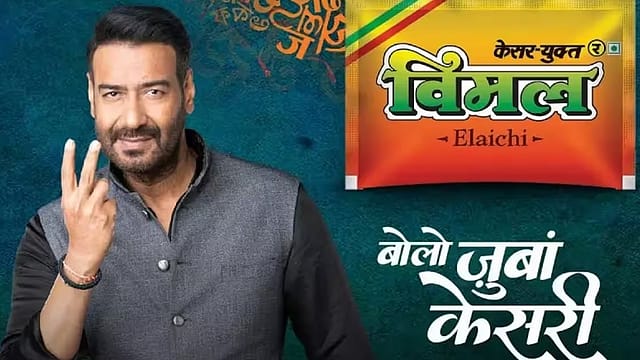
Ajay Devgn has approached the Bombay High Court to challenge a notice over his appearance in Vimal Elaichi advertisements. Maharashtra’s Food and Drug Administration, headed by Tukaram Mundhe, alleges that the campaign indirectly promotes Vimal Pan Masala, a product prohibited in the state.
Shah Rukh Khan and Tiger Shroff also received notices. On October 30, Mundhe said the preliminary proceedings were complete and the cases would move to adjudication, where an authorised officer examines the evidence and decides liability. Devgn’s petition is expected to be heard on November 4.
Why does the FDA say an elaichi ad promotes pan masala?
Because the FDA is questioning the brand message conveyed by the advertisement.

The Era of Forever Wars
30 Oct 2026 - Vol 05 | Issue 44
Coping with an explosive Middle East
Elaichi means cardamom. The regulator alleges that using the Vimal name for the advertised mouth freshener also promotes a brand strongly associated with pan masala. It wants evidence showing that Vimal Elaichi is an independent product genuinely available for sale.
The question is whether viewers are being sold cardamom on its own merits, or being reminded of another product whose promotion is restricted.
What exactly is surrogate advertising?
It is advertising that promotes a restricted product indirectly through another product or service that can legally be advertised.
The Department of Consumer Affairs has previously flagged alcohol brands promoted through soda, packaged water and music CDs, and tobacco-related brands promoted through fennel and cardamom. Familiar branding can keep the restricted product visible without showing it directly.
However, a shared name does not automatically make an advertisement unlawful. The 2022 advertising guidelines expressly allow for a brand name shared with a restricted product if the advertisement is otherwise unobjectionable.
Its words, visuals and overall presentation therefore matter. A genuine product can share a brand name; whether a particular campaign crosses the line requires evidence.
Are elaichi, pan masala and tobacco the same thing?
No. Cardamom is a spice. Pan masala can be made without tobacco. In its earlier Delhi High Court petition, PB Agro LLP described itself as the master licensee for Vimal elaichi and pan masala not containing tobacco.
Maharashtra’s July 2026 prohibition covers pan masala and several specified tobacco and areca-nut preparations. The FDA’s case concerns alleged indirect promotion of a prohibited product through an elaichi campaign.
Separately, tobacco-free does not necessarily mean risk-free. The World Health Organization’s cancer agency has classified areca nut, commonly called supari, as carcinogenic to humans, meaning it can cause cancer. That finding concerns areca nut, not cardamom.
What is Devgn’s argument?
He reportedly says he appeared in an elaichi advertisement and did not endorse Vimal Pan Masala. His challenge also concerns how the FDA proceeded against him.
According to reporting on his petition, Devgn argues that the notice showed the regulator had already formed a view against him. He says he was not supplied the advertisement and supporting material needed to give a meaningful response. He also questions why the brand owner was not first asked for an explanation under the relevant food-advertising procedure.
These are questions about a fair hearing as well as the advertisement itself. The High Court will have to assess the grounds raised against the notice.
Can the law hold an actor responsible for an advertisement?
Potentially, yes. Responsibility for a misleading advertisement can extend beyond the manufacturer.
Section 24 of the Food Safety and Standards Act prohibits misleading food advertisements. Section 53 allows a penalty of up to ₹10 lakh for someone who publishes, or is a “party to the publication” of, an advertisement that falsely describes food or misleads consumers about its nature, substance or quality.
That wording explains why participation in a campaign can attract scrutiny. It does not automatically establish that a particular actor committed a violation.
The food-advertising regulations also set out a procedure for seeking information and considering explanations. Devgn’s reported objection about approaching the brand owner concerns that procedure.
What checks must celebrities make before lending their name?
The 2022 guidelines require endorsements to reflect genuine, reasonably current opinions and adequate information about, or experience with, the product. They must not deceive consumers.
In the earlier Delhi proceedings, PB Agro said its endorsement agreements assured the actors that the product and campaign complied with the law. Those were the company’s submissions recorded in the judgment.
Under the separate Consumer Protection Act framework, an endorser can avoid specified CCPA penalties by showing due diligence, meaning reasonable checks to verify an advertisement’s claims. A manufacturer’s assurance is relevant evidence, but whether it satisfies the required checks depends on the facts.
Could this lead to a ban on celebrity endorsements?
The Central Consumer Protection Authority, or CCPA, has powers to penalise misleading endorsements and temporarily bar the endorser from advertising other products.
Under Section 21 of the Consumer Protection Act, penalties can reach ₹10 lakh for a first contravention and ₹50 lakh for subsequent ones. An endorsement prohibition can last up to one year, rising to three years for subsequent contraventions. The due-diligence protection applies to these specified penalties.
Those are CCPA powers. They should not be confused with the Maharashtra FDA’s food-safety proceedings or treated as penalties already imposed on these actors.
Has a court already cleared the Vimal campaign?
No. On September 14, the Delhi High Court dismissed PB Agro’s challenge to the Maharashtra notices because it lacked territorial jurisdiction. It considered Maharashtra the appropriate forum and left the campaign’s legality undecided.
Why does the Vimal controversy sound familiar?
The campaign has drawn criticism before. In April 2022, Akshay Kumar apologised after appearing in a Vimal Elaichi advertisement and announced that he was stepping back from the association. He said existing contractual terms could allow the advertisement to continue airing.
That episode concerned public criticism and his response. The present dispute asks authorities and a court to examine the legal responsibilities attached to the campaign.
What happens next?
The Bombay High Court is expected to consider Devgn’s challenge on November 4. Mundhe has said the FDA will continue with the adjudication process in accordance with law.
The key issues are whether the campaign indirectly promotes a prohibited product, what role the endorsers played, and whether the regulator followed the required procedure. The next meaningful development will be a court direction or adjudication order addressing those questions.