Dolly Parton’s Branding Legacy: How a ‘Manufactured’ Image Built One of the World’s Most Authentic and Trusted Personal Brands
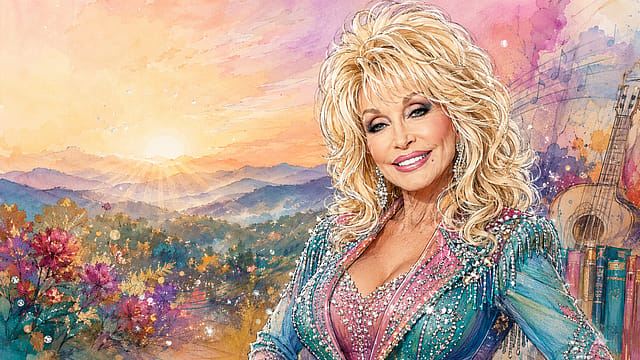
Dolly Parton once entered a Dolly Parton lookalike contest. She lost.
There may be no better opening to the story of a woman who spent seven decades creating one of the world’s most recognisable personal brands. The enormous blonde wigs, painted lips, extravagant curves and clothes bright enough to disturb air traffic were unmistakably Dolly.
Apparently, even Dolly was not Dolly enough.
Parton died in Nashville on August 25 after a brief battle with cancer. She was 80. She leaves behind more than 3,000 songs, over 100 million records sold, films, books, businesses, a theme park and a literacy programme that had distributed more than 304 million books by the end of 2025.

Zeroing In on ECI
09 Oct 2026 - Vol 05 | Issue 41
Constitutional legitimacy versus political opportunism
She also leaves behind a branding paradox.
Parton looked like a manufactured celebrity but behaved like an authentic human being. Most brands do precisely the reverse. They manufacture stories about authenticity. They commission purpose statements, remove makeup from photographs and instruct executives to appear vulnerable on LinkedIn. Parton applied the eyelashes, raised the hair, added another layer of rhinestones and told the world exactly what she was doing.
There was no attempt to pass construction off as nature. Her appearance was exaggerated. Her values were remarkably consistent. The crucial lesson is that authenticity is not an aesthetic. It is the distance between what a brand promises and how it behaves. Parton kept that distance unusually small.
Build the Spectacle. Protect the Substance
Long before marketers began discussing distinctive brand assets, Parton had assembled one from head to toe.
The hair, clothes, Tennessee accent, laughter and self-deprecating wit created instant recognition. You could identify her from a silhouette. Perhaps from one square inch of sequinned fabric. She understood that fame requires differentiation. Talent may bring people into the room, but memorability ensures they know who entered.
The theatricality also gave her a powerful defensive weapon: she owned the joke. People mocked the wigs, breasts, plastic surgery and “dumb blonde” persona. Dolly usually responded with a better punchline. She denied critics the pleasure of discovering anything she had not already announced. The humour often made her appear harmless. That may have been one of her cleverest disguises.
Beneath the country-girl warmth was an entertainer who understood contracts, copyrights and control. The greatest example involved one of the few people more famous than she was.
Elvis Presley wanted to record I Will Always Love You. Parton was ecstatic. Then, on the eve of the recording, his manager, Colonel Tom Parker, told her that Elvis did not record songs without receiving at least half the publishing rights.
Parton refused. She later said she cried through the night. Presley recording her song could have transformed her career, but surrendering half the copyright could have altered her ownership forever.
Another singer eventually recorded it. Whitney Houston’s 1992 version became one of the most successful singles in music history. Parton retained the publishing rights and joked that the royalties earned her enough money to buy Graceland.
It may be the finest celebrity-business lesson ever delivered through tears. Admiration is emotional. Ownership is contractual. Never confuse the two.
Marketing professor Ashita Aggarwal says Parton recognised something many creator-led brands continue to learn painfully. Visibility gives a personality influence, but ownership converts influence into enduring economic value. Parton could collaborate widely because she remained fiercely protective of the intellectual property at the centre of her brand. "She understood that applause ends; rights continue earning,” she adds.
That instinct allowed Parton to expand without being consumed by her extensions.
Dollywood, opened under her name in 1986 through a partnership with Herschend, was more than celebrity merchandise spread across 165 acres. It was situated in Tennessee’s Great Smoky Mountains, close to the poverty and community from which her story began. It created employment and tourism where Dolly’s biography had started. Her name did not merely sit above the entrance. Her roots ran beneath it.
The same principle made her Imagination Library believable. Dolly launched the programme in 1995 in honour of her father, whom she considered exceptionally intelligent although he could neither read nor write. It began by sending books to young children in her home county. By the end of 2025, the programme had distributed 304,539,509 books across the US, Canada, Britain, Australia and Ireland. During that year alone, it mailed more than 40 million.
Many celebrities donate money. Parton built infrastructure around a wound in her own family. That is the difference between purpose and decoration. A fashionable social cause may earn a brand attention. A cause connected to its origin can earn credibility. Dollywood returned opportunity to Tennessee. The Imagination Library returned literacy to the story of her father.
Neither felt attached by an advertising agency searching for an annual campaign.
“Dolly’s extensions succeeded because each carried a recognisable piece of the original story,” says Aggarwal. The theme park, books, philanthropy and commercial collaborations travelled outward, but they kept returning to Tennessee, family, aspiration and self-belief. That narrative continuity protected the brand from becoming merely a famous name pasted onto products.
Change Rooms. Keep Your Name
Parton's other remarkable achievement was longevity without desperation.
Her chart success stretched across seven decades. She moved from country television to pop radio, Hollywood, Broadway, theme parks, philanthropy and rock music. She worked with performers young enough to be her grandchildren. Beyoncé revisited Jolene. Miley Cyrus called her godmother. Dolly entered every new cultural room without dressing herself as its youngest occupant.
She did not chase youth. She welcomed it to Tennessee. That distinction matters. Brands often approach reinvention like fugitives escaping their past. Logos disappear, language changes and heritage is treated as evidence of ageing.
Parton renewed herself without surrendering recognition.
When the Rock and Roll Hall of Fame selected her in 2022, she initially tried to decline, saying she did not believe she had earned the right. She eventually accepted and recorded Rockstar, bringing Paul McCartney, Ringo Starr, Elton John, Sting, Stevie Nicks and other performers into her orbit. She did not become less country to enter rock. Rock had to make space for more Dolly.
Her appeal also crossed divisions that swallowed other public figures. Rural and urban audiences claimed her. Conservatives recognised the faith and Tennessee roots. Progressives embraced her working-woman anthem, philanthropy and support for marginalised communities.
She achieved breadth without becoming bland. Part of that came from knowing when not to speak. Part came from humour. Much of it came from a public record of doing useful things without demanding ideological inspection at the entrance.
Trust accumulated through repetition. One song. One joke. One book mailed to a child. One decade after another. Celebrity brands are often built around attention and damaged by overexposure. Parton's survived because attention was only the outermost layer. Beneath it sat songwriting, ownership, commercial judgement and generosity tied to action.
The hair was fake. The eyelashes were fake. The rhinestones probably required their own electricity supply. But the humour was real. The business instinct was real. The books reaching children were real. The affection accumulated over seven decades was very real.
Parton’s greatest branding lesson had been hiding beneath the wig all along: You may manufacture the spectacle. You cannot manufacture trust.