Customer King? Why India’s Service Sector Feels Like Customer Last
India’s service economy is scaling faster than ever, but customer care is not keeping pace. From airlines to banks, efficiency metrics dominate the internal conversations, often at the cost of trust, empathy and accountability. According to the Economic Survey of India 2026, services now account for 53.6% of the GDP and we are also a large exporter of services, driven by IT, business services, and digitally delivered platforms.
Yet for many customers, the experience of being served increasingly feels like being tolerated, if not ignored. Delays, cancellations, denied insurance claims, opaque charges, and unresolved complaints have become routine across sectors, from aviation and banking to healthcare, telecom, and digital platforms. Packed flights and botched bookings now coexist with record profits, while regulatory fines and court rulings repeatedly expose a troubling indifference to customer hardship.

Losing Memory
16 Oct 2026 - Vol 05 | Issue 42
The making of a medical and social emergency
Even regulators are beginning to sound uneasy. RBI governor Sanjay Malhotra had recently cautioned that the use of technology for the benefit of customers must ensure that digitalisation and innovation lead to fair outcomes. He flagged the need for guardrails against opaque pricing, mis-selling, and coercive recovery practices an implicit acknowledgement that efficiency and scale are increasingly being pursued at the cost of trust.
This unease sits awkwardly with decades of marketing rhetoric. “Customer is king” and “customer first” remain staples of boardroom slides and brand campaigns, yet their application appears confined to selective pockets. The emerging pattern feels closer to customer last. Is this erosion of care driven by operational pressures, aggressive cost-cutting, fragile supply chains, or the sheer complexity of managing large-scale service systems? Or is it more fundamental an ecosystem where shareholder value and quarterly performance consistently trump customer well-being?
Ironically, these goals were never meant to be in conflict. The architects of the service-profit chain argued long ago that internal service quality, employee satisfaction, customer loyalty, and profitability are tightly linked. Break one link, and the entire chain weakens. The disconnect between this logic and lived customer experience raises an uncomfortable question for service business leaders: in the pursuit of growth and efficiency, have we forgotten who the system is meant to serve?
What do customers do? Customers with choice simply exit. They switch banks, insurers, airlines, or hospitals because services within categories increasingly feel interchangeable. Where switching is difficult, frustration accumulates and eventually spills over into complaints, litigation, and regulatory scrutiny.
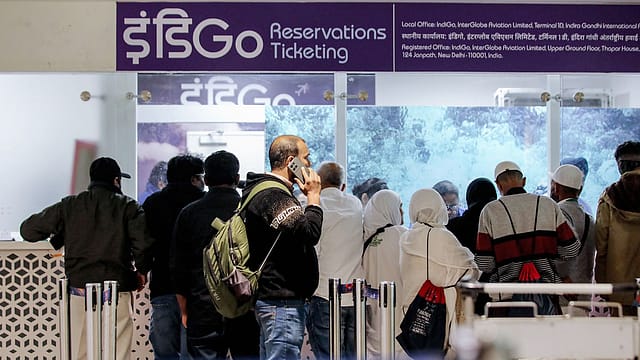
Recent events in aviation illustrate this vividly. Following widespread flight cancellations by IndiGo India’s most consistently profitable airline in the past, a LocalCircles survey found that 87% of affected passengers wanted the Central Consumer Protection Authority to intervene under the Consumer Protection Act. Complaints ranged from itinerary changes without consent to refunds that fell short of advertised “100% refund” assurances, compounded by weak customer support. The episode was not an anomaly; it was symptomatic.
Banking data tells a similar story. According to the RB-IOS Annual Report, FY 2024–25 recorded 13.34 lakh complaints, marking a 13.55 per cent rise over the previous financial year driven largely by loans and credit cards. Credit card grievances alone rose sharply, covering disputed charges, opaque fees, and aggressive recovery practices. Insurance meant to offer reassurance during moments of vulnerability has fared no better. IRDAI’s grievance data shows hundreds of thousands of complaints annually, with claim repudiation, delays, and partial settlements dominating. Consumer courts have repeatedly reprimanded insurers for arbitrary exclusions and bad-faith denials, ordering not just claim payments but compensation for mental agony. Contractual fine print is increasingly being tested against principles of fairness. Healthcare reveals the same tension. Courts have intervened in cases involving overbilling, opaque treatment packages, and denial of cashless insurance approvals at critical moments. While hospitals cite rising costs and capacity constraints, patients experience the system as transactional precisely when care should be most human.
Across sectors, the contradiction is stark. Net Promoter Scores (NPS) are proudly displayed in investor presentations, yet grievance volumes tell another story. Firms measure loyalty, but customers queue up at ombudsmen, regulators, and courts. The gap between proclaimed customer-centricity and experienced reality has rarely been wider.
What has changed is not intent, but operating logic. As services scale, efficiency metrics: cost per transaction, resolution time, utilisation crowd out relational metrics such as trust, reassurance, and fairness. Frontline employees operate under scripts and targets, while customers navigate fragmented systems optimised for throughput rather than care. To be fair, service providers argue that the pressures are real. Airlines point to congested airports and volatile fuel costs; banks cite regulatory complexity and cyber risks; insurers highlight rising claims ratios and fraud; hospitals emphasise capacity constraints and cost inflation. At scale, they argue, some friction is inevitable. And they are not entirely wrong.
But customers do not experience systems, balance sheets, or operational constraints. They experience moments—missed flights, rejected claims, disputed charges, delayed treatments. When these moments are met with opacity, indifference, or the absence of human accountability, operational explanations quickly begin to sound like excuses.
India’s service economy has mastered access, scale, and efficiency. What it now struggles with is care. Transparency cannot be optional. Empathy cannot be outsourced entirely to chatbots. Accountability cannot end with regulatory fines or court-mandated compensation.
Customers don’t expect perfection. They expect care when things go wrong.
(The author is professor of marketing at IMT Ghaziabad. The views expressed are personal)