Bhai Ka Bhai: Can Arbaaz Khan’s Bhaigiri Help boAt Grab Bigger Mindshare?
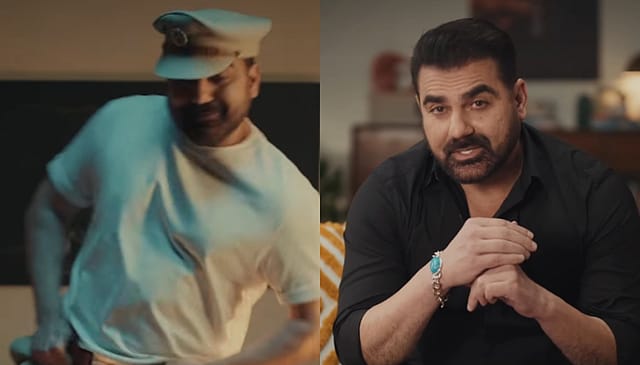
Arbaaz Khan has landed a role for which no audition was required.
Bhai ka bhai.
In boAt and Blinkit’s new Raksha Bandhan film, Arbaaz sits before the camera and begins explaining the art of being a Bollywood “Bhai”.
There are late-night tweets. Practised one-liners. Hero poses. Swagger that has received more rehearsals than affection.
Then Arbaaz delivers the line for which he was hired.
“Main bhai ka bhai hoon.”
Nobody mentions Salman Khan. Nobody needs to. The audience supplies the missing Khan, the backstory and the joke. That is the cleverness of the campaign. boAt has not merely hired Arbaaz Khan. It has hired the Khan family tree.
The Modi Years
02 Oct 2026 - Vol 05 | Issue 40
A Nation Rebuilt
The mockumentary eventually tells brothers to stop being aadhe bhaiya and become achhe bhaiya. The suggested route to fraternal improvement is conveniently short: open Blinkit, order a boAt Rockerz 480 headphone or Chrome Iris smartwatch and let quick commerce deliver sibling affection.
Being a better brother, apparently, now comes with Bluetooth.
From Bhaigiri to Brandgiri
The campaign belongs to a growing form of celebrity advertising in which the star’s public mythology becomes the script.
Arbaaz is not here primarily as an actor or producer. He is here because “Bhai ka bhai” can be understood in three words. Replace him with another celebrity and the film loses its engine.
“The casting is the creative idea,” reckons Ashita Aggarwal, professor of marketing at SP Jain Institute of Management & Research. Arbaaz brings an association that the brand does not have to build or explain. The consumer completes the joke. "That participation makes the communication more memorable,” she adds.
It is also an economical piece of cultural borrowing. Every viewer arrives carrying years of Salman Khan references, memes, family associations and Bollywood bhai-giri. boAt lights the fuse and waits for recognition.
The method has worked elsewhere. CRED took Rahul Dravid, one of Indian cricket’s calmest men, and turned him into the furious “Indiranagar ka gunda”. CeraVe hired Michael Cera and pretended that the actor had developed the skincare brand bearing half his name. Dunkin’ converted Ben Affleck’s Boston roots, public love for its coffee, friendship with Matt Damon and even brother Casey into an expanding comic universe. Solo Stove made Snoop Dogg its “smokesman” and announced that he was “giving up smoke”.
The celebrity arrives with preloaded software. The advertisement merely presses play.
Everybody, Please Board the boAt
Celebrity passengers are hardly new to boAt.
Kartik Aaryan became its first Bollywood ambassador in 2018. Diljit Dosanjh followed in 2020. Kiara Advani joined in 2022 and Ranveer Singh in 2024. Singers Neha Kakkar and Guru Randhawa have fronted its “Soul of the Musicians” campaigns.
Its cricket dressing room has been even more crowded. Hardik Pandya, KL Rahul, Rishabh Pant, Shikhar Dhawan, Prithvi Shaw and Shreyas Iyer have featured in its advertising or appeared as “boAtheads” across campaigns and IPL associations. Jasprit Bumrah has also appeared in earlier boAt communication.
The brand has recruited swagger, music, glamour, cricketing aggression and youth appeal from almost every available shelf.
Now it has recruited kinship. Arbaaz is a slightly different passenger. Ranveer brings energy. Diljit brings music and cool. Cricketers bring performance and fandom. Arbaaz brings a relationship.
That makes the idea sharper, but it also exposes boAt’s larger marketing dependence. When a brand repeatedly borrows personalities, does it accumulate a personality of its own? Celebrity variety can keep a brand culturally visible, but visibility is not the same as a coherent identity. “If consumers remember the famous face, dialogue or meme but struggle to recall the product difference, the celebrity has taken the larger share of mind,” reckons Aggarwal.
That is the test facing the Rakhi film. The “Bhai ka bhai” gag lands. But once the laughter fades, what survives? Arbaaz? Salman? Blinkit? The headphones? Or simply an urgent reminder that Raksha Bandhan is approaching?
The Sound Behind the Swagger
boAt’s marketing story matters because the company is approaching the public markets for the second time.
Imagine Marketing, boAt’s parent, first filed papers in January 2022 for a ₹2,000 crore IPO. The proposed issue comprised ₹900 crore in fresh shares and a ₹1,100 crore offer for sale. It shelved the plan amid unfavourable market conditions and instead raised ₹500 crore privately from Warburg Pincus and Malabar Investments.
The timing subsequently became more complicated. Imagine Marketing reported a consolidated loss of ₹129.5 crore in FY23 and another ₹79.7 crore loss in FY24. Revenue also lost momentum as competition intensified across affordable audio products and wearables. The company returned to profit in FY25, reporting consolidated revenue of ₹3,097.8 crore and net profit of about ₹61 crore. That was a meaningful recovery, although revenue remained broadly flat compared with the previous year.
boAt has now returned to the IPO jetty. It filed confidential papers with the Securities and Exchange Board of India in April 2025 and received regulatory approval later that year. Its updated offer is smaller than the abandoned 2022 plan: ₹1,500 crore, comprising a ₹500 crore fresh issue and a ₹1,000 crore offer for sale.
Under the proposed offer for sale, South Lake Investment plans to sell shares worth ₹500 crore, Aman Gupta up to ₹225 crore, co-founder Sameer Mehta ₹75 crore, Fireside Ventures ₹150 crore and Qualcomm Ventures ₹50 crore. Of the ₹500 crore intended to enter the company through the fresh issue, ₹225 crore is reportedly proposed for working capital and ₹150 crore for brand and marketing expenses.
The offer has not yet sailed. As of August 24, 2026, boAt’s investor-relations page carries the updated draft prospectus, but the final price band and bidding dates have not been announced.
That puts the Arbaaz campaign in a more interesting light. boAt does not merely need Rakhi sales. It needs to show that its brand can remain culturally loud in a category where products are easily compared, discounts are constant and rivals such as Noise, Fire-Boltt, Xiaomi and OnePlus can compete for the same ears and wrists.
According to Redseer data cited in boAt’s IPO filing, the company held a 34 per cent share of India’s market by volume across its relevant category. The larger challenge is defending that position without allowing commoditisation to turn every earbud into another black object inside a charging case.
Can Bhaigiri Build Mindshare?
The campaign certainly wins attention. It arrives before Raksha Bandhan, converts Arbaaz’s biography into a punchline and provides a direct route to purchase through Blinkit. The cultural joke, festive occasion, product and distribution platform sit inside one short film.
That is efficient advertising.
Yet the product connection remains transactional. A good brother buys a gift. Blinkit delivers it quickly. boAt happens to supply it.
Arbaaz could arguably be selling several gift categories without damaging the joke. Watches, grooming kits, chocolates or sunglasses could all board the same script. The strongest celebrity campaigns make the famous person inseparable from the brand idea. Dravid’s rage delivered CRED’s taste for absurdity. Michael Cera’s surname practically contained CeraVe. Ben Affleck’s Dunkin’ association grew from a publicly recognised habit.
Arbaaz and boAt share no similarly inevitable connection. The campaign has a perfect brother. It may not have found the perfect product reason.
There is another complication. The joke risks making Salman Khan the most memorable celebrity in an advertisement in which he never appears. Here's how. boAt pays for Arbaaz. Salman collects the recall. That is the strange arithmetic of meta-casting.
None of this makes the campaign unsuccessful. Advertising does not always need to explain specifications or establish lifelong brand meaning. A festive film can seek attention, conversation and immediate sales.
But boAt’s larger corporate moment demands more than seasonal noise. The company has returned to profit. It is attempting an IPO again. It proposes to direct ₹150 crore of fresh capital towards brand and marketing. Investors may therefore ask the same question as consumers:
After the swagger, what does boAt uniquely stand for? Arbaaz Khan can help boAt grab attention. Bhaigiri can produce a memorable film. Blinkit can deliver the box in minutes. Bigger mindshare will require the product to remain in the room after Bhai and bhai ka bhai have left it.