Before Memory Erases Identity: Tata Trusts Gives Dementia an Indian Name
A mother begins to forget. The family supplies explanations. She is growing old. She is tired. Everybody misplaces things. Everybody forgets a name occasionally. Why turn a small lapse into a large fear?
India already has expressions for what it believes it is witnessing. Budhapa aa gaya. Bhulne ki bimari hai. (Old age has set in. It’s a disease that makes you forget) The first converts a possible medical warning into inevitable ageing. The second reduces a complex condition to forgetfulness. Both offer the family something enormously comforting: permission to do nothing.
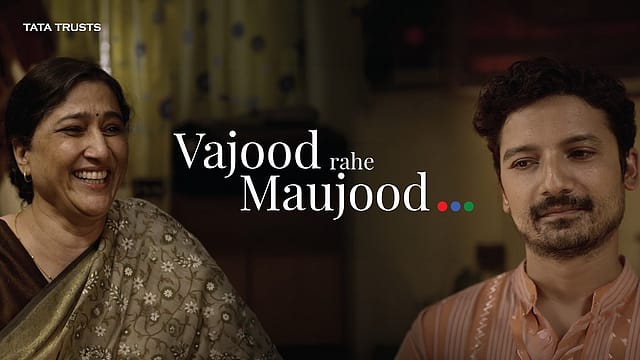
Tata Trusts’ new campaign attacks that permission. Vajood Rahe Maujood follows a mother displaying early signs of dementia and the son who becomes her primary caregiver. Geeta Agarwal Sharma plays the mother; Priyanshu Painyuli plays her son. A poem written for her birthday becomes the device through which he attempts a difficult conversation.
Zeroing In on ECI
09 Oct 2026 - Vol 05 | Issue 41
Constitutional legitimacy versus political opportunism
The film moves dementia away from its most familiar advertising shorthand: somebody forgetting a key, a face or a destination. It asks the audience to notice something larger slipping away.
Roles change. Everyday abilities weaken. Relationships acquire unfamiliar shapes. The person who organised the home begins requiring help inside it. The mother who remembered everybody’s preferences hesitates over whether her son likes chole or rajma.
Memory is involved. Identity is implicated. Its most powerful insight, however, does not appear on the screen. It sits inside the language spoken around the screen.
The Disease Hiding Between Two Expressions
The agency’s qualitative research reportedly found that many Indian languages lack familiar, everyday vocabulary for describing dementia and its early changes.
That absence matters. A family cannot investigate what it considers ordinary ageing. It cannot easily discuss a pattern it has no precise words to describe. A medical condition therefore remains concealed inside affectionate teasing, irritation and folk wisdom.
She has become absent-minded. He is getting old. It happens to everybody. The symptoms remain visible. Their meaning disappears. This gives Vajood Rahe Maujood a far larger advertising role than awareness generation.
Advertising usually fights for a share of voice. Tata Trusts must first give the problem a voice. Brands ordinarily name products to stimulate desire. They spend fortunes connecting a word with pleasure, aspiration, safety or status. Tata Trusts is performing the reverse task. It is trying to name an invisible change so that denial becomes more difficult.
Even the campaign title does strategic work. Vajood carries existence, individuality and personhood. Maujood means remaining present. The rhyme makes a frightening medical conversation more intimate and pronounceable. It avoids placing a cold clinical term at the centre of the family’s first conversation.
The campaign is effectively creating a bridge between two vocabularies: the doctor’s language of symptoms and the household’s language of relationships. Before a family reaches the clinic, it must cross that bridge.
India’s Quiet Dementia Emergency
A 2023 nationwide study estimated that 7.4 per cent of Indians aged 60 and above live with dementia, representing approximately 8.8 million people. Prevalence was found to be higher among women than men and higher in rural than urban populations.
Yet diagnosis remains a formidable problem. Alzheimer’s Disease International notes that one Indian study suggested as many as 90 per cent of cases may remain undiagnosed.
That gap is partly medical: inadequate screening, limited specialist capacity and uneven access to care. It is also cultural.
An Indian household can observe behavioural changes for years while interpreting them through personality, stubbornness, ageing or fate. The affected person may be scolded for repeating a question, mishandling money or becoming confused in a familiar place.
The condition enters the house long before its name does. This is why the campaign’s language insight matters more than its inevitable emotional response. Crying during a film does not guarantee recognition inside one’s own home. Tata Trusts must help viewers move from “how sad” to “have I seen this?”
Its wider campaign ecosystem attempts that transition. The Tata Trusts dementia platform distinguishes occasional forgetfulness from persistent patterns such as losing orientation in familiar places, repeatedly asking the same question or frequently losing the thread of a conversation. It provides campaign material intended to take the discussion beyond the film and into homes. The distinction is essential. Emotion can open the door. Useful information must walk through it.
The Son Changes the Caregiving Picture
The casting contains another quiet intervention. The protagonist is a woman because dementia has a disproportionate impact on women. The primary caregiver is her son.
Indian advertising frequently treats caregiving as a female reflex. A wife cares for her husband. A daughter or daughter-in-law manages the medicines, meals, appointments and emotional temperature of the household. Men appear when the condition becomes a financial decision or hospital emergency. Vajood Rahe Maujood places the son inside the daily emotional labour of noticing. He does not arrive with a miraculous solution. He must observe, interpret, speak gently and remain available. His birthday poem becomes both gift and diagnostic conversation.
The campaign thereby expands the meaning of masculinity without announcing that it is doing so. A son’s care is allowed to be patient, frightened and tender.
The Global Battle Over How Dementia Should Look
Dementia advertising has repeatedly struggled with the same question: how much devastation must be shown to make the public care?
Britain’s Alzheimer’s Society chose brutality in its 2024 film The Long Goodbye. At his mother’s funeral, a son described the many moments at which dementia had seemingly taken parts of her before her physical death.
The campaign generated attention and 235 complaints to the UK advertising regulator. More importantly, some people living with dementia objected that its “living death” framing denied their continuing personhood and the possibility of meaningful life after diagnosis.
Alzheimer’s Research UK’s Change the Ending used the visual language of a children’s fairy tale. A couple’s promised happily-ever-after deteriorated as dementia entered the story. Olivia Colman’s narration then turned the bleak ending towards research and the possibility of changing it.
The Alzheimer’s Association in America chose hope more directly. Its First Survivor campaign imagined that somewhere in the world was the first person who would survive Alzheimer’s disease. The future patient became a symbol of what research might make possible.
Japan’s Restaurant of Mistaken Orders travelled in the opposite direction from all three. The pop-up restaurant employed people living with dementia as servers. Incorrect orders were accepted with humour and kindness. The initiative replaced the image of the passive patient with a person working, participating and occasionally getting something wrong without catastrophe.
Each approach makes a strategic choice. Fear creates urgency. Hope attracts funding. Participation challenges stigma. Tata Trusts chooses recognition: notice the small changes while the person remains beside you.
When Does Urgency Become Erasure?
That choice also contains the campaign’s most important vulnerability.
Describing dementia as an erosion of identity is emotionally powerful. It can make families recognise that the condition affects abilities, relationships and independence far beyond memory.
The metaphor can also travel too far. If the public begins believing that a person’s identity disappears with cognitive decline, the diagnosis may become a premature social death. Family members can start discussing the patient as though she is already absent. Her preferences are overlooked. Her agency is surrendered. Care becomes something performed upon her rather than with her.
A person may lose memories without losing personhood. A mother may struggle to remember which dish her son loves while still recognising affection, music, touch, comfort or fear. Identity can change without becoming empty.
The campaign’s title fortunately supplies its own correction. Vajood Rahe Maujood is an appeal to preserve presence. Its most useful interpretation is not that the family must desperately hold the old personality in place. It is that the individual must remain visible, respected and involved as the condition changes what she can do.
Marketing and branding experts reckon that the campaign performs an unusual act of branding. "It uses identity to make an invisible condition recognisable," says Ashita Aggarwal, professor of marketing at SP Jain Institute of Management & Research. Its linguistic insight is especially powerful because families cannot discuss a change for which they possess only dismissive expressions such as old age or forgetfulness. The caution lies in the metaphor itself. Identity loss can create urgency, but communication must never imply that the individual has ceased to exist. "Awareness should make the person more visible, not turn the diagnosis into another form of disappearance,” she adds.
The 2024 Lancet Commission estimated that addressing 14 modifiable risk factors across the life course could potentially prevent or delay around 45 per cent of dementia cases globally. That does not make every case preventable or place responsibility upon individuals. It establishes that fatalism is a poor public-health response.
Early recognition can influence assessment, planning, support and care. But recognition requires language.
That is the central argument: India’s dementia crisis is partly a crisis of vocabulary. When a society has no familiar words for a condition, symptoms become quirks, warnings become old age and delay begins to feel like normality. Tata Trusts is using advertising to make the invisible discussable.
Most campaigns want people to remember a line. This one may succeed if its line helps a family recognise why somebody is forgetting. Before memory loses a name, language must find one. And when memory changes, the person must remain present.