Origin Stories: A poetic journey through Africa's past and present
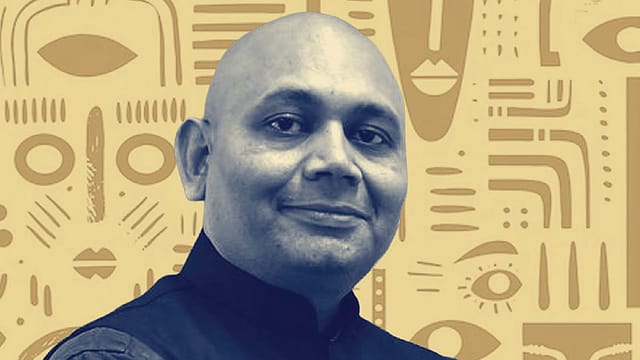
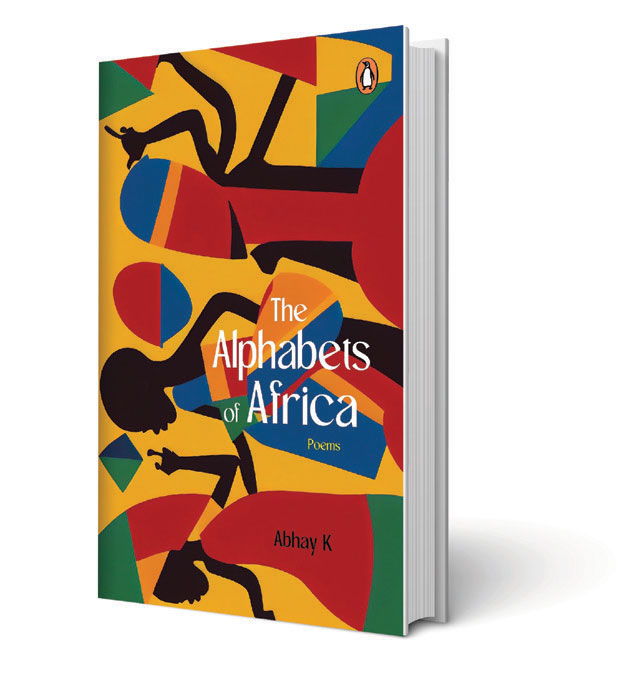
THERE IS A particular kind of courage in choosing to write, through the alphabet, about a continent the world has too long misread. It sounds almost childlike, and yet in Abhay K’s hands, this governing structure becomes something more considered. The alphabet, after all, is where learning begins. And Abhay K seems acutely aware that a poet arriving in Africa, even one with diplomatic postings and extensive travels behind him is always, in some sense, a beginner.
The Alphabets of Africa is the latest in Abhay K’s series of continent-spanning collections. He has done this before, with Latin America and with individual cities like Kathmandu and Dhaka, and the formula has clearly become a comfort zone. That is a mild risk; there is a point at which a signature style starts to feel like a template, but Africa rewards the approach. The continent is too vast, too layered, too historically rich to be forced into a single narrative arc. The alphabetical framework, then, gives the poet permission to range freely without losing shape.

Losing Memory
16 Oct 2026 - Vol 05 | Issue 42
The making of a medical and social emergency
What makes this collection stand apart is its insistence on Africa’s civilisational depth. Too much writing about Africa begins at the dawn of colonialism, as if the continent had no meaningful history before European ships appeared on its coasts. Abhay K will have none of it. He reaches back to some of humanity’s earliest recorded moments: the Narmer Palette, thought to be among the world’s oldest historical documents; the Manden Charter of the 13th-century West Africa, a remarkably early declaration of human rights; the staggering wealth of the Mali Empire under Mansa Musa. These are not footnotes. They are the spine of the argument the book is making that Africa is not a story of deficit.
Underpinning all of this is a bolder claim: that Africa is not peripheral to human history but foundational to it. Our ancestors evolved on the continent roughly 200,000 years ago and spread across the world tens of thousands of years later, making every living human, in the deepest genetic sense, African. This moral urgency runs beneath the poems like a current. The collection does not observe Africa from a distance. It insists on a reckoning—with what is owed, and with how little the world has chosen to acknowledge it.
That acknowledgement extends to the modern world. Coffee traces its origins to Ethiopia. Jazz grew from African musical traditions, transplanted to New Orleans. The cobalt that powers the lithium-ion batteries in our phones comes largely from the Democratic Republic of Congo. Abhay K folds these facts into verse not as trivia but as provocation. He asks the reader to consider how much the world has drawn from Africa and returned so little of.
The poems are most alive when they carry the texture of direct experience. Abhay K has spent real time on the continent, and it shows. There is a difference between a poet who researches a place and one who has walked its streets, and the better poems here have the grain of the latter. The weaker ones occasionally read more like lyrical summaries: competent, but lacking the charge of felt detail. With 54 countries to cover, some unevenness is perhaps unavoidable.
At its core, The Alphabets of Africa is an act of reparative attention, a poet choosing to look at something the world has long mislabelled and saying: look more carefully, and look for longer. It won’t be the last word on Africa. What it offers is a beginning.