Into the Wild: The changing face of India’s forests and natural landscapes
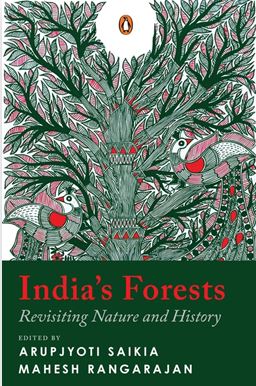
For aeons, forests have evoked awe and fear. They have inspired prose, poetry and fairy tales. India’s Forests: Revisiting Nature and Histories, a new book comprising 10 essays by leading scholars from various disciplines and co-edited by ArupJyoti Saikia and Mahesh Rangarajan, prompts us to do precisely what its title says—revisit some of our theories and romanticised notions of pristine, untouched forests, and forest dwellers in harmony with nature and sacred groves, to gain fresh insights.
The book “precludes easy generalisation”, its editors note, given that India’s inhabitants made their own histories with forests, which served as sites of produce and hunt, refuge, resource and even rebellions. Using well-researched references, it overturns several fond notions of today’s forests—or what remain of them—that they stayed unchanged since time immemorial; and that use of forests for commercial activities, or their destruction to make way for crops and roads are a more recent phenomenon. For that reason alone—providing enough evidence to support a rethink of the role, scope and place of forests in society, history, ecology and the complex interlinks between the state, society and nature—the book deserves a read.

Zeroing In on ECI
09 Oct 2026 - Vol 05 | Issue 41
Constitutional legitimacy versus political opportunism
The book begins by going back in time. The authors of the initial chapters draw on evidence from archaeology, Arthshastra and ancient literary, religious and legal texts to offer fascinating insights into the perceptions, role and significance of forests, as well as forest governance in ancient times. Shibani Bose draws from archaeological records to question the premise of unbroken mature tree forest over the Ganga Plain and says that grasslands probably existed over 15,000 years ago and for much of 45000 years, with a savannah tree mosaic. Bose also writes of long-distance procurement of deodhar (cedar) trees from the Himalayas to 3 millennium BCE sites in Harappa and ‘bhojpatra ‘(Himalayan birch) to Allahabad.
Kumkum Roy draws from Arthashastra from 3rd century BCE to highlight the multiple categories of forests and forest people, and sheer level of fear and distrust they evoked among the rulers. The forest dwellers were Atavika people meant to be subdued or punished if they are seen in league with a foe, and there were taxes on a variety of forest products from herbs, flowers and fruits to horns, hides, tusks and skins. And emperor Ashoka spelt out dire consequences for forest dwellers who disobeyed him to join hands with foes or did not help in trapping forest elephants, prized possessions for wars.
Diversion of forests for cultivation occurred as far back as 13th to 18th century, based on Bikaner archives that show how India’s wetlands and forests gave way to expanded rice cultivation in the Bengal delta. And conservation of Asiatic lions and the one-horned rhino go back to over the past two centuries, thanks to princely protection, of Junagadh Nawabs and Bhavnagar’s Rajas in the case of lions, and Nepal’s Ranas for the one-horned rhino.
Similarly, Mukul Sharma examines the sacred groves of Jharkhand historically and contends that these are dynamic and contested spaces, shaped by historical changes rather than existing as timeless ecological treasures. Some have limited ecological and conservation value, typically comprising only a few trees within small plots that are frequently encroached upon. And social and caste hierarchies and exclusions, particularly gender and caste, occur in sacred groves too.
The readings offer rich insights and references for scholars, environment historians and ecologists alike. While the concepts, role and governance of forests over time have been captured well, the geographical sequence in chapters feels jumbled, compared to the chronological order. This, sometimes, hampers the flow of text and may befuddle lay readers. But that should not deter from the book as an excellent resource for information and fresh perspectives on forests.