Colombo: Port of Call reopens a forgotten maritime world
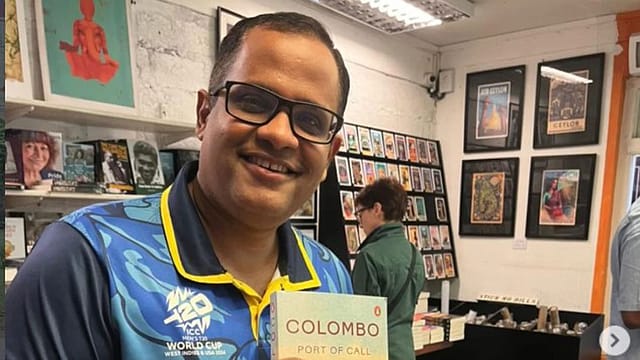
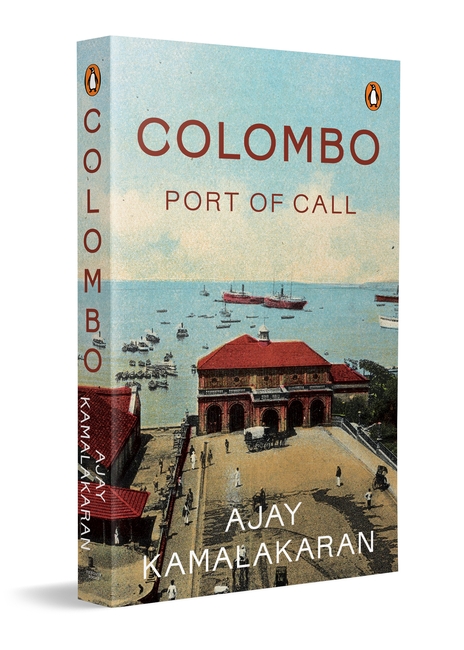
I admit to a definite bias, as anyone who has read my work will attest. Sorry, biases: sport, history, travel, and good writing. I was fortunate enough to get my hands on an early copy of hyperpolyglot Ajay Kamalakaran’s latest offering, Colombo: Port of Call, and I must admit to doing something familiar to anyone who enjoys non-fiction – I picked and chose chapters to read.
Getting an insight into the visits of the great Don Bradman to Sri Lanka was my own first port of call. Growing up in Ireland, cricket was not really on my radar. We had far more important and vital sports to follow (all sports are vital and important). However, thanks to the media reach of our former colonial overlords, The Ashes received solid enough airtime in our house. Listening to Test matches from Down Under on the BBC World Service before having to go to school was a nice treat. A former hurling (Ireland’s national sport) teammate of mine once told me how he ran out of his bedroom and met his father in the hallway to celebrate – at 5 am – a terrific English win. Lots of us in Ireland preferred the English over the Aussies, which is totally at odds with our support for anyone but England in almost every other sport.
The Age of Anger
31 Jul 2026 - Vol 05 | Issue 31
A raging generation makes the government relent. What's next?
Anyway, Don Bradman became famous in Ireland when BBC2 showed the mini-series Bodyline in 1985. Here was a man so good at his sport that opponents had to devise a plan intended to inflict injury on him in order to win. It didn’t change our support for the English cricket team, but Don’s fame certainly grew. So, forty-one years later, I find myself sitting with a mug of black tea (from India via Ireland), with milk, watching snow fall in the Ural Mountains, while Kamalakaran’s words place me in sweltering Colombo, watching the great man. It is the first time in at least a decade that a non-fiction book has catapulted me back to my childhood and made me re-read the same chapter.
Naturally, I next anchored at the chapter on Arthur Conan Doyle. His Irish ancestry has always impressed me, though never quite enough to make me watch the Sherlock Holmes films or read the books featuring that character. I have, however, read his Professor Challenger series and some of his other historical fiction, including Sir Nigel, and I have always respected his support for the human rights campaigner and Irish nationalist Roger Casement. While I knew of Doyle’s service in South Africa during the Boer War, I had no idea about his Colombo sojourn or the effect it had on him. A ‘Holmes-ologist’ friend of mine in Moscow, who now lectures at my former workplace, the Russian State Social University, was thrilled by my relaying of the information. She has even included it in a seminar she teaches on Doyle to Master’s students.
While it may be unfair to write about the ‘characters’ appearing in this book, it is indeed a cast of figures with global reach and enduring historical importance. Mahatma Gandhi’s stopover adds another human touch to the man who, in Ireland, ranks alongside our own Daniel O’Connell among the great figures of peace. Andrew Carnegie, another who deserves recognition for preferring peace over conflict, also disembarks in Sri Lanka, and the writer conveys the genuine enjoyment the dour Scottish industrialist took from the land.
From princes to dancers, Kamalakaran highlights the impact that the transit point of Colombo had on its visitors, and part of the reader wishes they too had the time to undertake an ocean voyage. The chapter on Anton Chekhov, however, brings home the less-than-romantic realities of why and how some travellers ended up in Colombo. Chekhov, in my opinion a highly overrated writer who ‘got lucky’, spent almost three days in the country in 1890, and the visit reverberates in Colombo to this day. That was not something I had expected or known, and while I still find his writing average, Kamalakaran nudged me towards appreciating the man and his journey from Sakhalin in Russia’s Far East.
While the main focus is Colombo, an understanding of Sri Lanka – the culture, the people, the landscape, the warmth – flows naturally from the writer’s narration. An appreciation of sea travel is hardly needed for a person born on an island, especially someone who took ferries to Britain multiple times a year from childhood. What Colombo: Port of Call delivers is an appreciation of the importance the city played in the global travel network and of the historic figures who, when visiting, recognised the majesty of the place and its people. That alone is reason enough why the book is worth at least a read, ideally with a good cup of tea.