Carlo Ginzburg (1939–2026): The Historian Who Gave Voice to the Forgotten
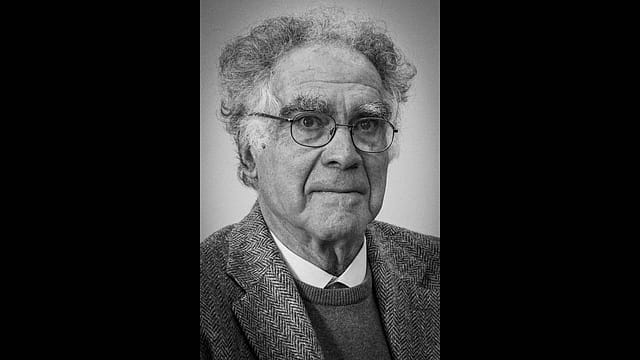
Of all the books that have vanished from my home library over the years, the one I miss most is The Cheese and the Worms by the great Italian historian Carlo Ginzburg, who passed away on June 17 after a monstrously productive and influential life as an intellectual. Ginzburg taught generations of historians inventive ways of looking at the past and gave readers a rare lesson in how knowledge can be recovered from the voices of the marginalised, the overlooked and the ignored.
I often tell my wife that it is unfair of me to curse the man or woman who walks away with a borrowed book. The greater sin, perhaps, isn't not returning a book, but never reading it at all. In that sense, I prefer to imagine that whoever “liberated” my costly copy at least had the decency to open it.

The Health and Wellness Issue
25 Sep 2026 - Vol 05 | Issue 39
Scuola Normale Superiore in Pisa, where he was professor emeritus, issued a statement saying that he died in Bologna. It added something simple yet striking: “He listened to those without a voice and upheld a rigorous conception of truth.” It was at the institution that the highly decorated scholar had studied and taught for long, apart from stints at Harvard, Yale and Princeton. He was a recipient of awards such as the Balzan Prize and the Humboldt Research Award.Born in the year World War II began and when Italy was under the grip of fascism, Ginzburg would later come under the influence of his late father, scholar and editor Leone Ginzburg, who was killed at the age of 34 by the fascists when the young Ginzburg was barely five.
The experience left a lasting mark on him, especially in shaping his sympathy for the marginalised who, unsurprisingly, were the perpetual victims of the political violence that Benito Mussolini used to the hilt to rule the streets. His mother Natalia, a writer, was the first to translate Marcel Proust’s works into Italian. His father had been born in Odessa into a secular Jewish family before moving west.
Ginzburg would go on to study at the University of Pisa and the Scuola Normale Superiore before leaving for London. Besides the universities listed above, he also taught at Bologna and the University of California, Los Angeles, before returning to the Scuola Normale in Pisa as Professor of the History of European Cultures.Ginzburg, who came to be hailed as one of the principal founders of microhistory, where historians reconstructed the past through the lives of ordinary people rather than elites and by focusing on popular culture, subcultures and the beliefs of an age, was destined to have a lasting influence on historians around the world. Says Ashoka University historian Nayanjot Lahiri: “The Cheese and the Worms (1976) taught me more about the historian’s craft than any other book that I have read over the years.
It is based on records relating to the trial of a sixteenth-century Italian miller but beyond the amazing sources that he dug into, Ginzburg through that book taught me about historical imagination, about how narratives are crafted and how important it is to be upfront about the question of what survives as evidence and what does not. It also provided an exceptional window into how articulate the ‘inarticulate masses’ could be. It is a book I continue to enjoy engaging with in the classroom, especially with PhD students at Ashoka University.” Indeed, the book focuses on Menocchio, the sixteenth-century heretic who was burned at the stake.Ginzburg’s research interests were vast -- they included Machiavelli, Dante and art history -- before extending to the study of sixteenth- and seventeenth-century Inquisition trials in Europe.
He sought permission from the Vatican to reopen the archives as early as 1979, a request to which it relented much later. Equally riveting is his 1966 book, The Night Battles: Witchcraft and Agrarian Cults in the Sixteenth and Seventeenth Centuries, which examines the cult of the ‘benandanti’, who were believed to leave their bodies and roam about fighting ritual battles against witches and other malevolent forces in order to protect their harvests.He was just 27 when he wrote this first book.
About his method of writing history, Ginzburg had explained in an interview: “The idea of trying to reconstruct the victim’s point of view had several roots. On the one hand, I drew on Antonio Gramsci’s idea of the culture of the subaltern classes. On the other hand, I was influenced by Michelet’s La Sorcière [The Witch], which presents the figure of the witch as an incarnation of revolt. When I began this work, I initially underestimated how difficult it was to grasp the meaning of the victims’ attitudes, because it meant reading the archives of persecution against the grain (to borrow a phrase from Walter Benjamin).”
The man, who was deeply immersed in philology, was also an advocate of slow reading so as not to miss details, especially in early literary texts.He also commented on contemporary political events. In a 2016 interview published on Veso blogs, he said: “I should mention that last year when I was giving classes at the University of Chicago, I heard some of Trump’s speeches. And for the first time I was tempted to use a word that I never use outside of its specific historical context: fascism. To clarify: to say as an insult that Trump is a fascist is very far from my attitude as a historian.
The idea of comparing fascism with the current phenomenon would be only the beginning of a tentative historical analysis; only the beginning of the investigation.”Clearly, his views were nuanced and deeply considered rather than attempts to foist opinions on others. He remained sober, rigorous and unassuming. During a visit to India, especially to Jawaharlal Nehru University and Kolkata, he said he was deeply inspired by his interactions with audiences and was reminded of the language and intellectual energy often associated with Gramsci.