Book Review: Departure(s) by Julian Barnes

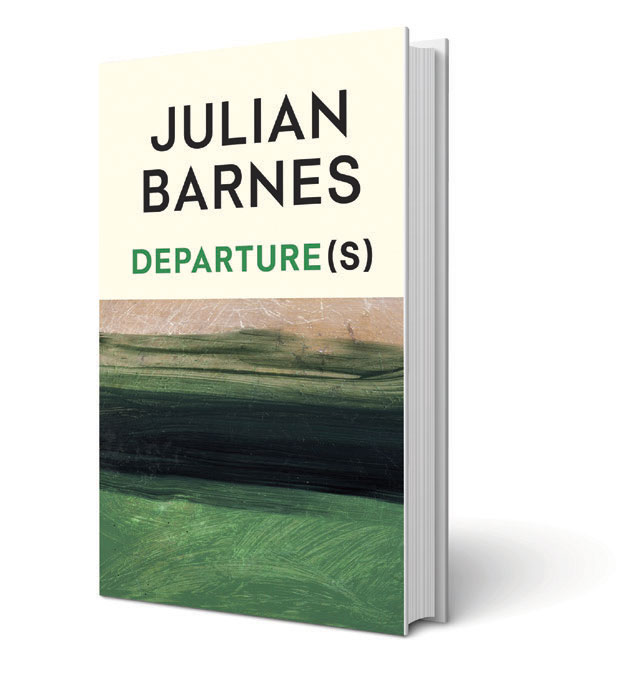
JULIAN BARNES IS probably not laying down his pen but he has written what he claims is his last book. Perhaps, as his narrator Julian says, he doesn’t want to die in the middle of writing a novel like Brian Moore. Perhaps he senses this is his moment for a dignified exit; after all, the Boomers of the London literary scene that once included him and his friends Martin Amis, Ian McEwan and Christopher Hitchens are dying out. Although Salman Rushdie and Kazuo Ishiguro of that all-male generation are still going strong and McEwan hasn’t called it a day yet, Barnes was always the oldest of the lot. Now 80, and diagnosed with “manageable” leukaemia in 2020, he is also tired: “Actually, just writing this makes me feel a bit weary.” To tell the story, “I have to give a certain amount of background. You know the form: who, where, when, why; what the weather was like and if that is relevant; who the characters are and how they speak; their social roots and educational background, their career paths.”
And yet, Departure(s), the last novel, does tell a story, or only the beginning and end of it, with a 40- year gap where the middle should be. Stephen and Jean, names changed, were his friends at Oxford and Barnes had promised not to tell their story, a promise he breaks even as he meditates on memory (a lot of pages are devoted to Proust’s madeleine), love, death, etc. Barnes remains a master of irony and while he guides the reader through pathos pretending not to play God (“I’m not a believer in the high tone, and in any case the Tragic Age is long past… Maybe we haven’t yet found the right words to fit the lesser nature of the post-tragic life”), reading him is akin to listening to a piano tuned to 432Hz instead of the standard 440Hz: you focus and don’t stress. Not so much a soothing (physical pain) as a calming (emotional excitement) effect because in Barnes, not one word is out of place, not one note wrong. The same goes for his measured humour: he invites you to not just laugh with him but also at him. Little wonder, the funniest moments are in the section ‘Manageable’ which is mostly spent in hospitals. His diagnosis coming in the time of Covid, and with rumours that squeezed doctors might send the elderly afflicted straight to end-of-life care, he fantasises wearing a badge protesting “BUT I WON THE BOOKER PRIZE”. He is unlikely to die of his cancer, but the disease will certainly die with him. He can discard the working title ‘Jules Was’.

The Identity Project
11 Sep 2026 - Vol 05 | Issue 37
Amit Shah leads the mission for a national demographic correction
To return to Stephen and Jean, whose story we are made to wait for and then depart from only to return near the end, they were lovers who split at graduation, and four decades later, Stephen asks Julian to put him in touch with Jean. They marry in late middle age but their “last chance of happiness” proves elusive as well, and then they die. As in the Man Booker winning The Sense of an Ending (2011) and the novel that made Barnes’ name, Flaubert’s Parrot (1984), the narrator, taking the novelist’s name for the first time—there is a lot of autobiographical detail here even for a Barnes, which he challenges us to Google if we don’t believe—stands somewhat aloof; he tells us the half-story, but his attention is elsewhere.
Barnes adds grandeur to the quotidian. The operative word is “attending”, or “attendingness”, and he tells the reader as he departs: “No, don’t stop looking.” He doesn’t believe in the efficacy of IAMs (involuntary autobiographical memories) as a sceptical realist who knows Proust too worked through his memories with wilful exertion. But Julian the narrator’s mock humility might rankle at times because Barnes the author is fully in control.