Bitter Sweetness: A debut novel baked in power and loss
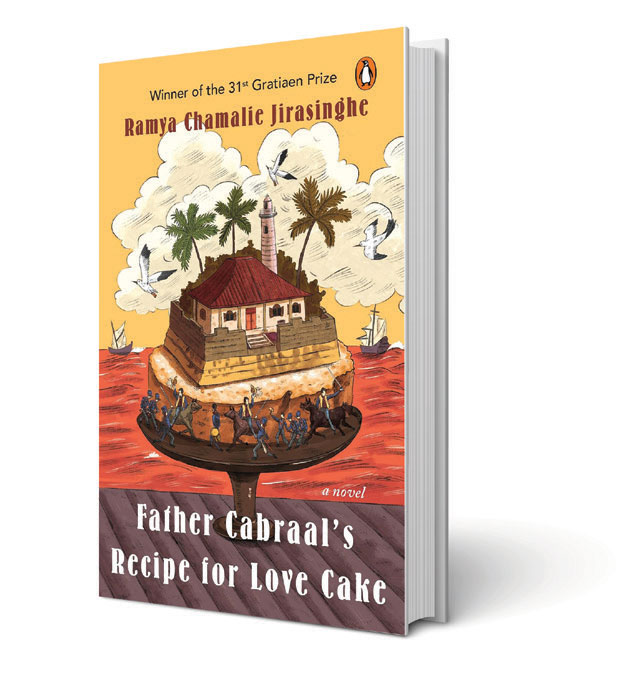
IN THE BEGINNING of Father Cabraal’s Recipe for Love Cake, Katharina Silvaria, one of the two protagonists of Sri Lankan author Ramya Chamalie Jirasinghe’s debut novel, sets about gathering ingredients to bake a love cake: flour, nutmeg, semolina, cashews and sugar, among other things. The cake offers sweetness yet its ingredients highlight the bitter history of a fictional island that has been shaped by colonial rule and spice trade.
On an island that resembles Sri Lanka, the novel unfolds across two timelines: one in the present and the other centuries earlier during the height of colonial rule across the Indian Ocean. In the present, London-based Katharina has withdrawn into her ancestral home, trying to recover from her traumatic experiences as a war reporter. She finds the recipe of love cake in the tattered remains of the houses and takes up baking as a means to healing.
Losing Memory
16 Oct 2026 - Vol 05 | Issue 42
The making of a medical and social emergency
The hobby quickly becomes a habit, almost a discipline, for Katharina. But a periodic revolution against the rich brings the country to a grind, leaving her all alone and the baking comes to an abrupt halt. This isolation is broken when her life gets entwined with a fugitive named Rajiv Almeida, one of the rich who is on the run for helping the revolting “servos”.
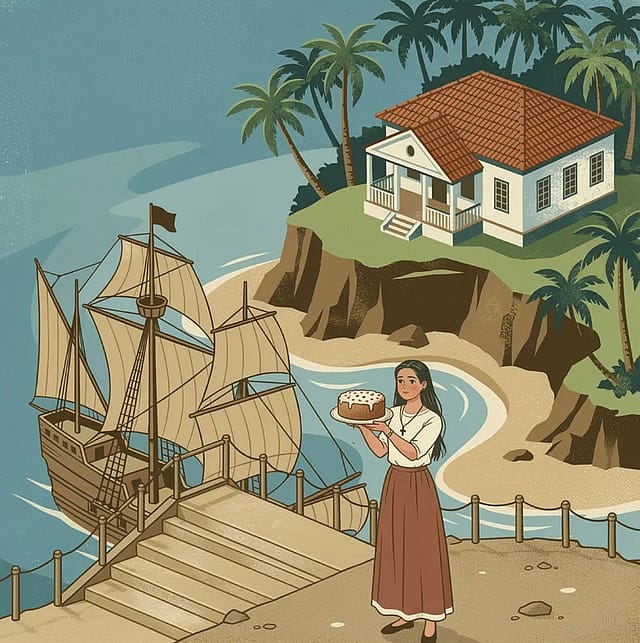
The other narrative is set when the island is under the control of “The Company”, a trading venture resembling the East India Company. A sailor named Santiago De Melo decides to settle on the island and ends up with Maria, a local who runs a spice plantation left behind by her African partner killed over pepper by Company men. Spices, be it pepper here, or nutmeg—a key ingredient in Katharina’s love cake—then are not just means of flavouring a dish but also the ingredients of a conflict.
And in telling this history, Jirasinghe refuses to romanticise the past. Instead, she shows what it really was—a world built on coercion and unequal relationships, where even personal lives are shaped by bigger forces.
What connects these two stories is more than the house or the love cake recipe. The same spices that give the love cake its taste are also what brought the colonial rulers to the island in the first place. The violence of that colonial period still exists. It has just changed its form, showing up in the political unease and fear that surround Katharina’s and Rajiv’s world.
Stylistically, the novel bears the imprint of Jirasinghe’s background as a poet. Her prose is controlled and lyrical, paying close attention to the details of things—how they look, smell and feel. There is also a strong sense of place, the unnamed island coming alive in its descriptive landscapes.
The structure, moving between the two timelines, works well for the most part. The parallels between the times are easy to follow, the past adding depth to the present and giving it a wider context. At the same time, the present-day narrative offers a more intimate look at fear, trust and survival through Katharina and Rajiv.
However, Jirasinghe fails to give equal importance to both narratives. The historical sections, focusing on De Melo, are better written and more fully realised than Katharina’s story. She remains distant. Even though one can understand her trauma, it is not explored in the same depth as the historical atrocities. Even the revolution seems like a mere sketch rather than fully developed.
Even so, Father Cabraal’s Recipe for Love Cake succeeds in linking the everyday with a larger history. In the end, it becomes a reminder of how ordinary things can carry complicated stories within them.