A Life Examined, A Life Offered: Dr. Vasuki’s The School of Life
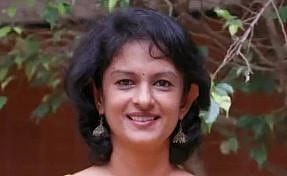
There are books that instruct, books that console, and books that quietly accompany us through the confusions that make us human. Dr. Vasuki’s The School of Life belongs to a rarer category: it attempts to illuminate the mind without sermon, and to steady the reader without promising shortcuts. When I received a signed copy from the author, a great friend, with a note hoping that “we could spread this book’s message to the world together,” it was not merely a memoir of a civil servant but a deeply reflective manual on the lived texture of life itself.
From its opening pages, the book is disarmingly honest. The Preface, which reads almost like a disclaimer, does not shield the reader from the author’s vulnerabilities. Instead, it reveals a writer of exceptional clarity, one who is both capable of strong public speech and of the private courage required to examine the fault-lines of one’s own mind. While the narrative follows her journey from an innocent girl shaped by childhood memories, Marina Beach in Chennai, kayak strokes in Lakshadweep, to a committed IAS officer, the book doesn’t fall into the familiar mould of bureaucratic memoirs. It resists the temptation to convert experience into formula. This is not a guidebook to cracking the Civil Services; it is an inquiry into why we live the way we do, and how we might live better.
The Modi Years
02 Oct 2026 - Vol 05 | Issue 40
A Nation Rebuilt
Part I: A Mind Awakens
The first part of The School of Life traces the fragile, formative terrain of a young woman becoming herself. Ambition, insecurity, envy, the changing rhythms of Indian households with the arrival of cable television, and the odd addictions that shape modern life—chocolates, cricket, serials, scrolling, substances—are narrated with a frankness reminiscent of Gandhi’s My Experiments with Truth, a work the author explicitly invokes. Like Gandhi, she refuses to sanitise her growth; she lets the reader sit with her doubts, her ideological ruptures, her journey from faith to atheism in adolescence, and the difficult questions she learned to ask of God, society, and her own mind.
Her reflections on happiness, fear, rage, stress, and the silent pressures that drive young people towards despair are written with unusual lucidity. At a time when mental health is reduced to hashtags, Vasuki’s writing offers an unadorned honesty that feels almost old-fashioned in its sincerity. And yet it is profoundly contemporary.
The love story that winds through this section, her meeting with her husband Karthik, the rise of her self-esteem, the shared dream of the IAS, is narrated with emotional intelligence and without embellishment. Her experiences with asthma, PMS, anxiety, and performance pressure are woven not as confessions, but as evidence of a mind learning to negotiate with its limits.
Part II: Life as Teacher
The second part widens into society, systems, and the ethical dilemmas of public life. Her years in a tribal district of Madhya Pradesh, with minimal Hindi and maximum humility, constitute some of the most powerful passages in the book. Reading The Baiga, grappling with unfamiliar customs, and confronting her own assumptions about civilization and development—these moments appear not as picturesque anecdotes but as ethical turning points.
Vasuki’s environmental awakening, influenced by films and books such as The Story of Stuff, feels neither ideological nor fashionable. It emerges from lived observation: commercialised necessities, manufactured desires, and the quiet violence of greed and misinformation. Her reflections on gender, social roles, addictions, laziness, inertia, lust, pride, and responsibility are stitched together with a rare intellectual honesty.
One of the most compelling parts of the book is her exploration of the human mind—belief, perseverance, cognitive dissonance, heuristics, the path of least resistance, neuroplasticity. These concepts are not scattered like academic ornaments; they are integrated into the narrative of her life as frameworks that helped her make sense of chaos.
Her memories of the 2018 Kerala floods, when she served as Thiruvananthapuram Collector, become a study in collective consciousness—“humanity at its best,” as she calls it. The metaphor of the caged circus animal, used to understand emotion, is striking in its simplicity and accuracy.
Part III: The Inner Revolution
If the first two parts are about learning from life, the third is about learning from the self. Here, the book deepens into philosophy without becoming abstract. Happiness, she insists, is a state that emerges from within; not from achievement but from alignment. She encourages the reader to slow down, to resist the contemporary cult of productivity, and to accept that rest is sometimes the most urgent work.
Her arguments against the glorification of busyness, and for a “work to live” ethic, arrive with particular force in an India that is burning out quickly and quietly. Her reflections on food—“we are what we eat”—and the earth-body connection echo traditional wisdom but are anchored in modern understanding.
The chapter on the Cosmic Mind is perhaps the most intellectually ambitious. She explores consciousness, the manifest and unmanifest, the illusions we mistake for reality, the metaphors through which we understand ourselves (her metaphor of the human as a water bottle is both playful and profound), and the practices, yoga, meditation, devotion, faith, love, that help us chip away at ignorance. The discussion on egoic mind, and her question of whether its dominance is good or bad, is philosophical but never pretentious.
Part IV: A World to Reimagine
The final part of the book expands from the personal to the planetary. Drawing on ideas such as chaos theory and the butterfly effect, she lays bare how inner suffering leaks into social aggression, and how a society saturated with frustration creates psychological chain reactions. Yet she doesn’t descend into pessimism. Instead, she urges conscious existence, courage, the power of choice, the need to break cycles and addictions, and the importance of investing in real relationships.
Her call for a new world: less egoic, more sustainable, more compassionate, is neither utopian nor naïve. It emerges from the discipline of introspection and the hopefulness of one who has seen institutions from within but believes they can be kinder.
The book ends with a vision and mission: a world where human beings live in harmony with themselves and nature. It carries an echo of Paulo Coelho’s optimism that the universe conspires, but filtered through a mind that has wrestled deeply with doubt.
A Book That Speaks to Our Times
The School of Life is not a book of answers. It is a book of openings. It asks the reader to think, to pause, to question, to sift through their own inherited ideas, and to reimagine the scripts by which we live. Its language is accessible without being simplistic, its insights wide without being scattered, and its tone generous without slipping into indulgence.
In an India that is young, anxious, ambitious, and often directionless, Dr. Vasuki (IAS) has written a work of quiet power. It is the kind of book that does not shout, but stays.
And in its staying, it helps you see yourself with a little more courage, a little more clarity, and perhaps a little more grace.