Indian Fashion Startups and Innovators Get a Boost from Kering
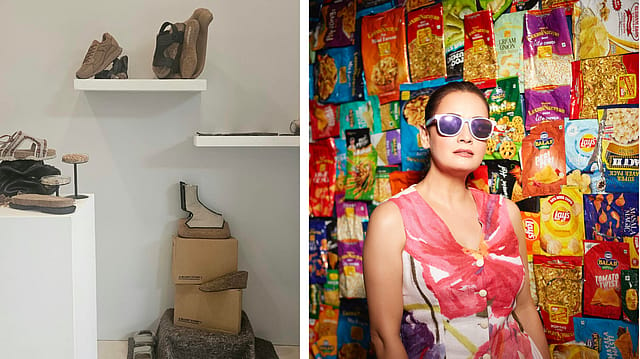
Bags made from banana fibre. Textiles crafted from reclaimed feathers. Footwear that swaps crude oil derivatives for agro waste in its making. Sunglasses that were once multi-layered plastic packaging. These were among the displays at the French Embassy on October 13. It was a showcase of Indian fashion studios, startups and material innovators who have spent a little over the past month navigating rounds of an intensive competition to make it to this spot. This was the final of the debut Kering Generation Award—a global programme that aims to identify emerging ideas and initiatives to lower the fashion industry’s environmental impact across its processes.
With a portfolio of brands that includes the likes of Gucci, Bottega Veneta, Balenciaga and Brioni among others, Kering is one of the largest and most influential luxury conglomerates in the world. The Kering Generation Awards programme has been in motion since 2018, running across several countries—Japan, China and the MENA region. In India, the programme has launched in partnership with Reliance Brands Limited. Its announcement, in fact came ahead of the R|Elan Circular Design Challenge finals on the same day marking the start of this season’s edition of Lakmé Fashion Week in partnership with the Fashion Design Council of India (FDCI).

Zeroing In on ECI
09 Oct 2026 - Vol 05 | Issue 41
Constitutional legitimacy versus political opportunism

Speaking at the event, Marie-Claire Daveu, Chief Sustainability & Institutional Affairs Officer at Kering noted that the potential for discovering such talent in India with its unique grammar of luxury, its savoir-faire and growing conversations around sustainability. Daveu, who was also part of the awards jury, highlighted the company’s investment in sustainability and material interventions drawing attention to its Material Innovations Lab—created in 2013 and based in Milan—which has accumulated a database of more than 8000 samples of textiles and materials. There is no future for fashion without innovation, she added.
For its first edition in India edition, the award shortlisted six finalists. It is a sign of R|Elan Circular Design Challenge rising heft that five of its finalists (including a winner) from previous edition made it to this lineup. From its inaugural edition in 2019, when the fashion brand I Was A SARI by Stefano Funari and Poornima Pande, took home the prize, the Circular Design Challenge has become a launchpad for varied enterprises working in the field—finalists have not only included fashion designers but also entrepreneurs and material innovators working in India and internationally.
The India finalists of Kering Generation Awards included, much like RCDC, a mix of labels and startups of which three winners emerged. A Blunt Story took home the third prize for its innovative footwear—a category with a high carbon impact. Founder Chandni Batra has created a label of unisex designs which eschew materials derived from crude oil and incorporate a proprietary plant-based sole and other eco-friendly parts. In second place, Anish Malpani’s Pune-based label Without—a previous Circular Design Challenge winner—has drawn attention for transforming multi-layer plastic packaging and discarded textiles into eyewear and packaging. The winners receive the opportunity to work and interact Kering’s brand maisons and interact with its industry associates—and it is not difficult to see the potential that brands like A Blunt Story and Without (working in fast-moving accessories categories as well as packaging) can bring to the conglomerate’s material innovation initiatives.
The main award, which includes a prize of €50,000, went to Paiwand Studio—designer Ashita Singhal’s Noida based practice which reweaves discarded textiles and other materials into new materials. Paiwand works with a network of waste collectors and trained weavers to reweave an array of materials from clothing to leather. But what distinguishes Singhal’s approach—and thus makes it valuable to a company like Kering—is that she doesn’t limit these interventions to Painwand’s own designs. Singhal has developed a B2B model where she collaborates with other designers, brands and export houses to upcycle their waste into new materials as well. Their collaborators so far have included designers and labels such as Amit Aggarwal, KARDO, Oceedee, Injiri as well as platforms such as India Art Fair. For Singhal as well as other designers, the Kering Generation Prize opens the door to a whole new world.