When DNA Forgets How to Fold: Scientists Find a Hidden Cause of Heart Defects
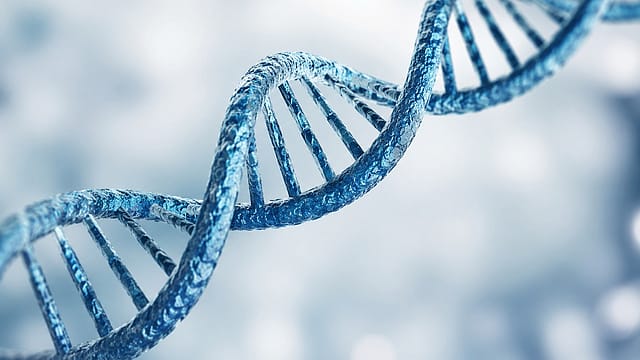
DNA, it turns out, has an origami problem.
Stuffing an enormous amount of genetic material inside a microscopic cell is already an extraordinary feat. But DNA isn't simply crammed inside. It is folded. Carefully. Precisely. And those folds help determine which genetic instructions a cell can read.
Now scientists at the Gladstone Institutes have discovered that losing just one functioning copy of a gene called TBX5 can mess up that intricate folding inside developing heart cells.
The consequence? Genes needed to build a healthy heart may no longer switch on when and where they should. The findings, published in Science, could help explain not only some cases of congenital heart disease but also a longstanding genetic mystery: Why can losing one copy of a gene cause so much trouble when another working copy remains?

Rise of the Pivotal Power
18 Sep 2026 - Vol 05 | Issue 38
The BRICS declaration is a strategic victory for Modi
DNA has an architect. Meet TBX5
TBX5 was already known to play a critical role in heart development. But researchers have now discovered that it appears to have another job. Think of it as part architect, part traffic cop.
TBX5 helps organise the heart cell's DNA into the correct three-dimensional structure. The researchers found that it helps guide a molecular motor called cohesin to particular places along DNA. Cohesin then helps create loops that bring genes physically closer to distant genetic switches called enhancers. Those encounters matter. They help tell genes when to turn on. Remove too much TBX5 and the architecture begins to go wrong. And surprisingly, losing only one of the two copies can be enough.
What does ‘folding DNA’ actually mean?
Imagine trying to squeeze a miles-long instruction manual into something the size of a pinhead. You can't simply stuff it in. You need a filing system. DNA has one.
Different sections are organised into compartments, domains and tiny loops. The arrangement allows different types of cells to access different parts of the same genetic instruction manual. A brain cell needs one set of instructions. A heart cell needs another. The folding helps each find the right pages. The researchers found that when TBX5 levels dropped, this organisation was disrupted at multiple levels, from large compartments down to individual chromatin loops. In other words, the words in the instruction manual may still be there. The pages are just folded the wrong way.
How did scientists discover this?
Researchers turned human stem cells into heart muscle cells in the laboratory. Some had two healthy copies of TBX5. Some had one. Some had none. They then used high-resolution techniques to map the three-dimensional structure of DNA and computational models to analyse millions of data points from thousands of individual cells.
What emerged was striking. The less TBX5 the cells had, the greater the disruption to their genome organisation. Even cutting the normal amount in half was enough to interfere with DNA folding and the activity of genes involved in heart development. Could this explain why the same mutation affects people differently? Potentially, yes.
And this may be one of the most interesting findings. Researchers discovered that individual heart cells did not all respond identically to losing TBX5. Atrial and ventricular cells showed differences. Even cells of the same type varied in their response. That variability could help scientists understand why two people carrying the same genetic mutation can develop different heart abnormalities. The mutation may be the same. What it does to the architecture of individual cells may not be.
Is this only about heart disease?
Perhaps not. Congenital heart disease affects roughly one in 100 babies and can arise from many different causes. But TBX5 belongs to a broader group of genes where losing just one functioning copy can produce developmental problems. That has led researchers to a much bigger possibility. If TBX5 helps shape the physical architecture of DNA in heart cells, could other genes associated with birth defects be performing similar architectural jobs elsewhere in the body?
The researchers believe the mechanism could extend beyond the heart. That could change how scientists think about some genetic diseases. A faulty gene may not only change an instruction. It may change how the entire instruction manual is folded. And sometimes, it seems, getting life's blueprint right depends on knowing exactly where to make the crease.
(With inputs from ANI)