Meloni Proposes Burqa, Niqab Ban in Italian Schools, Cap on Foreign Students
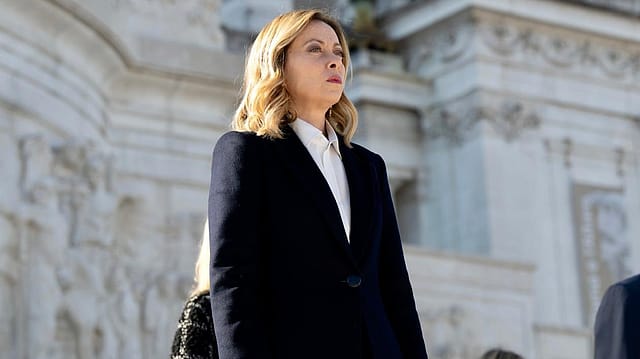
Italian Prime Minister Giorgia Meloni has announced plans to ban burqas and niqabs in schools and introduce a legal limit on the number of foreign students in each classroom.
Speaking at Fenix, a youth event organised by her Brothers of Italy party in Rome on Sunday, Meloni said the proposed measure would soon go before the Council of Ministers. The provisions have not yet been presented as enacted law.
The package would also require parents of foreign students facing severe integration difficulties at school to learn Italian. Meloni did not specify the maximum number of foreign students that would be permitted per class.
“For us, anyone who comes to Italy and wants to build their future here must learn our language, know our culture, and respect our rules. It is the only serious way to welcome people,” she said.
Zeroing In on ECI
09 Oct 2026 - Vol 05 | Issue 41
Constitutional legitimacy versus political opportunism
Face Coverings and Classroom Limits
Meloni linked the proposed restrictions on burqas and niqabs to the requirement for uncovered faces in schools and to gender equality.
“Because you go to school with an uncovered face and because in Italy, no one, in the name of a real or presumed tradition, can decide that a young woman must hide herself,” she said.
“Gender equality is non-negotiable—not on our streets, and not in our schools.”
The proposed Italian-language obligation would apply to parents whose children face severe integration difficulties, rather than to all parents of foreign students.
According to figures from research institute Fondazione ISMU cited in the report, around 930,000 students without Italian citizenship attend schools across Italy. They account for nearly 11.6 per cent of the country’s school population.
Medical Admissions Also in Focus
Meloni also used the event to defend changes to university admissions, saying her government had scrapped the multiple-choice entrance test for medical school.
She described the previous system as an unfair barrier to opportunity and blamed earlier left-wing governments for the mechanism.
“We scrapped this infernal mechanism because if you want to play the lottery, you buy a New Year's ticket—you don't enrol in university,” she said.
Her remarks brought together the government’s proposed school integration measures and its changes to higher education admissions. Further details of the classroom cap and how the school provisions would be implemented were not provided in the announcement.
With inputs from ANI