Trump’s 100% levy threat misses the point — Tariffs don’t work
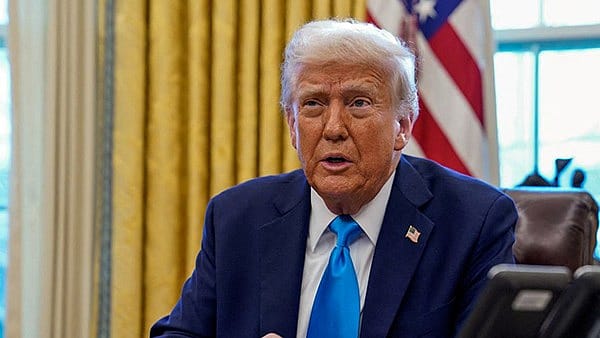
The US President has a well-earned reputation for being unpredictable but the Modi government has made it abundantly clear that it will not constrain its energy sourcing options. The view in New Delhi is that Trump may not use the Sanctioning Russia and Iran Act, 2026, as tariffs have proved counter-productive, resulting in higher inflation in the US and doing so will have serious and lasting implications for the entire spectrum of India-US ties.
The threat of tariffs returned last week with the United States Congress passing a Bill, signed into law by President Donald Trump, that allows him to impose 100% tariffs on countries that buy oil and gas from Russia or facilitate its evasion of international sanctions. The passage of the Bill with rare Republican-Democrat support saw one of its co-authors, Connecticut Democrat Richard Blumenthal warning India and China to “clean up their act” and stop purchasing Russian energy he believes is helping Vladimir Putin fight an unjust and illegal war against Ukraine.

Zeroing In on ECI
09 Oct 2026 - Vol 05 | Issue 41
Constitutional legitimacy versus political opportunism
The question is that since the tariffs do not automatically kick in and require a presidential decision to be operationalised, will Trump take such a call? A report in the New York Times headlined “India is again squeezed between the threat of Trump tariffs and Russian oil,” purportedly sympathetic to India’s case for energy security, typically misses the point. India has repeatedly stated what it intends to do. It is not going to stop buying Russian oil. Though it did reduce crude imports from Russia in the face of Trump tariff actions that raised rates on Indian goods to 50% in 2024, this will not fall to anywhere near zero. So, the point is: Will Trump pull the trigger and weaponise tariffs yet again?
Trump’s Options
Placing bets of what Trump may or may not do is dicey, but the view in New Delhi is that he won’t turn the tariff cannon against India as he did in 2024. The assessment is based on high level discussions between India and US where both sides have continuously exchanged views on how they want bilateral relations to progress. It does seem the Trump administration, which does not lack bellicose characters like Treasury Secretary Scott Bessent and Commerce Secretary Howard Lutnick, might want to hold its hand at a time when relations are improving though not fully on even keel. Opening a fresh front against India at a time when Trump finds himself increasing friendless as he deals with Iran does seem a good idea.
It is, of course, possible that a Trump with his back to the wall may lash out in different directions. But that is not, on balance, likely. The painful truth which Trump might recognise, even if he may not want to acknowledge, is that tariffs did not and will not work. Keener minds in the Indian officialdom had early in Trump’s current term held that the tariff war Trump indiscriminately unleashed against friends and foes alike will lead to higher inflation in the US. This has proved to be correct and the Federal Reserve, headed by Trump appointee Kevin Warsh, recently raised the benchmark interest rate to 3.75-4%. Trump predictably threw a fit, arguing the rate should be no more than 1% but Warsh had no options. He had to be true the chair he occupies and admitted inflation had been too high for too long. And one reason for high inflation -- the war against Iran which has driven up oil and commodity prices.
LPG imports from US
India not only reduced oil imports from Russia though they have risen again. But interestingly enough, after the Strait of Hormuz closed down, India has rapidly rerouted its LPG supplies and imports the bulk of it from the US. Somehow the fact that India is sourcing more than 60% of LPG supplies from the US instead of the Gulf is not acknowledged by anti-Russia hawks like Blumenthal. This raises the question whether the Bill seeking to punish India and China is more to do with domestic politics.
Despite the US Supreme Court striking down Trump’s tariff policy, he has pursued action under sections 301 and 322 to retain tariffs against India and other nations. Under Section 301 India faces an additional 10% ad valorem duty for imports to the US. Section 232 allows the President to restrict imports on ground of national security and such measures impact India’s steel and aluminium industry. India is negotiating with the US on these issues but exporters have made adjustments aided by changes in duties on inputs and other policy tweaks besides finding other markets. US officials are quite aware there are limits to the punitive provisions though they are not to be underestimated.
India-US BTA Stalemate
The most telling evidence of failure of Trump’s tariff gambit are the stalemated negotiations over the Bilateral Trade Agreement (BTA) with India insisting the final tariff rate should provide it a competitive advantage over rivals. The talks are dragging on and the Indian side is comfortable with a 10% base rate under Section 301 in effect since July, 2026. It was a February, 2026, phone conversation between Prime Minister Narendra Modi and Trump that ended the deadlock over tariffs. But the 18% rate agreed on then and which was not signed into law when the US Supreme Court struck down Trump’s tariff policy is no longer on the table and both sides know this.
In the past Trump chose not to sanction India for purchase of Russian S 400 air defence systems. The acquisition of the systems proved to be timely and the batteries proved their worth during the May 7-10 India-Pakistan conflict in protecting Indian civilian and military establishments. A battery strategically placed near the border brought down a Pakistani AWAC at the range of 314 km which had been deployed in desperation as several critical ground based radars had been taken out by the Indian Air Force.
India’s Policy
Lastly, contrary to perception, exemplified by the NYT article, India is clear about what it intends to do. The Ministry of External Affairs statement on the passage of the Sanctioning Russia and Iran Act unambiguously points to likely implication for bilateral ties along with a stated intent of securing the energy needs of a 1.4 billion population. In the James Bond film “Goldfinger” the British spy is famously warned after crossing villain Auric Goldfinger’s path once too often. “Once is happenstance. Twice coincidence. The third time its enemy action,” Goldfinger tells Bond. As it is, the Trump administration has taken several unfriendly actions since it assumed office without bending India to its will. Unleashing 100% tariffs might be a mistake Trump does not want to make.